Nike Davies-Okundaye's contribution is visible in cloth, but it does not end at the edge of an artwork. Teaching, maintaining places for art and bringing attention to other makers are also part of her cultural work. The profile of an accomplished artist becomes richer when it asks how knowledge continues to move after a particular object has been completed.
Inherited skill and individual invention
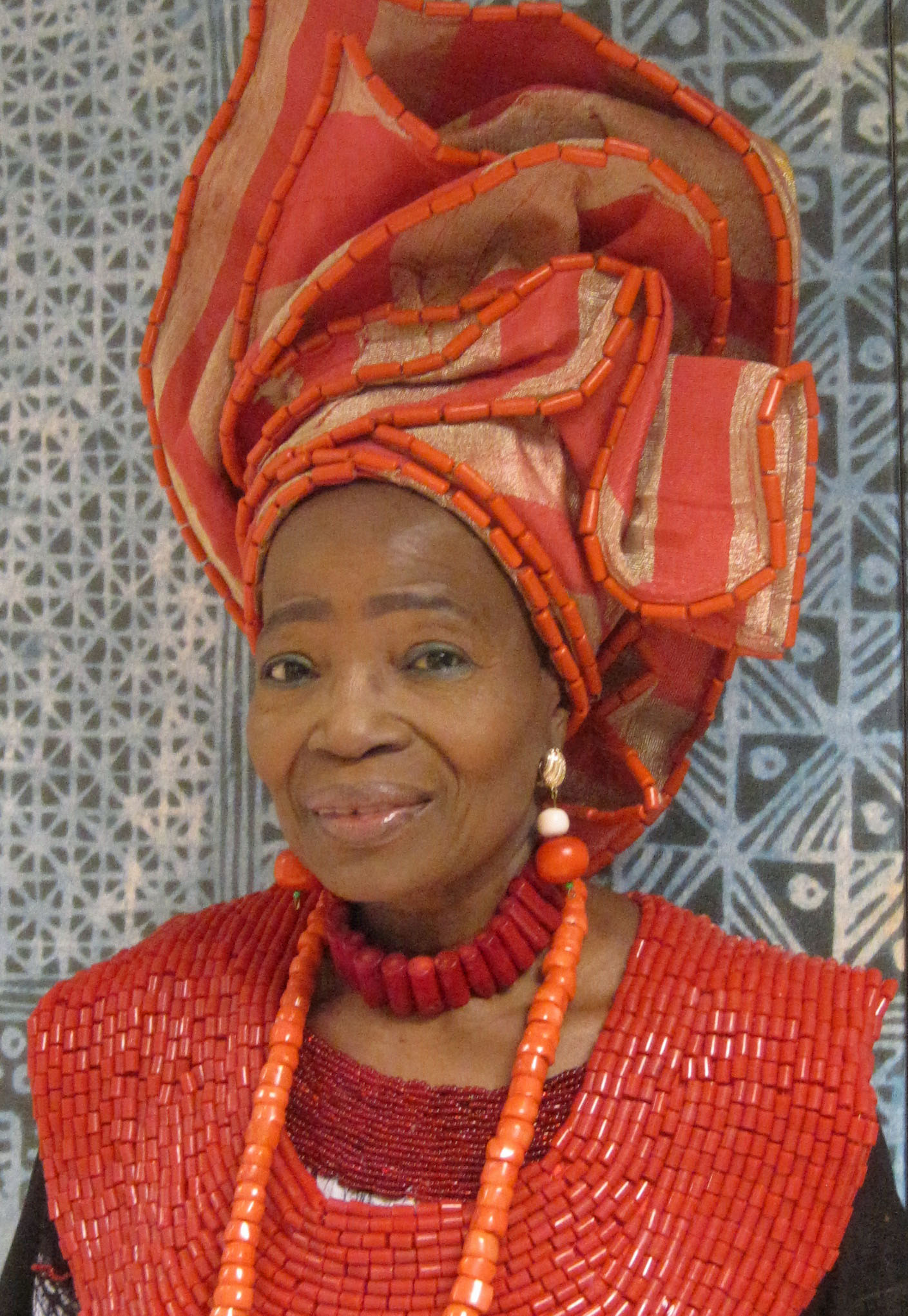
Her representing gallery, kó, identifies her as born in Ogidi in 1951 and describes an artistic formation within a family textile lineage and the Osogbo Art Movement. These are useful anchors for a career that connects inherited practice with individual invention. They challenge the idea that artistic education happens only in a formal classroom.
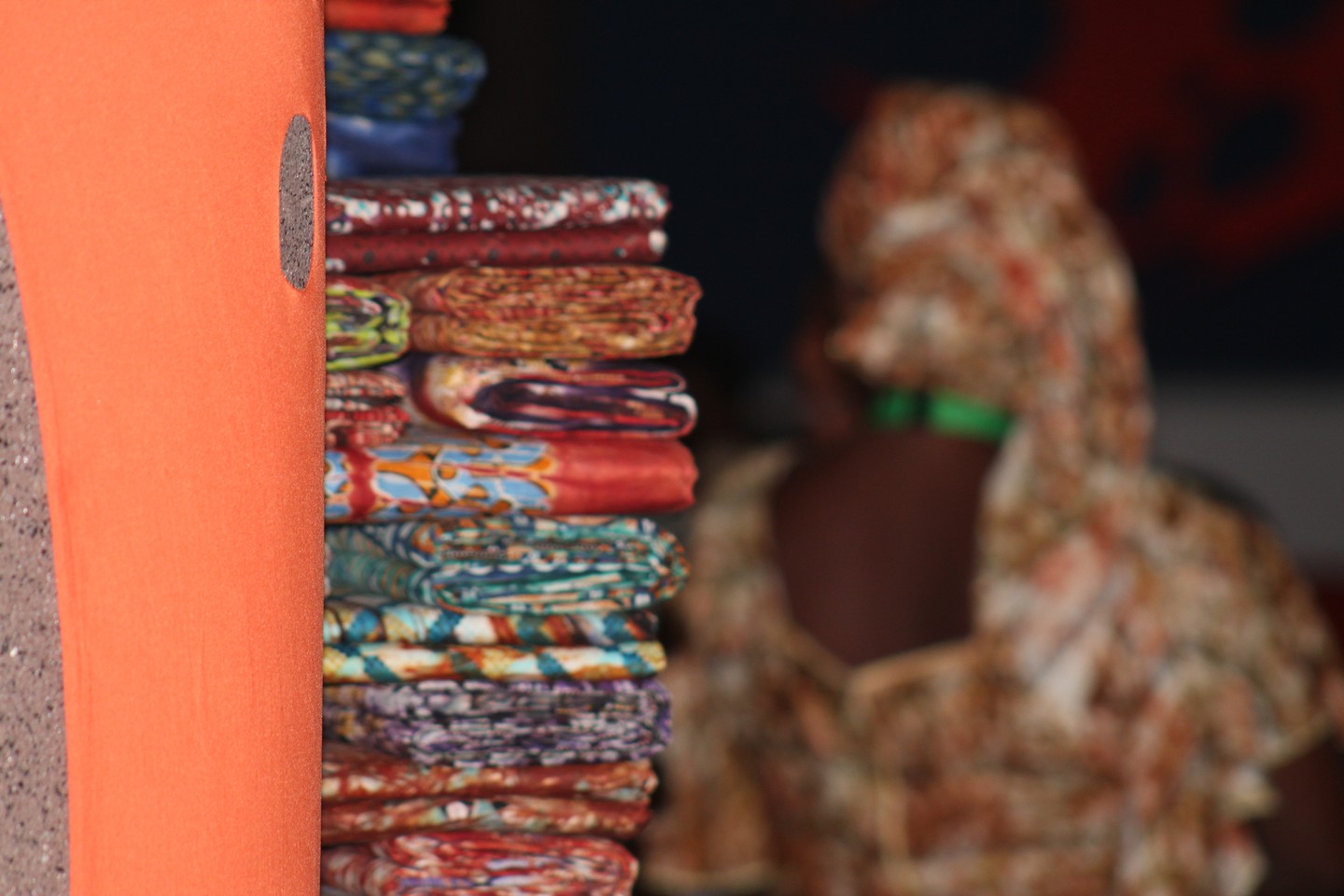
Adire is a family of resist-dye processes, not simply a blue-and-white look. Davies-Okundaye's practice includes batik, embroidery and other media alongside that tradition. Looking carefully means asking how marks were made and how a material responds to a technique. A pattern reproduced by industrial printing carries different labour from a cloth prepared and dyed by hand.
Read the object before the symbol
The gallery's account describes works drawing on Yoruba cultural memory, daily life and women's experience. Rather than assigning a universal meaning to every symbol, begin with the particular object and its documentation. Ask about the title, medium and maker's account before treating a motif as a code that must mean the same thing everywhere.
Museum collections provide another route into the work. The Smithsonian National Museum of African Art's collection record allows readers to encounter Davies-Okundaye within an institutional history of African art. A museum acquisition is one kind of recognition; it does not by itself tell us how a community uses a cloth or how a maker earns a living.
Teaching belongs in the legacy
The teaching associated with her art centres is a separate contribution from the objects shown in galleries. Passing on a technique can preserve vocabulary, practical judgment and a relationship with materials. Those benefits deserve discussion without inventing a count of trainees or assuming that every participant achieves the same economic result.
For a buyer, the practical implication is to ask for the maker's name, the production process and care instructions. For a visitor, it is to notice whose work is on display and how it is credited. Admiration for a famous founder should create curiosity about the artists around her, rather than absorbing their individual identities into the reputation of a gallery.
Davies-Okundaye's legacy joins skilled making with the work of keeping making possible. That is why a serious account belongs in both arts and artisans coverage. It celebrates artistic imagination while recognising the quieter contribution of instruction, and it gives readers a reason to value the people whose hands and knowledge create the cloth.