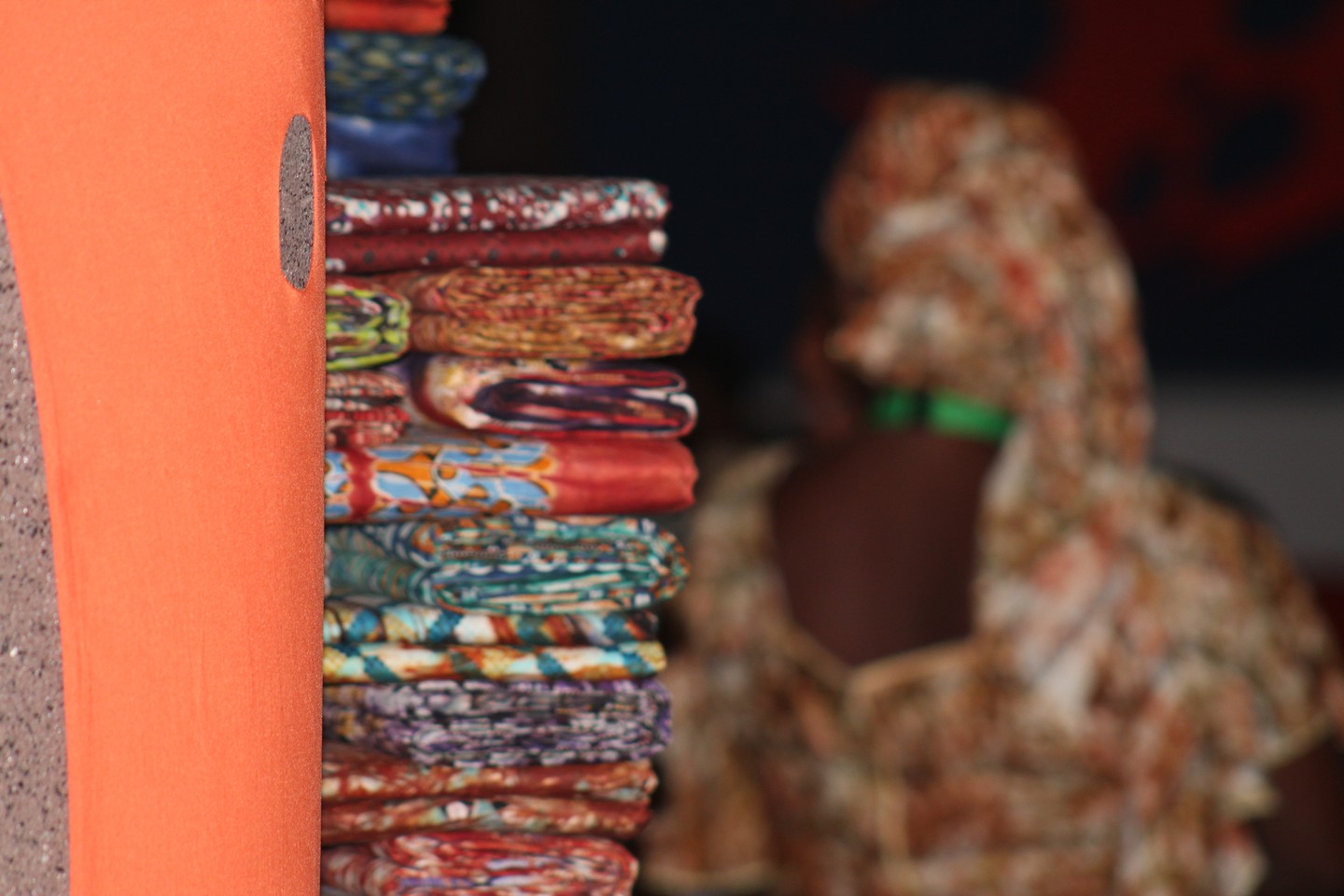
Adire deserves to be approached as a family of making processes, rather than a pattern guaranteed by the word on a label. Its appeal includes colour and design, but also the decisions that kept dye from reaching parts of a cloth. Understanding that basic principle gives a buyer better questions to ask and a reason to value the person who made the textile.
Understand what the name describes
The V&A's textile history places adire in Yoruba communities of southwestern Nigeria and describes indigo-dyed cotton decorated through resist techniques. That context is a starting point, not a rule that every contemporary piece must look identical. A living practice can change its palette, fabric and intended use while retaining a relationship with skilled making.
Tying, stitching and starch resist can create different kinds of marks. The museum distinguishes oniko, alabere and eleko methods and documents cloths collected in Ibadan. You do not need to identify every technique by sight before buying. Ask the seller to explain the process and, where possible, show the reverse, a close detail or a maker's account.
Ask before you pay
A printed cloth can be useful and attractive, but it should be sold honestly. A repeated surface inspired by adire is different from a textile whose pattern was produced through resist dyeing. Ask whether the piece is hand-dyed, printed or a combination, and whether the stated maker produced this particular cloth. The answer should inform the price and your choice.
Before commissioning a garment, agree on the finished dimensions, fabric quantity and placement of major motifs. Look at how a pattern will fall across the front, sleeves and seams. A tailor needs enough material to work with the design; a beautiful cloth can lose its character when a cutting plan treats every part as interchangeable.
Care and credit after purchase
Care should follow the producer's advice for that fabric and dye. Ask about colourfastness, washing, drying and pressing before paying, and keep any written instructions. If information is limited, test a discreet area and avoid assuming that all blue fabrics tolerate the same treatment. This is a buying checklist, not a substitute for a textile conservator's assessment of an old or valuable piece.
Credit is part of care too. Record the maker or workshop, where you bought the cloth and the process described. When sharing a photograph of the finished outfit, name the dyer and tailor where permission and information allow. That small act gives people behind the garment a better chance of being recognised for their own work.
Adire's cultural value does not depend on a buyer claiming expertise. It grows when curiosity becomes practical: ask about the making, choose honestly described material, pay for the labour you are commissioning and look after the result. The cloth then carries more than a striking surface; it carries a traceable relationship with skill.