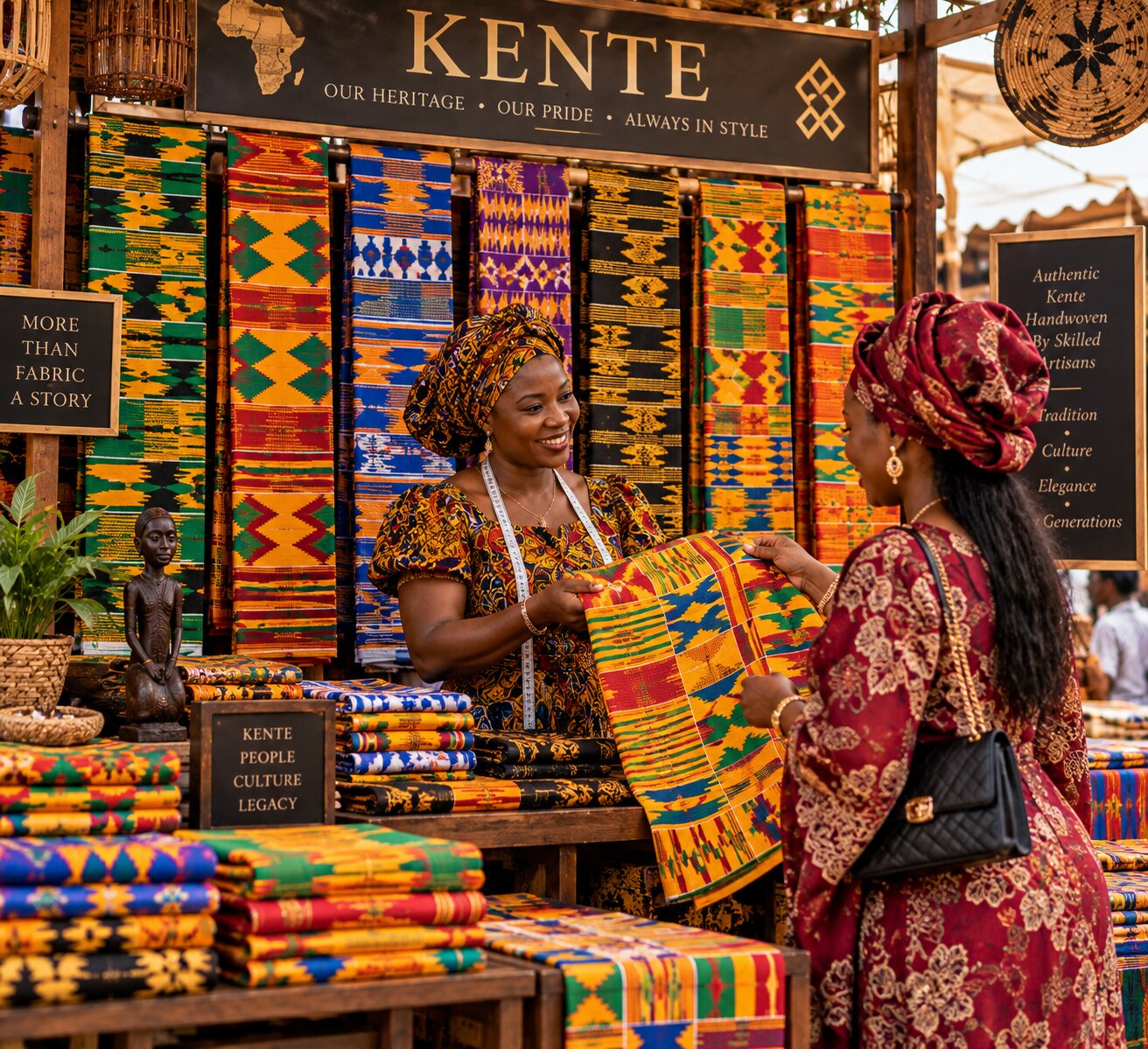
Kente is often encountered first as a bright surface on a sash, garment or celebration photograph. A closer look changes the question from what colours mean to how the textile was made. The woven structure, the joined strips and the knowledge of the maker are part of the cloth's identity, not invisible preparation for its appearance.
What the 2024 recognition means
UNESCO inscribed Ghana's craftsmanship of traditional woven textile kente on the Representative List of the Intangible Cultural Heritage of Humanity in 2024. The recognition concerns a living practice and its transmission. It is not a new inscription today, and it does not authenticate every product advertised as kente.
The nomination describes a craft shaped by communities and passed through learning. That makes a weaver's name and account valuable information for a buyer. Ask where a cloth was produced, what materials were used and whether it is handwoven. A printed imitation can borrow a visual vocabulary without containing the same structure or labour.
Meaning needs a source
Do not assume that a colour has one universal meaning independent of the cloth and occasion. Names, patterns and interpretations require a specific source. A knowledgeable maker or documented collection can explain this piece more reliably than a generic chart circulating online. Respect for symbolism begins with admitting when its context is not known.
Look at the joins, edges and consistency of the weave, but use those observations to begin a conversation rather than issue an instant verdict. Handmade variation does not automatically indicate poor work, and perfect-looking repetition does not by itself prove hand weaving. The seller's explanation should be clear enough to support an informed choice.
Choose a design that respects the weave
When planning a tailored garment, ask how the narrow-strip structure affects cutting and drape. Agree on the direction of the pattern, the placement of seams and the treatment of borders. A design that respects the cloth may require a different plan from one made for a smooth factory-woven fabric.
Store and clean the finished piece according to its actual fibre and construction. Ask for instructions before purchase and keep them with the receipt. For an heirloom or museum-quality object, seek specialist advice rather than applying a household method because it worked on another colourful garment.
Heritage survives through people, work and usable knowledge. Buying from a traceable maker, crediting the weaving and understanding what a product actually is offer practical ways to support that continuity. Kente then becomes more than a symbol displayed for an occasion: it becomes an opportunity to recognise the craft community behind it.