At a distance, an El Anatsui sculpture can suggest a vast, shimmering cloth. Closer attention reveals a different material world: metal fragments, connections and evidence of repeated handling. The movement between those two scales is part of the work's power. Something discarded acquires a new presence without becoming free of its previous associations.
A specific object, specific materials
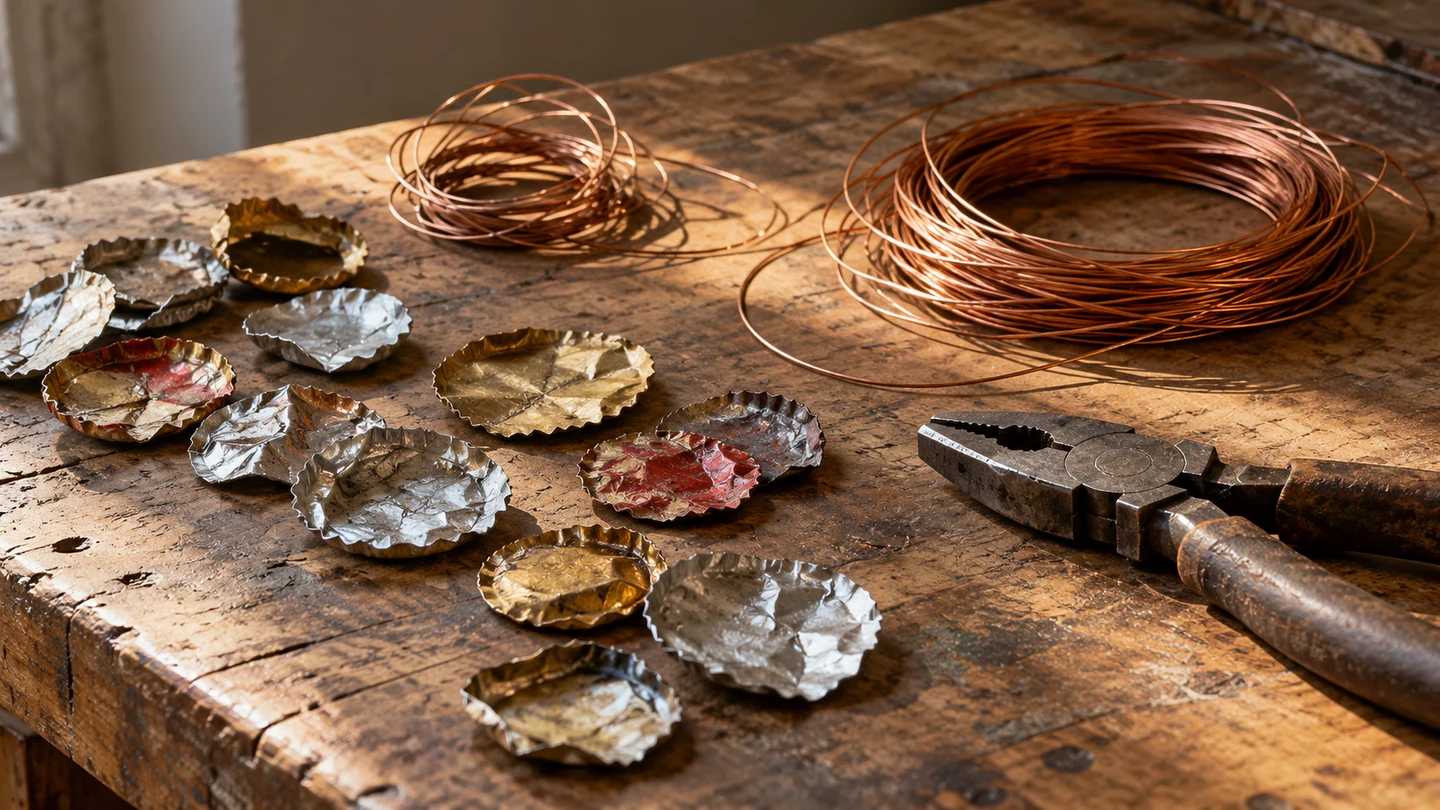
The Metropolitan Museum of Art's record for Dusasa II identifies the work as made in 2007 from found aluminium, copper wire and plastic disks. It places a Ghanaian artist working in Nigeria within a history of sculpture assembled from bottle caps and seals. Those specific materials matter more than a general description of beautiful recycling.
The labour of connection
The construction invites a viewer to think about connection. A large surface is made possible by many small acts of shaping and joining. The Met relates the title to a communal patchwork and the artist's team of assistants. This makes collaboration part of the work's explanation, rather than an invisible service behind a single famous name.
The comparison with textiles is productive, but it should not erase the fact that the artist is working in sculpture. Weight, flexibility, folds and installation all influence what the viewer encounters. A photograph records one arrangement and viewpoint. It cannot supply the entire physical experience of an object that occupies and changes a space.
The materials also carry histories of circulation and consumption. A discarded cap was once part of a commodity; gathering it into a new surface does not remove that history. The critical question is how the work makes ordinary material newly visible, rather than whether an attractive object has solved the environmental problem that produced its ingredients.
From an object to a monumental installation
Behind the Red Moon, the 2023 Tate Modern Turbine Hall commission, offers another documented point of comparison. The artist's official exhibition record identifies its large-scale installation and separate acts. It is historical context, not an exhibition announcement for today. Follow the museum or artist directly for current access and exhibition information.
Readers can begin with the Met's object record and the artist's exhibition documentation, then compare photographs of complete installations with close details. Look for the difference between the overall field and the individual joins. Keep the credited artwork images on their authorised source pages; the conceptual image accompanying this feature does not reproduce a sculpture.
Anatsui's contribution is a way of seeing possibilities in material and relationships between places. Ghana and Nigeria are not interchangeable backgrounds to that achievement. They belong to the artist's formation and working history, while the sculptures invite audiences elsewhere to consider labour, scale and the surprising afterlife of everyday objects.