
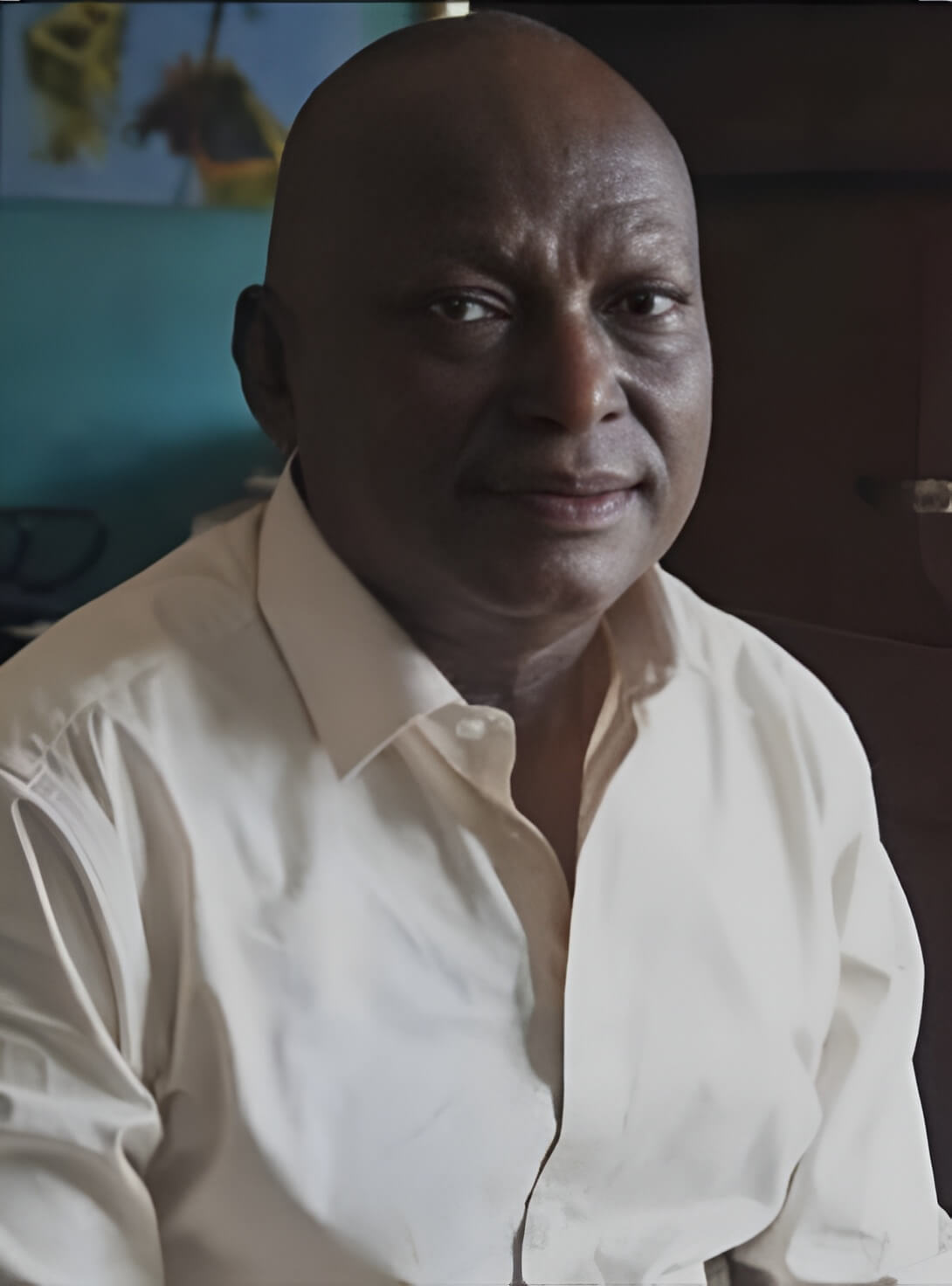
Reuben Ugbine belongs in the front rank of contemporary Nigerian sculpture. His name is sometimes rendered online as Reuben Ugbani, but the artist, his family foundation, galleries and professional records use Ugbine. That correction matters because an artist's name is the first part of preserving his record.
Ugbine was born on 24 November 1956 in Anponya, Ghana, to Nigerian parents. The Reuben Ugbine Foundation says his interest in wood carving took root at Warri Secondary School, before formal training gave that early fascination technical range and discipline.
From school carving to a life in sculpture
He earned an Ordinary National Diploma at Auchi Polytechnic in 1976 and received the Principal's Prize for best student. He then studied sculpture at Yaba College of Technology in Lagos, completing a Higher National Diploma in 1979. The sequence placed him within two important centres of modern Nigerian art education.
His professional life joined teaching to practice. Records from the foundation and O'DA Art place him in instructional, cultural and lecturing roles associated with Auchi Polytechnic between the late 1970s and 1987. He later committed himself to full-time studio work and developed Creative Hands in Benin City as a base for sculpture and experimentation.
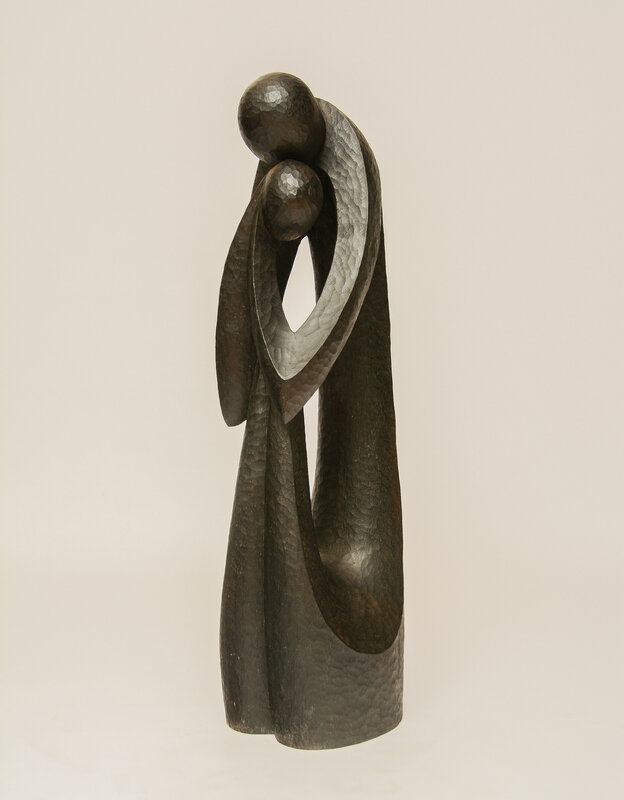
Ugbine worked across media: ebony and iroko wood, fired clay, metal and painting. His wood sculptures often use the grain and density of the material to produce tall, simplified figures, while his terracottas invite a more intimate encounter with faces, clothes, gestures and the small objects of ordinary life.
Why the terracotta figures matter
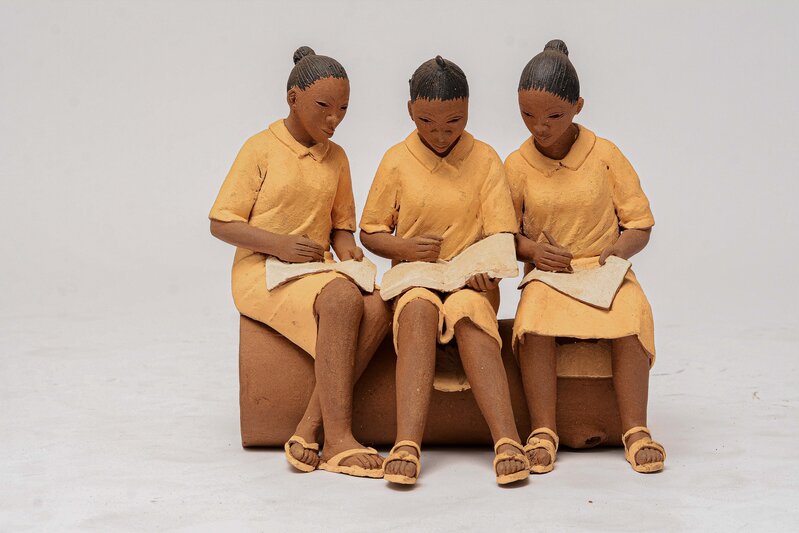
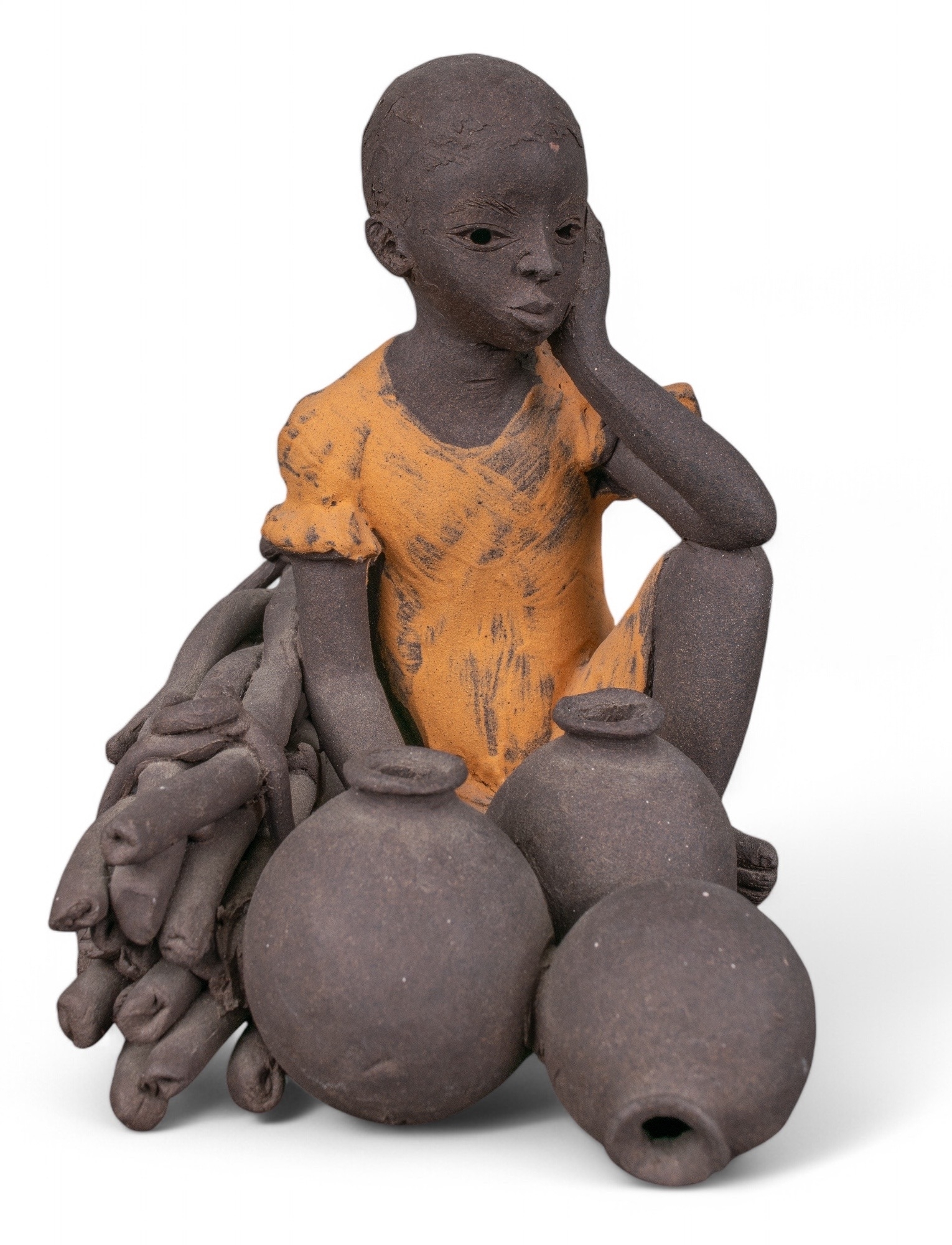
The foundation dates his signature figurative terracotta direction to 1982. Rather than treating terracotta only as an archaeological reference or decorative medium, Ugbine used it to narrate contemporary Nigerian society. Students reading, children sitting together, market sellers, mothers, workers, couples and players of draughts became subjects worthy of close, lasting attention.
An academic study of his ceramics describes a practice grounded in social reality: work, education, gendered labour, childhood, dress and community interaction. The figures are recognisably modern, yet their pierced eyes, earth colour, hand-built surfaces and frontal presence can call older West African terracotta traditions into the conversation without merely copying them.
That balance explains his influence on African cultural memory. Ugbine did not freeze 'tradition' in an imagined past. He showed culture being lived—in uniforms and wrappers, in a hairstyle, a load carried, a game played, a lesson shared. His sculptures argue that heritage survives not only in monuments but in repeated human actions.
His work travelled through exhibitions in Nigeria and abroad, and he belonged to the Society of Nigerian Artists and the Guild of Professional Fine Artists of Nigeria. O'DA Art and later Nigerian reporting state that work by Ugbine entered the British Museum collection in 2018; the gallery account is retained here as attribution rather than presented as an independently verified museum catalogue entry.
A short tribute
Ugbine died in Benin City on 6 September 2021. He left a family, generations of students and a body of work that continues to be exhibited and studied. The Foundation established in his name now seeks to document the archive, encourage research and create opportunities for younger artists.
A fitting tribute is therefore brief: Reuben Ugbine gave weight and dignity to lives that could be missed in the rush of history. In clay and wood, he made attention itself a cultural service. May his name be spelled correctly, his works conserved carefully and his example remain available to the artists who come after him.