Lagos Fashion Week can begin for a visitor before the first model reaches a runway. The organiser’s save-the-date announcement gives October 28 to November 1, 2026, as the event window. As of this October 17 guide, that is a future programme to plan around, rather than a completed fashion week to review. Confirm each show, presentation and booking directly before committing money.
Read the craft as closely as the silhouette
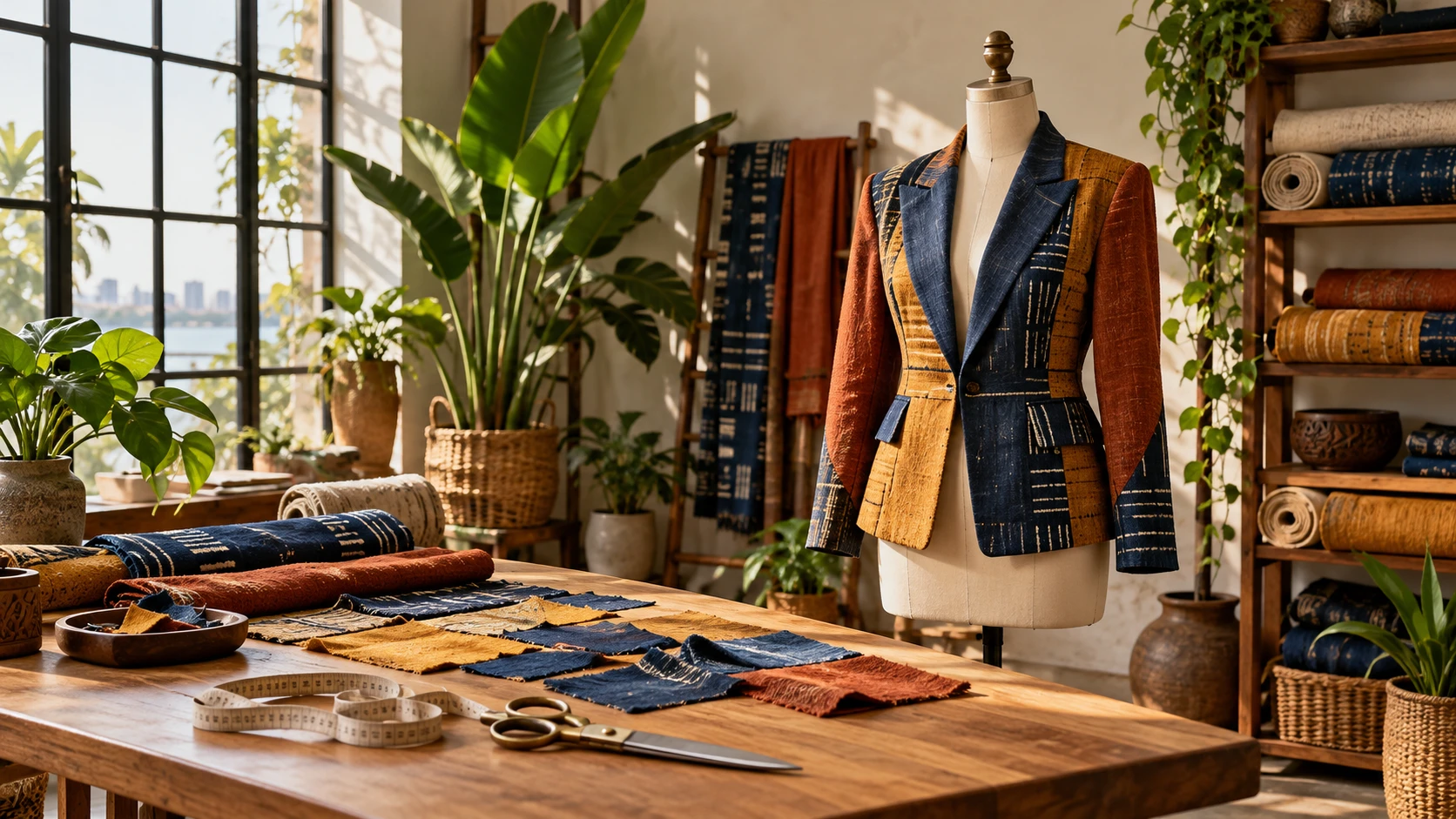
The official Green Access 2026 page offers a particularly useful way to understand the creative work behind the occasion. It describes an emerging-designer programme focused on craftsmanship and circular design, including reclaimed materials, durability, repairability and collaboration with makers. Those are programme aims; the page is not independent evidence that a finished garment has achieved a measured environmental benefit.
Start with the material. Ask whether a fabric is newly made, reclaimed or a combination, and how that description is documented. A visible patchwork surface does not by itself establish where the cloth came from or how much waste was avoided. Buyers can appreciate a beautiful object while asking for specific, modest claims rather than accepting a broad sustainability slogan.
Next, look at the work that makes the garment useful after the photograph. Can a seam be repaired? Is a fastening replaceable? Will the maker explain how to maintain the material? These are practical editorial questions suggested by the programme’s emphasis on long product life. They are not a certification checklist or a promise that every design on a runway follows the same approach.
Questions to take into a showroom
Credit also belongs in the conversation. A designer, weaver, embroiderer and tailor may contribute different knowledge to one piece. Ask who carried out which work and whether the brand can explain that collaboration without reducing the maker to an unnamed tradition. A clear answer helps an audience see the people and decisions behind the finished silhouette.
The Green Access page describes mentorship, workshops, prototype reviews and a final presentation. It still displays an application link, but the presence of that link alone does not verify an open deadline, available place or current selection round. This article is a visitor and viewing guide, not a recruitment notice. Interested designers should obtain the current terms directly from the programme.
Plan the city around the event
For an audience visit, a five-day window is not a five-day admission pass. Check whether a particular event is public, ticketed, accredited or invitation-only; confirm its current venue and entry conditions. The official site links to older 2025 runway and event guides as well as 2026 material. A page’s year must match the booking being made before its timetable is used.
Accommodation should follow confirmed locations rather than a generic promise to stay near fashion week. Ask a hotel about the exact address, total payable cost, cancellation deadline, check-in arrangements and transport options for the planned journey. Allow time between events and avoid a schedule that depends on an unverified transfer estimate. This is planning advice, not a hotel inspection or a current room-rate recommendation.
The rewarding visit is one that leaves room to look and ask. Follow how a design moves, learn what its materials require and respect photography or recording restrictions. The runway creates an introduction; the garment’s longer life depends on the buying, making and care decisions that follow. Those questions can make the city’s fashion experience richer without turning an upcoming event into an invented success story.