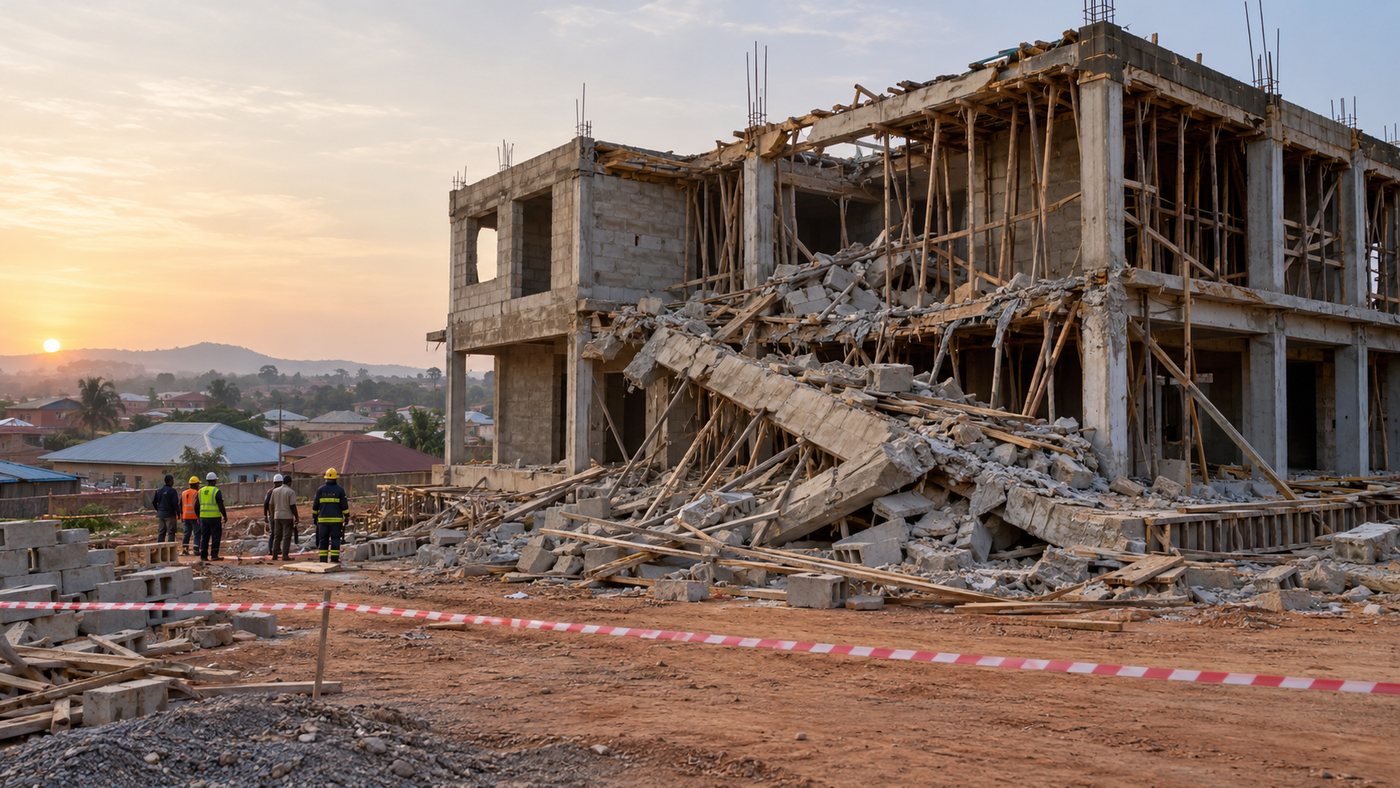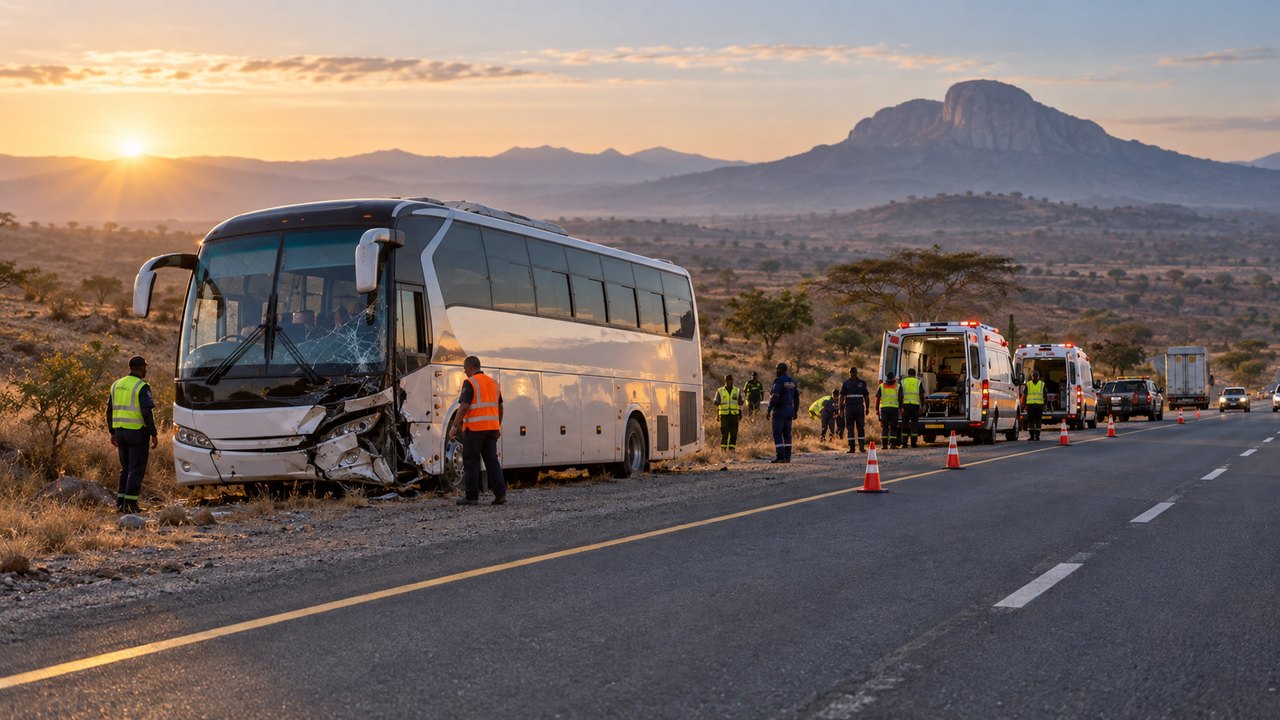
At least 24 people were killed when a passenger bus and a truck collided near Mtito Andei in Kenya’s Makueni County on Sunday, October 25, police told the Associated Press. Another 24 people were receiving treatment at Mtito Andei hospital, according to medical superintendent Paul Kisienya. The figures are an early official account from a developing emergency and should not be expanded with unverified names or social-media lists.
The passengers were travelling back to Mombasa after attending the funeral of their church pastor in western Kenya. The crash occurred shortly after the bus left Mtito Andei, where passengers had stopped for breakfast. That travel purpose and sequence provide context, but they do not identify a legally responsible driver, operator or vehicle before investigators complete their work.
What is confirmed
Survivor Violet Mwandonyi told AP that she could not recall the collision and did not yet know the fate of her two children who had been aboard. Another passenger, Spenza Mudave, said a truck struck the bus from behind and the coach rolled. These are important eyewitness accounts gathered amid trauma; investigators still need physical evidence, vehicle records and statements from the people operating both vehicles.
The National Transport and Safety Authority initially suspected improper overtaking based on information that suggested a head-on collision. That account does not match every detail in the survivor description reported by AP. Until the scene reconstruction resolves the direction of impact, lane positions and sequence, neither version should be converted into a final cause finding.
The cause is not settled
President William Ruto offered condolences and ordered inspections of public service vehicles to check compliance with safety requirements. The order signals a national response, but an instruction is not proof that inspections have occurred, that the vehicles involved had failed a requirement or that one compliance problem caused Sunday’s collision.
The location makes the tragedy especially serious. On October 3, another collision at Salama on the same Nairobi–Mombasa highway killed 17 Catholic pilgrims and their driver. NWDH’s earlier report recorded that the Mlima Kiu–Salama stretch was already described as a black spot and that investigators were examining vehicle condition, overtaking and road-safety measures.
A second mass-casualty crash on the same corridor
The two crashes should not be collapsed into one cause without evidence. They occurred on the same major corridor and both produced mass casualties, but investigators must examine each scene independently. The recurring public-interest question is whether known road risks, vehicle inspection systems, operator practices, emergency response and earlier recommendations are being addressed in a measurable way.
NTSA described road crashes as a national emergency and cited about 20,000 crashes and more than 5,000 deaths annually. Those are the authority’s broad figures, not a count created by Sunday’s incident. A transparent response would publish the period and method behind the national estimate and later release the completed findings for the Mtito Andei collision.
The inspection order needs a public record
Ruto’s inspection order can be assessed through records: how many public service vehicles are checked, which defects are found, what happens to non-compliant operators and whether enforcement reaches long-distance buses and trucks consistently. Inspections can identify mechanical and documentary problems; they cannot substitute for safe driving, protected rest, reliable road design and accountable enforcement.
Families and survivors also need a clear official information channel. Authorities should reconcile hospital admissions, transfers, identifications and notifications before releasing a final list, while protecting private medical details. That process matters because early mass-casualty figures can change as patients move between facilities and relatives report missing travellers. A verified central record reduces harmful speculation without delaying the public release of confirmed safety findings.
For now, the verified account remains limited: police reported at least 24 deaths, the hospital reported 24 injured people receiving care, the bus was returning to Mombasa from a funeral and the exact collision sequence remains disputed in the available accounts. Names, a final casualty list, mechanical findings and legal responsibility should await official confirmation.