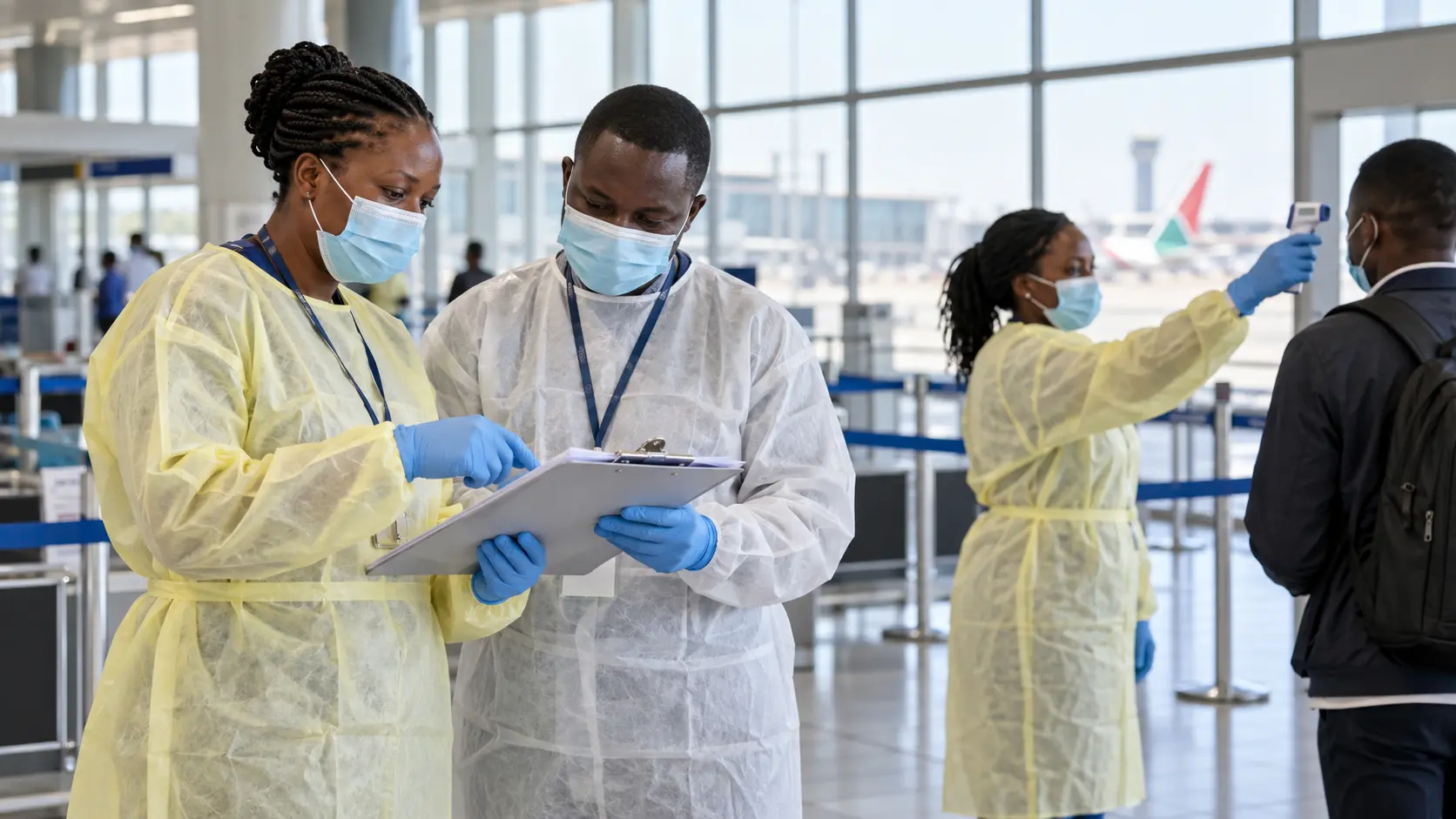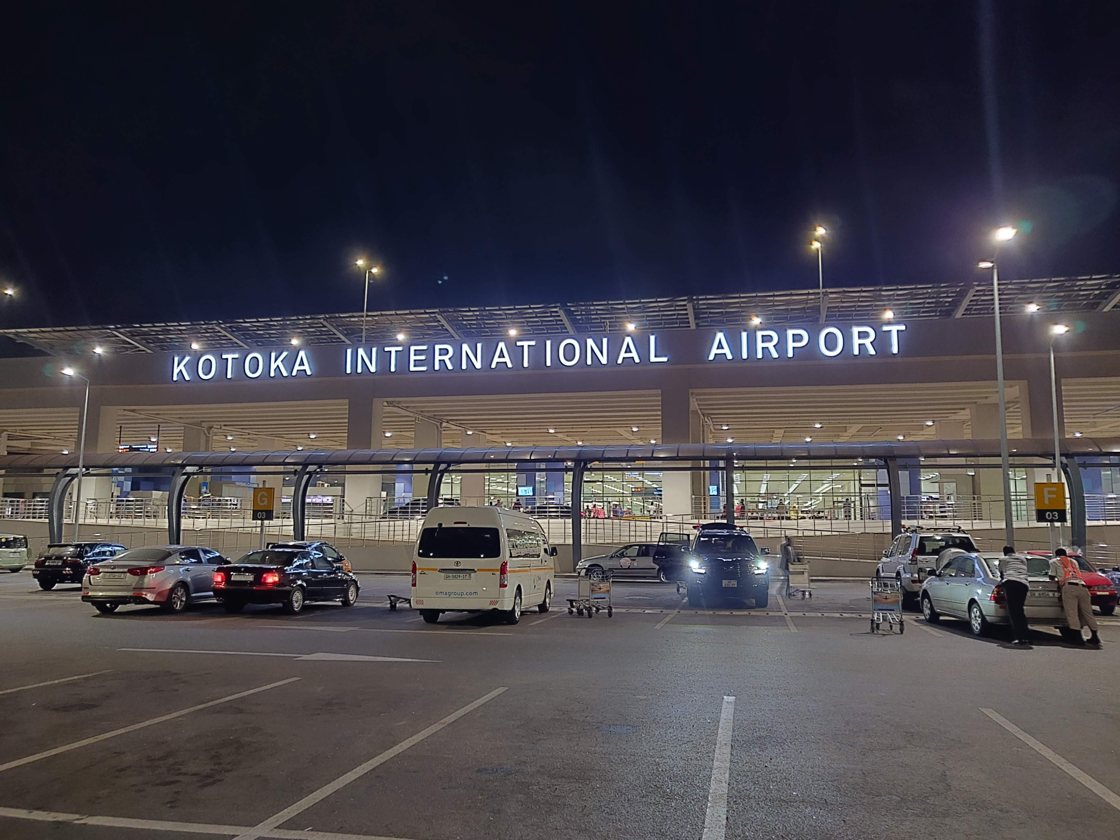
Ghana is strengthening Ebola surveillance and preparedness after confirmed infections in Nigeria and Kenya increased concern about cross-border transmission. Reports published on October 21, 2026 by Adom, 3News and Sahara Reporters describe a Health Ministry announcement covering airport screening, laboratory readiness and coordination with health and aviation agencies. The ministry said Ghana had recorded no Ebola case at the time of its statement. That qualification belongs beside the headline: a stronger response is a precaution, not confirmation that the disease has entered Ghana.
The announcement matters because regional travel connects public-health systems as well as destinations. Ghana’s ministry cited direct traffic with Kenya and frequent travel with Nigeria in explaining its decision. The relevant question is how quickly a possible exposure can be recognised, assessed and followed up. It would be misleading to infer that everyone arriving from either country is infected, or that the existence of a flight connection establishes how a particular person acquired the virus.
What the announcement establishes
Adom and Sahara Reporters describe simulation exercises at Accra International Airport and the Ghana Infectious Disease Centre, alongside work on laboratory procedures and healthcare-worker awareness. These are accounts of preparedness activity, rather than an independent audit of every facility’s capacity. Exercises can reveal gaps in coordination; their occurrence does not demonstrate that every gap has been closed. No new border closure or general suspension of flights is established by the sources reviewed for this report.
The same reports attribute a 21-day health-monitoring period for travellers arriving from affected areas to the ministry. Monitoring should not be confused with a diagnosis, nor should a reported monitoring arrangement be rewritten as an automatic detention rule for every passenger. Travellers should follow instructions issued by the relevant public-health authorities and confirm current requirements for their actual itinerary. This article does not establish an individual’s exposure, medical condition or permission to travel.
Read each case count with its date
Dates are particularly important in reading the regional figures. Ghana’s announcement, as reproduced in the October 21 reporting, refers to Kenya’s first imported case on October 6 and six additional cases by October 17. That is historical context, not the newest available Kenyan total. The United States CDC’s official situation page, updated October 20, records nine confirmed Kenyan cases and one confirmed Nigerian case. Those figures retain their October 20 reference date here; they are not presented as a newly verified October 22 tally.
Readiness is also being discussed away from the international terminal. Ghana News Agency’s October 21 report from Bolgatanga describes an Upper East regional emergency-management meeting involving health, security, immigration and port-health officials. Its agenda includes reviewing supplies, staffing and logistics. That local account concerns preparation for possible emergencies, including yellow fever and Ebola; it does not report a confirmed Ebola infection in the Upper East Region. National and regional measures should remain distinguishable rather than becoming one inflated outbreak claim.
Readiness needs clear information as well as equipment
For people deciding what to do with an alarming message, the most useful distinction is between a confirmed case, a person being monitored and a preparedness exercise. They answer different questions. A photograph of protective equipment or a busy airport cannot establish a case count. Neither can a screenshot detached from its issuing authority and date. Sharing the original dated notice, with its qualifications intact, is more useful than circulating an undated warning that loses the difference between risk and diagnosis.
The ministry’s advice, as reported by Adom, is to seek prompt medical assessment when symptoms follow relevant travel or contact and to disclose that history to healthcare workers. This is a public-health report, not a diagnostic guide or a substitute for professional care. Readers should use Ghana’s Ministry of Health and Ghana Health Service for current instructions. A source saying no case had been recorded on October 21 cannot promise that the position will remain unchanged, and a later update should be read on its own date.
The immediate test is therefore practical: whether screening connects to timely assessment, whether laboratories and clinical teams can act on a concern, and whether follow-up information reaches the people who need it. Those are measures of delivery to watch, not outcomes this announcement has already proved. Ghana’s precautions add a distinct national response to an evolving regional emergency while leaving the central reporting obligation unchanged: communicate verified developments clearly, without turning preparation into panic.