A piece of cloth can carry a public argument into places where a formal speech may not travel. In Yaoundé on October 9, 2026, UNICEF Cameroon unveiled a commemorative pagne called Le Fil de mes Droits, or The Thread of My Rights, to begin its national eightieth-anniversary activities. This is a cultural feature examining that earlier unveiling, rather than a claim that a new launch happened today.
The maker and the visual language
Cameroon Tribune’s October 10 account identifies the winning designer as Badane Gaiwe Rosita, a 23-year-old Cameroonian fashion designer and pattern maker. Naming her matters. A campaign fabric is the result of choices about lines, motifs and the relationship between the surface and its message; describing only the institution behind the commission can make the maker’s contribution disappear.
In the newspaper’s publicly accessible account, Rosita explains that her design draws on linear weaving and Ndop imagery from western Cameroon. A double-headed bell represents communication and a voice for children; simple geometric forms refer to education, while a spiral evokes the umbilical cord and growth. These are meanings attributed to this designer’s creation, not a claim that every cloth or community uses those symbols in exactly the same way.
Children helped select the design
UNICEF says the national competition began in April and that nine selected concepts went into a process involving children, the public and a professional jury. It records 2,723 online public votes and 110 children’s voices in the selection. That gives the participation claim a specific basis: children contributed to choosing the design. It does not establish that they determined every part of the wider campaign.
The choice of a wearable medium makes the project interesting beyond an anniversary ceremony. Our reading is that it asks the public to encounter rights as something connected: education, health, protection, identity and participation are not isolated concerns. That is the campaign’s argument in visual form. A garment can prompt a conversation about those connections without being evidence that any particular service has improved.
The October 9 release also announced further activities, including eighty photographs with children’s accounts from Cameroon’s ten regions, a youth hackathon and a time capsule addressed to the generations of 2046. Those were plans in the release. They should not be written up as an exhibition already completed, solutions already delivered or a measured expansion of children’s access to services.
From wearing a message to following its promises
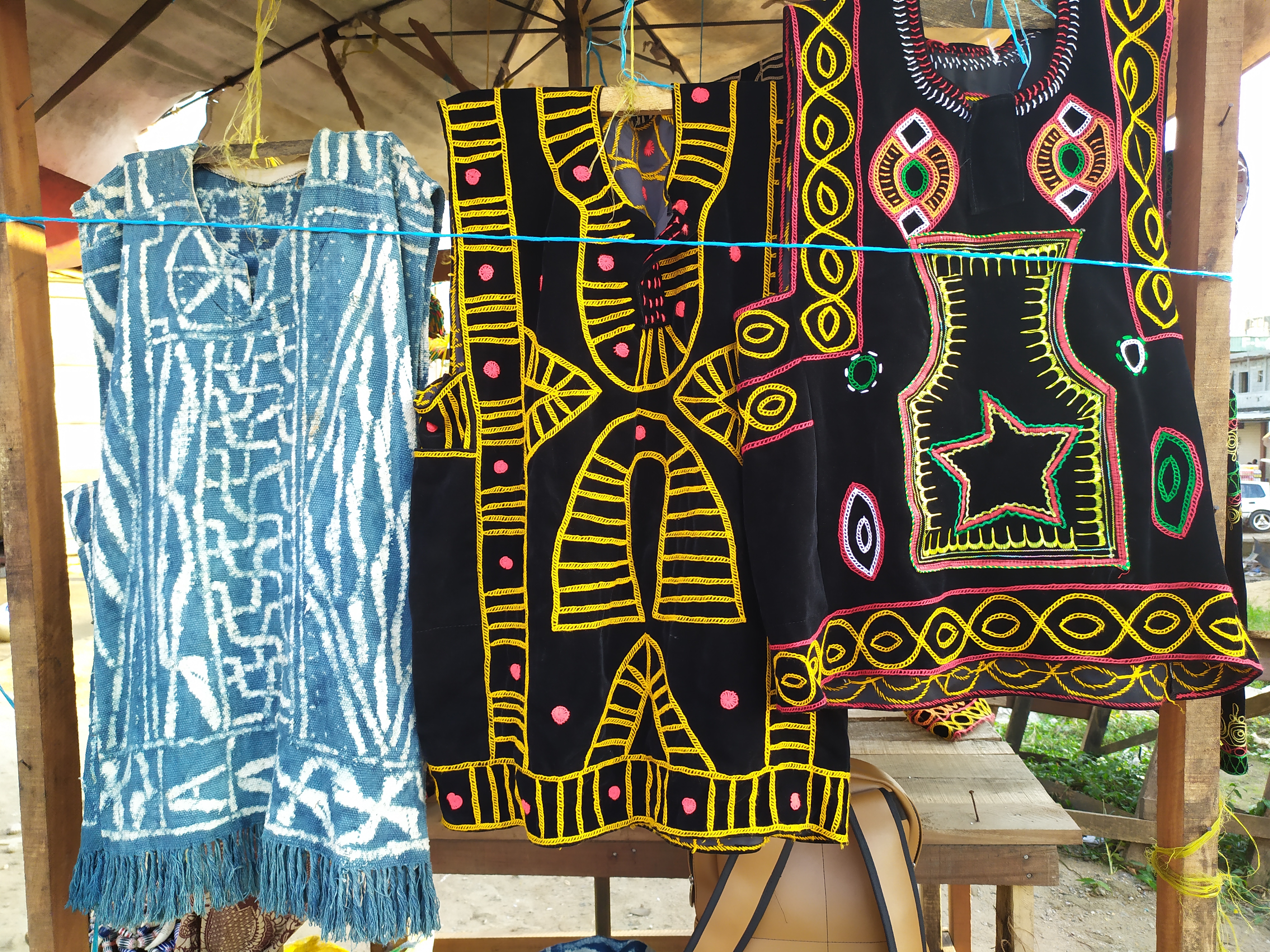
For readers interested in textile culture, the useful questions begin with attribution: who designed the cloth, what source traditions are acknowledged and how does the maker explain the symbols? The archival Toghu and Ndop photograph accompanying this article provides cultural context only. It is not a reproduction of Rosita’s design; the linked UNICEF release is the source for seeing the actual commemorative fabric.
For readers interested in children’s rights, a different follow-up is needed: what commitments emerge from the campaign and how are children able to describe the changes in their own lives? The cloth makes a message portable. Whether the public institutions and partners carrying that message also improve everyday access remains a question for subsequent evidence, after the ceremony and beyond the anniversary.