Rice training in Uganda’s West Nile is being presented as more than a route to a better harvest. An October 19, 2026, account from the National Agricultural Research Organisation describes work with refugees and host communities in Yumbe and Madi Okollo, connecting farming skills with women’s economic participation and cooperation. The publication date does not establish when every field visit or harvest occurred.
NARO identifies Japan as the funder, UN Women Uganda as grant recipient and Peace Winds Japan among the implementing partners. NARO supplies the livelihood component through training and seed, particularly NERICA 4. The institutional account is valuable primary evidence about the programme, but it remains an implementing organisation’s description rather than an independent evaluation.
Learning on a shared plot—and on one’s own
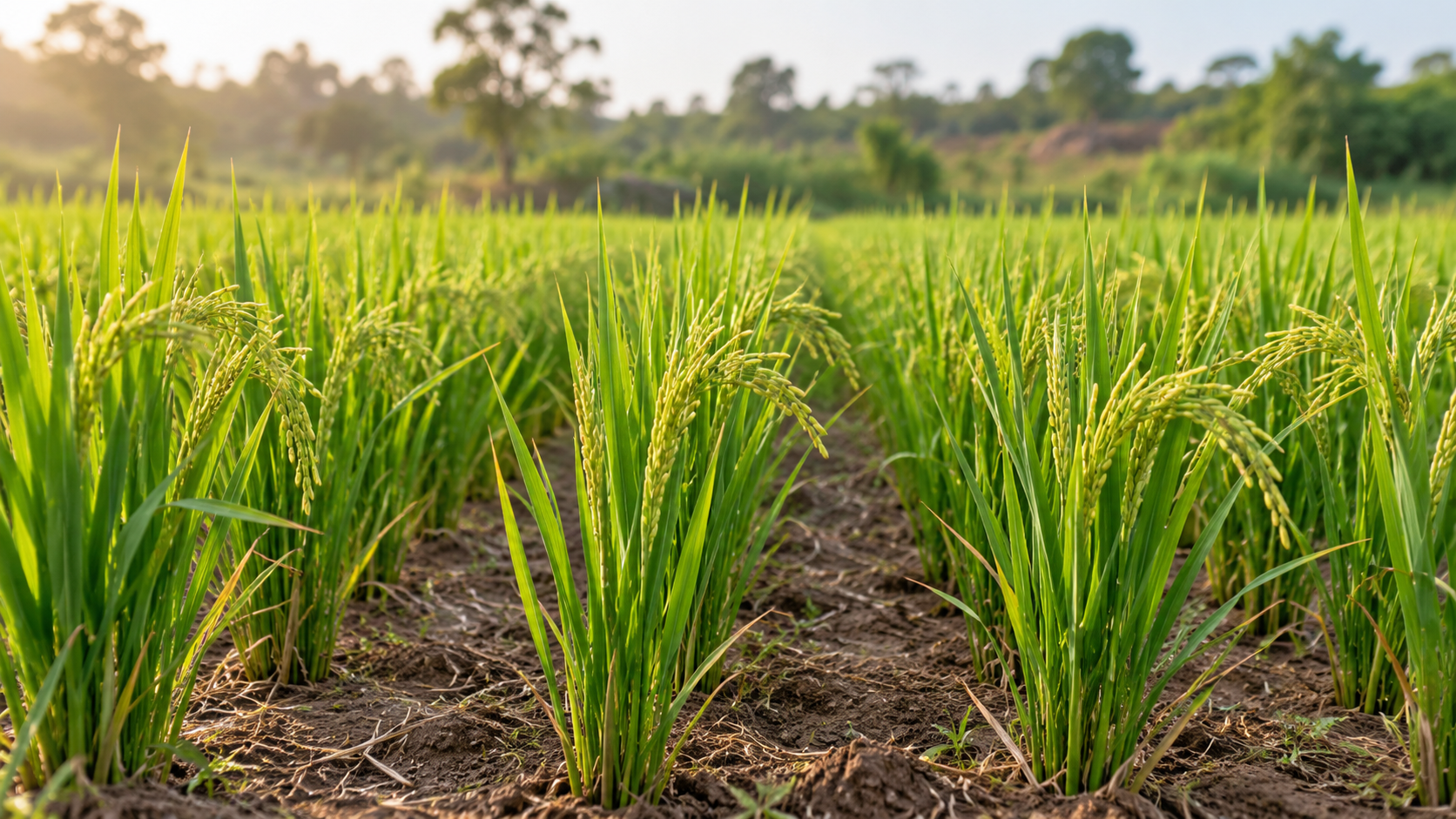
Nile Post’s October 19 report explains the field-school method in practical terms. Participants learn in a shared demonstration plot and apply the techniques in their own gardens. The distinction matters: observing a method once is not the same as using it through a growing season. The model seeks to connect instruction with repeated practice.
The report also describes cooperation over access to land between host-community members and refugees. Such arrangements make the livelihood question inseparable from relationships between neighbours. They should not, however, be read as a general land entitlement or an invitation for readers to claim a plot; the account concerns the participating communities and their reported arrangements.
Farmer Taban Rashid describes moving away from scattering seed, reducing the difficulty of weeding and paying more attention to handling and storage. His testimony illustrates why a farming intervention can involve more than a seed packet. It does not establish that every participant experienced the same results, and this article does not turn his personal earnings into a promised return.
Encouragement is not an impact evaluation
Both accounts describe drought as an ongoing challenge. Claims about NERICA 4 helping crops withstand conditions are attributed to project researchers and participants, not treated here as a guarantee against crop failure. Nile Post reports that NARO is comparing adoption and yield indicators with baseline information. A published, project-wide assessment would be the stronger next evidence.
The programme’s peace-building ambition is important precisely because it should be tested, not assumed. Shared learning and cooperation are reported activities; lasting improvements in incomes, women’s influence and relations between communities require evidence over time. For now, West Nile offers a concrete account of how agriculture is being used to work towards those goals—not proof that those goals have already been secured.