Uganda has ordered citizens returning after recent travel to the Democratic Republic of Congo to complete 21 days of quarantine at their own expense as it tightens precautions against Bundibugyo Ebola, Health Minister Chris Baryomunsi said on Sunday, October 25. The policy changes entry conditions; it is not an announcement that Uganda has detected a new case.
The ministry’s measures also restrict transit through Uganda for travellers with Congo travel history, including charter-flight passengers. Non-essential Congolese travellers are to be returned through the nearest border crossing at their own expense, while people accused of entering illegally may face prosecution. Humanitarian workers, truck drivers and other permitted essential travellers remain subject to screening rules.
What the new restrictions require
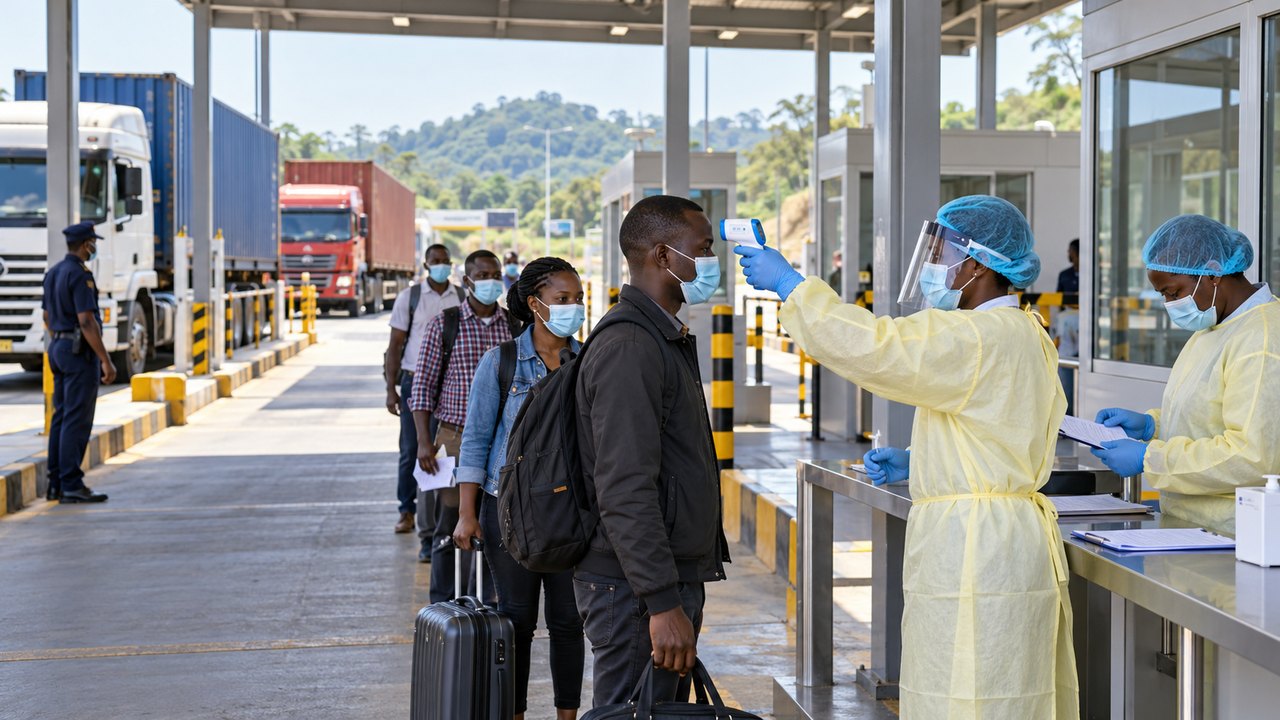
Screening has been intensified at Entebbe International Airport and land borders. The ministry says all arrivals must complete a passenger locator form and undergo health checks, including diplomats and United Nations personnel. A locator form supports follow-up; it does not diagnose Ebola, prove exposure or eliminate the need for clinical assessment and laboratory testing.
The quarantine period reflects the 21-day follow-up window used for Ebola contacts. Requiring travellers to bear the cost creates practical questions about accommodation, medical supervision, food, appeals, family separation and what happens when a person cannot pay. The available announcement does not provide a public schedule of fees or detailed safeguards for those situations.
Uganda declared its earlier 2026 outbreak over on July 28 after recording 20 confirmed cases, including two deaths. Its official Ebola portal continues to list no active cases. The new controls are therefore precautionary restrictions adopted during a regional outbreak, not evidence that Uganda’s outbreak declaration has been reversed.
Uganda still reports no current case
Ugandan authorities also said all 60 contacts connected to Kenya’s first Ebola patient while he travelled through Uganda completed 21 days of monitoring without symptoms and were released from follow-up. That is a completed outcome for those 60 named contacts. It does not establish the source of every later regional case or prove that no unknown exposure occurred elsewhere.
The route by which Nigeria’s first confirmed patient became infected remains unresolved. Nigeria’s health minister said sequencing found the virus genetically close to Kenya’s index case, with one mutation between the samples, while Africa CDC is investigating whether the travellers interacted at Entebbe on October 3. Genetic proximity and a shared airport date are leads, not a completed transmission chain.
The Nigeria infection route remains unresolved
Baryomunsi said Ugandan investigators had not established whether the Nigerian patient travelled to Congo and that authorities were working with Nigeria and international partners to verify her movements and interactions. Switzerland’s foreign ministry had said she did not visit Congo and was believed to have become infected while travelling in Uganda. Those accounts remain attributed and should not be rewritten as a final source finding.
Uganda says it has deployed Ebola specialists to Congo to support containment. Cross-border cooperation matters because restrictions can redirect people toward informal crossings when lawful routes become inaccessible or unaffordable. Effective surveillance therefore depends on transparent rules, accessible reporting, protected health workers, reliable data exchange and humane arrangements for people placed under observation.
What evidence should come next
Public communication must also distinguish screening, quarantine and isolation. Screening looks for symptoms or travel history; quarantine monitors people who may have been exposed but are not confirmed ill; isolation separates a suspected or confirmed patient for clinical care and infection control. Treating every quarantined traveller as infected would misstate the policy and could discourage honest reporting at official crossings.
The next records to watch are the ministry’s complete written directive, implementation guidance at each crossing, the treatment of essential travellers and people unable to pay, and any verified result from the joint investigation into the Nigeria and Kenya cases. Until then, the accurate status is tighter Ugandan border controls, no current confirmed Ugandan case and an unresolved regional transmission investigation.