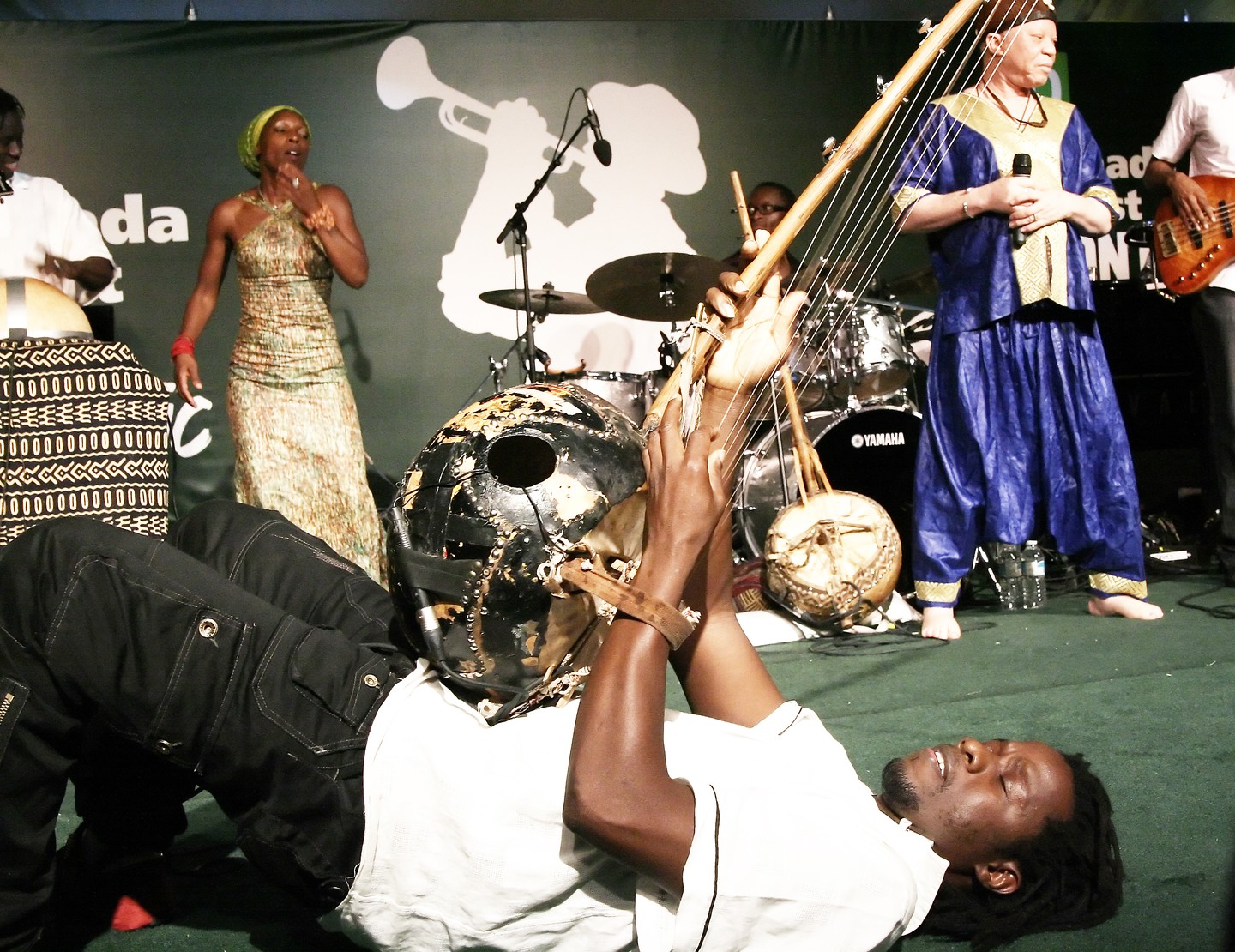
Salif Keita's reputation as the golden voice of Africa can be an invitation to listen more closely. A distinctive tone draws attention, but the artistic question is what the singer does with it. His career offers a route through melody, rhythm and arrangement, and through the movement of musicians between Mali, neighbouring countries and international stages.
An ensemble history across borders
His official biography places the Rail Band and Les Ambassadeurs in the formative part of that story. Those ensembles matter because the solo star did not emerge outside a musical community. Bamako and Abidjan belong to a history of exchange in which musicians worked with local traditions and instruments, while listening across borders.
Two records to start with
Use the artist's discography to anchor the journey in dated records. It lists Soro in 1987 and Moffou in 2002. These are established releases, not new albums announced today. Comparing them gives a listener a manageable starting point without pretending that two records can represent every period or collaboration in a long career.
With Soro, listen first to how the voice sits inside the arrangement. Notice when accompaniment supports a line, repeats it or pulls the ear in another direction. The interest lies in the relationship between a recognisable singer and a changing musical environment, rather than in deciding which element is purely traditional or purely modern.
Moffou invites a different kind of attention to texture and space. Compare the room given to voices and instruments with what you heard on Soro. Differences in production are not a ranking of authenticity. They are choices about how an audience is invited into the music, and they can reveal new qualities in a familiar performer.
Respect the person beyond the label
Keita's biography also discusses his experience of albinism and work supporting equitable treatment. That subject deserves respectful language. A physical characteristic should not become a spectacle or an explanation for every artistic decision. The person making music has a repertoire, collaborators and professional choices as well as experiences of exclusion.
The broader lesson is to resist making one singer stand for an entire continent. Mande musical traditions are specific, and West Africa contains many languages and histories. Learning about Keita can widen curiosity about those differences. A listening guide is most useful when it encourages further discovery instead of closing the subject with a grand label.
Listen to complete tracks on lawful services, follow the personnel credits where available and return to passages that catch your ear. Compare a studio recording with a properly dated live performance. Keita's contribution includes the force of an exceptional voice, but also the capacity to make listeners follow that voice into an ensemble and across an evolving musical landscape.