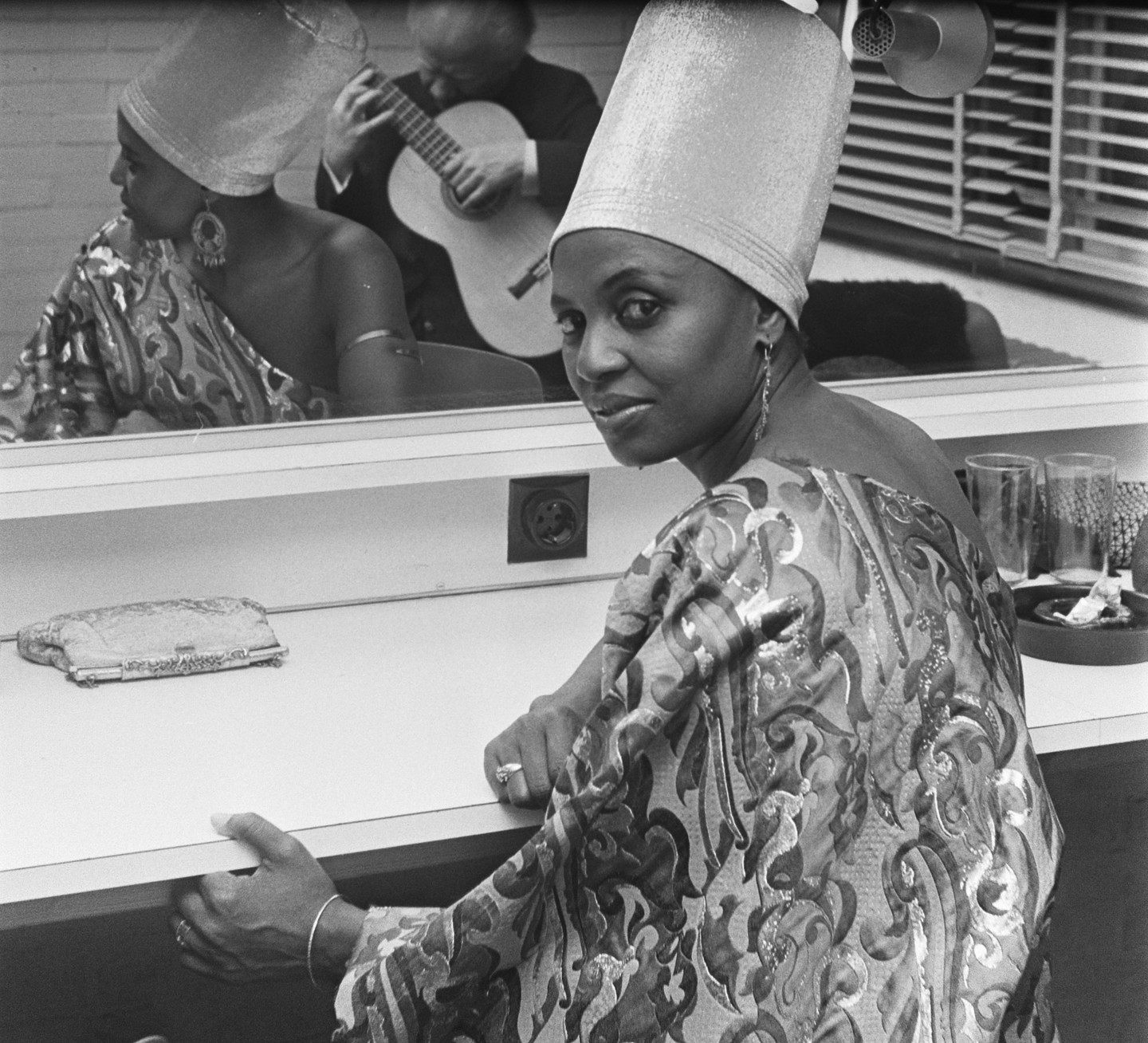
Miriam Makeba is remembered affectionately as Mama Africa. The title conveys the reach of her influence, but it can also flatten a particular artist into a symbol. Returning to the recordings restores the choices behind the reputation: language, phrasing, repertoire and collaboration. Her contribution is musical as well as political, and neither part should erase the other.
Music in the history of apartheid
Her career developed under apartheid and across the experience of exile. South Africa's official tribute to Makeba places her international work within the liberation struggle. That history matters to listening because a public stage could become a place where an audience encountered a country through a voice its government sought to constrain.
The United Nations archive documents her appearance before the Special Committee on Apartheid on 16 July 1963. This is a concrete historical act of public witness. It should not be confused with a performance date or treated as a new development. The record helps readers see that her political contribution involved speaking directly to institutions as well as reaching listeners.
A collaboration worth hearing
The Recording Academy lists a 1966 Grammy win with Harry Belafonte for An Evening With Belafonte/Makeba. The collaboration offers a useful entry point into her catalogue. Listen for the relationship between the singers, the arrangement and the repertoire, rather than treating the award as a substitute for hearing the work.
A recognisable song can open the door to a much wider body of music. Makeba's international popularity should encourage discovery of less familiar recordings, not leave listeners with a single endlessly repeated track. Compare performances of contrasting pace and scale: the way a voice carries a dance rhythm may differ from the way it holds a reflective passage.
Her place in African musical history also asks us to credit the people around a singer. Instrumentalists, arrangers, fellow performers and producers shape what reaches an audience. A powerful voice does not make those contributions incidental. Following the credits can turn admiration for a star into a more informed understanding of how a record was made.
A legacy for artists and listeners
For contemporary African artists and diaspora audiences, the legacy is not a demand to reproduce her style. It is a reminder that artistic reach can coexist with linguistic and historical specificity. An international audience does not automatically require a performer to become interchangeable with everyone else on the bill.
Begin with the Belafonte collaboration and continue through properly credited recordings from different periods. Read the UN testimony beside the music, while keeping the purposes of speech and song distinct. Makeba's lasting achievement is that listeners could encounter beauty, personality and an argument about human dignity through the same career, without any one of those exhausting its meaning.