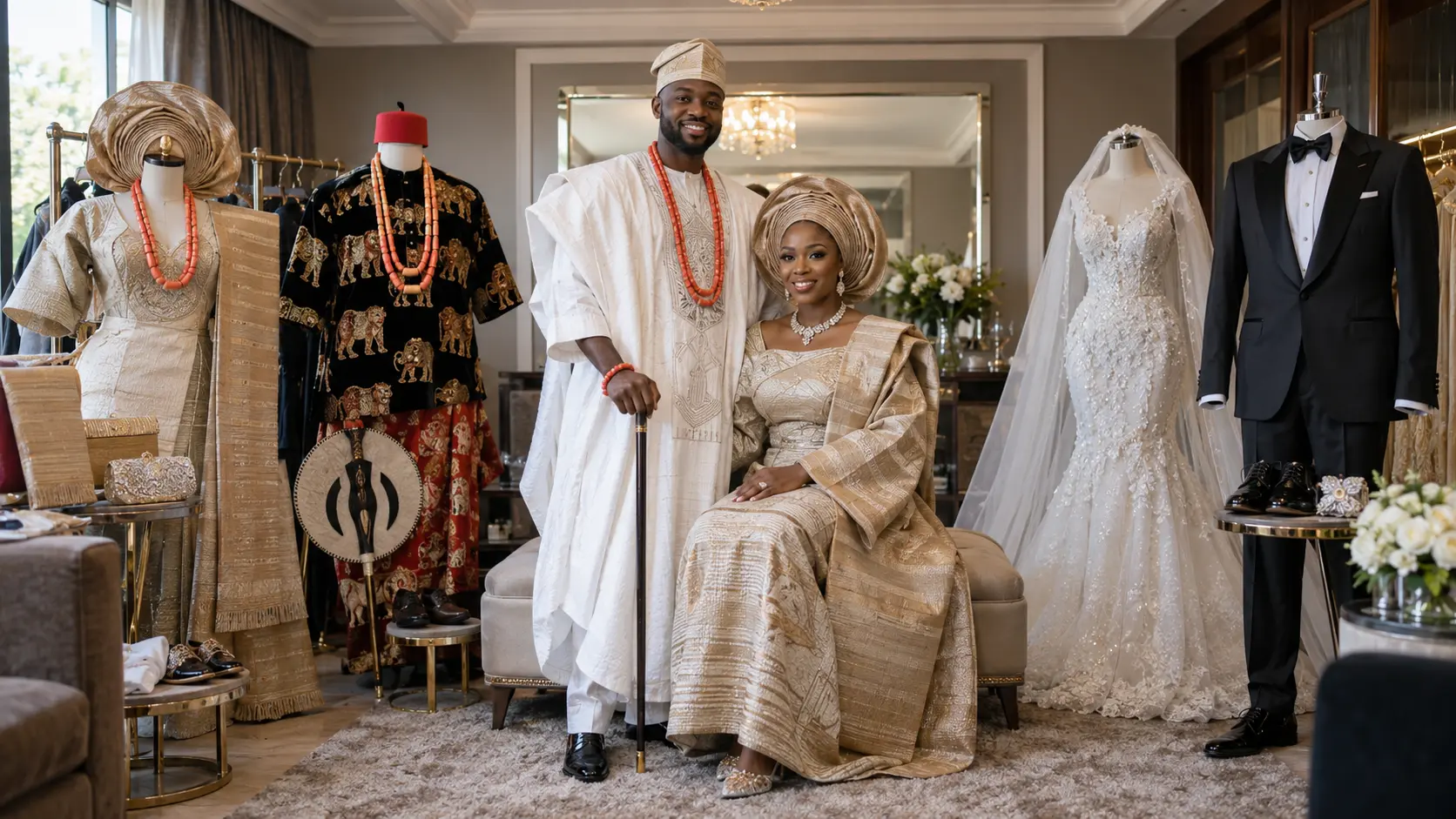
A Nigerian wedding is often remembered through the couple’s entrance, the music, the changing clothes and a hall alive with colour. Yet its real beginning is quieter. Families make introductions, discuss the form of the traditional marriage, agree a date, identify elders and decide how civil, religious and customary ceremonies will fit together. Each choice carries practical cost and cultural meaning.
There is no single Nigerian wedding script. A Yoruba engagement may centre on formal family introductions, proposal letters, prayers and the groom’s respectful prostration. An Igbo traditional marriage can include inquiry into family background, presentation of gifts and the bride’s public identification of her husband. Edo, Efik, Ibibio, Hausa, Fulani and many other communities have their own protocols, and inter-ethnic marriages require families to decide which elements can share a programme without reducing either heritage to entertainment.
The ceremony starts long before the venue
Once the families agree on form, a production system begins. Planners build a budget and timetable; venues translate a guest estimate into seating, power, parking and security; caterers test menus; musicians and masters of ceremony rehearse cues; photographers agree access; decorators plan load-in; and transport coordinators calculate Lagos or Abuja traffic. A successful day is less a miracle of glamour than the result of disciplined logistics.
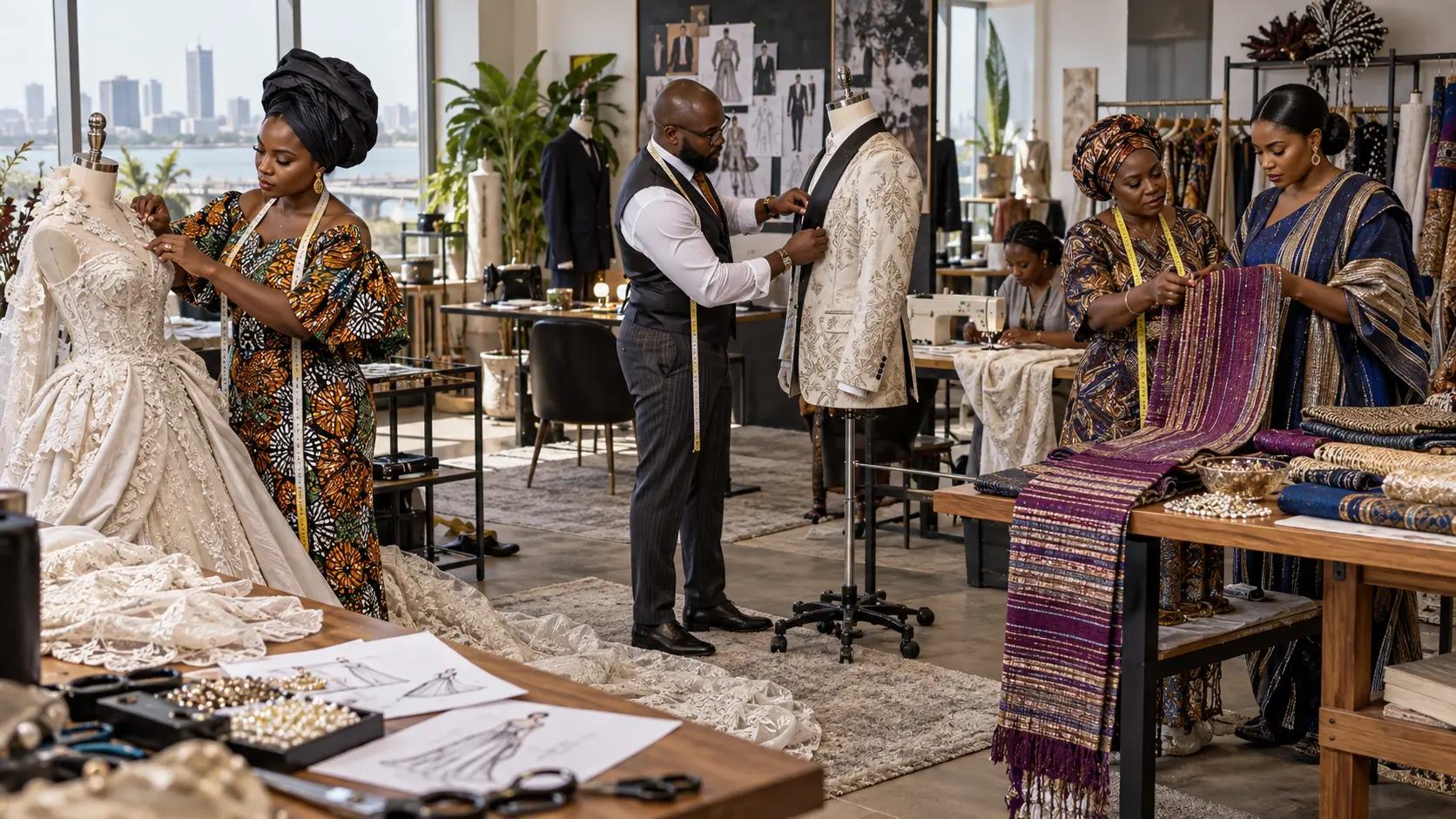
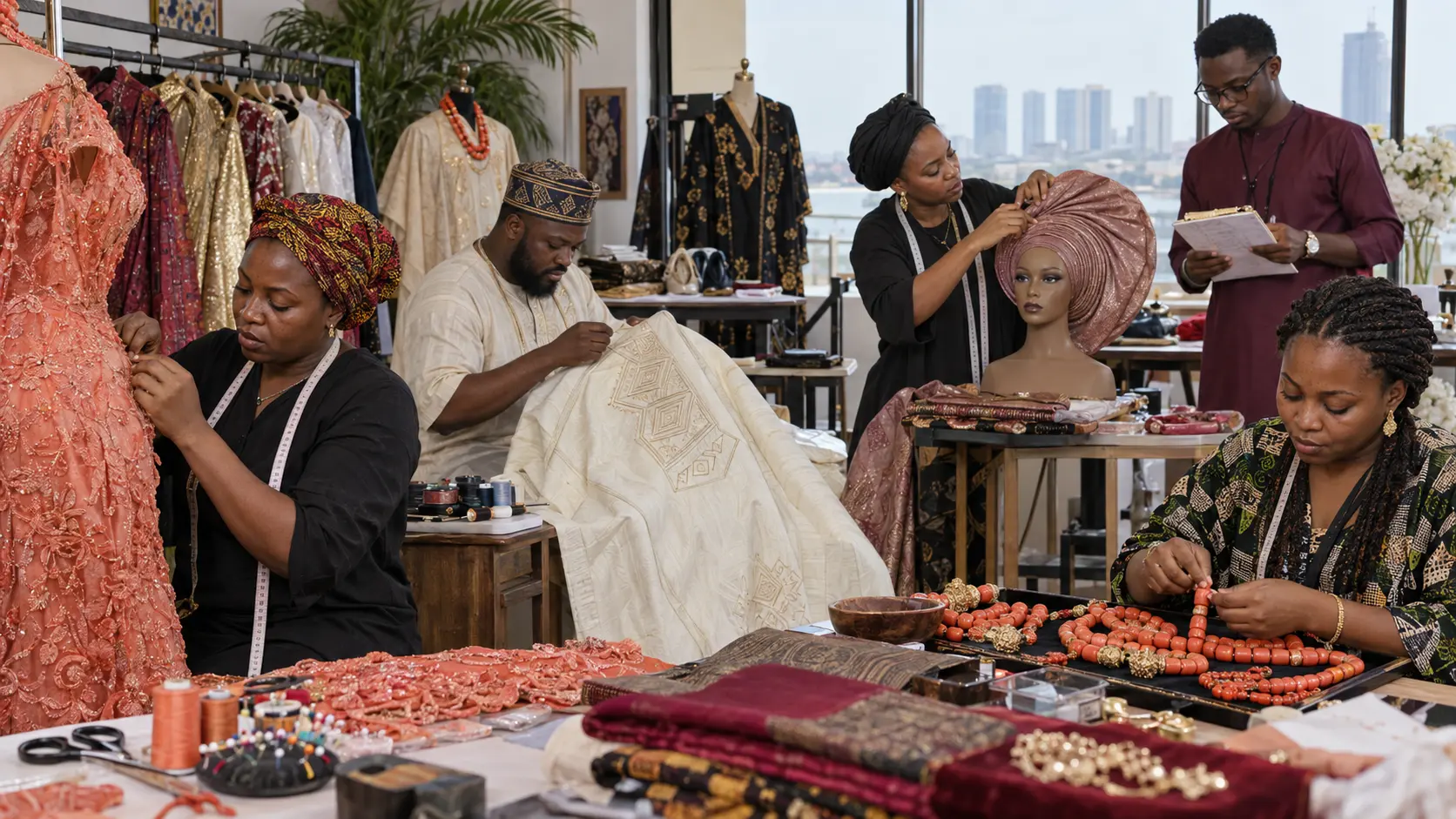
Clothing has its own calendar. A bespoke bridal gown may require consultation, sketching, fabric sourcing, pattern cutting, construction and several fittings. Traditional outfits add weavers, dyers, embroiderers, bead makers, jewellers, cap makers and gele artists. When aso ebi is involved, fabric must reach guests early enough for hundreds of independent tailors to produce different garments from one communal textile.
Food preparation extends the labour chain into farms and markets. Rice, peppers, tomatoes, yams, livestock, fish, spices and cooking fuel pass through wholesalers to caterers who must deliver safe meals at scale. Small chops, cakes, drinks, rentals, ice, refrigeration and waste collection are separate operations. What appears on one buffet table may represent weeks of purchasing, preservation and coordination.
Pageantry is built by skilled hands
Pageantry is therefore not the opposite of work; it is work made visible. The talking drummer who times a praise phrase, the aunt who teaches a bride how to greet elders, the technician who keeps microphones alive, and the dresser who changes an outfit in minutes all protect the ceremony’s rhythm. When any of those roles is treated as an afterthought, the most expensive décor cannot repair the result.
The wedding economy reaches well beyond luxury clients. BusinessDay has described the sector as a hidden part of Nigerian economic activity because spending moves through fashion, beauty, food, transport, media, hospitality and informal enterprise. Reliable national figures remain difficult to isolate, so dramatic estimates should be treated cautiously; the observable point is that one event distributes income across a wide network of skilled and casual workers.
That economic energy can become social pressure. Guest counts expand, social media rewards spectacle and families may borrow to meet an imagined standard. The Central Bank of Nigeria also warns that spraying, dancing on or mishandling naira notes violates currency rules. A culturally rich wedding does not require debt, unsafe overcrowding or cash used as floor decoration.
Celebration without financial theatre
The most memorable celebration is one in which the spectacle serves the marriage. Families are recognised, makers are paid fairly, guests are fed safely and the couple can still breathe inside the programme. Pomp acquires dignity when it reveals community effort rather than hiding it—and when the morning after the party begins with gratitude instead of unmanageable bills.