
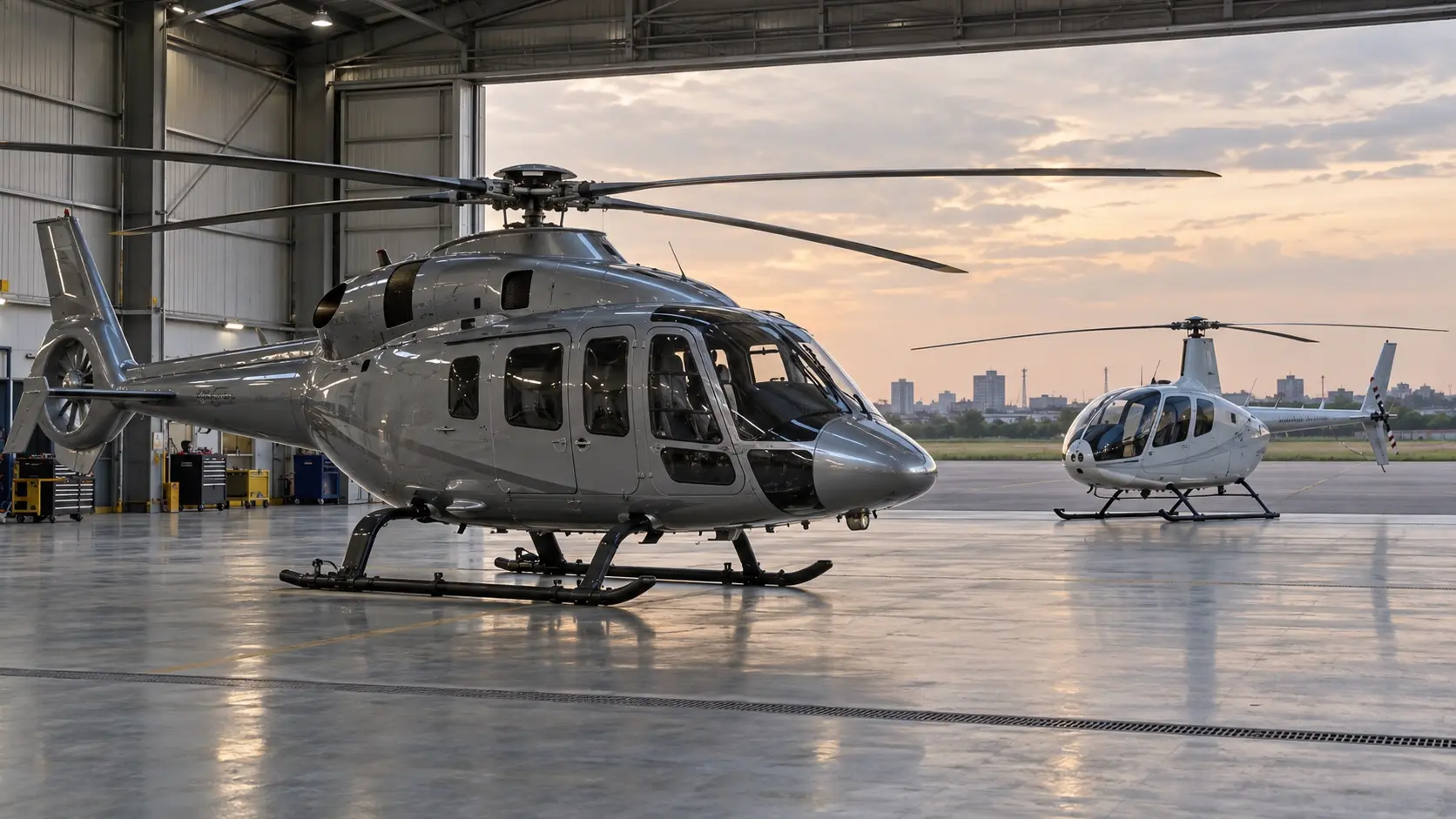
The Nigerian Air Force says it has received five new helicopters under an expanding fleet-modernisation programme, including three Leonardo AW109 Trekker B aircraft that arrived in Lagos on Tuesday, 15 September 2026. Two Airbus H125 helicopters had been delivered earlier, meaning the five-aircraft total announced this week does not describe five helicopters landing on the same day.
Air Commodore Ehimen Ejodame, the service's spokesperson, said the three AW109s form part of a batch of 10 acquired for the Air Force. The remaining seven are expected before the end of 2026, according to the statement carried by the News Agency of Nigeria. That timetable is an official expectation, not confirmation that the outstanding aircraft have shipped or entered service.
Five aircraft, but not one five-helicopter arrival
The newly arrived AW109s are undergoing post-delivery assembly before formal induction and operationalisation. The Air Force also said technical and crew-readiness processes are under way. Those steps matter because physical delivery, ceremonial induction and deployable operational capability are separate milestones.
The H125s were delivered before Tuesday's AW109 arrival, although the announcement did not give their precise arrival date. Grouping them in the same five-helicopter update reflects the broader modernisation effort; it should not be read as proof that all five followed an identical procurement, delivery or readiness schedule.
The Air Force says the AW109 Trekker B fleet is intended for intelligence, surveillance and reconnaissance, close air support, armed escort, combat search and rescue, and joint operations. These are the service's stated roles for the aircraft. The announcement did not provide operational mission records showing that the newly delivered helicopters have begun performing them.
What the Air Force says the helicopters are for
The H125 is a lighter single-engine helicopter that the Air Force says will add flexible support across multiple theatres. The AW109 Trekker is a twin-engine platform. A mixed fleet can offer commanders different options, but it also requires trained aircrew, maintainers, spare parts, ground equipment and a sustained logistics system for each type.
The acquisition has been developing for several years. In October 2024, the Air Force said a technical team had visited Leonardo facilities in Italy as part of plans for 10 additional AW109 Trekker helicopters. In May 2025, the Presidency announced the induction of two AW109 Trekkers at the Presidential Air Fleet Apron in Abuja and linked them to wider efforts to strengthen the armed forces.
The September 2026 delivery therefore adds aircraft to an existing programme rather than creating a wholly new capability overnight. It could improve mobility, surveillance, casualty evacuation and support for troops in difficult terrain, but its real effect will depend on serviceability, crew proficiency, maintenance capacity and how consistently the aircraft can be made available.
Delivery is the start of the readiness test
Nigeria faces multiple security pressures, from insurgency and armed groups to kidnapping and attacks on rural communities. New airframes can support security operations, yet they do not by themselves resolve the intelligence, policing, justice, civilian-protection and governance challenges that shape those crises. Claims about reduced insecurity should be tested against verified outcomes, not procurement totals alone.
The next concrete milestones are a published induction date, confirmation that technical checks and crew preparation are complete, evidence of operational status, and delivery of the remaining seven AW109s. Clear reporting on sustainment, safety and availability will show whether the five-helicopter announcement becomes durable capability rather than simply a fleet inventory increase.