Updated 7 September 2026: The Democratic Republic of Congo’s central government has put the provisional death toll from the Kinshasa wedding-hall fire at 12, without resolving the earlier figure of 22 announced by Lingwala mayor Norbert Mushiga Nzindula. The conflicting counts remain part of the public record while authorities continue identifying victims and consolidating hospital information.
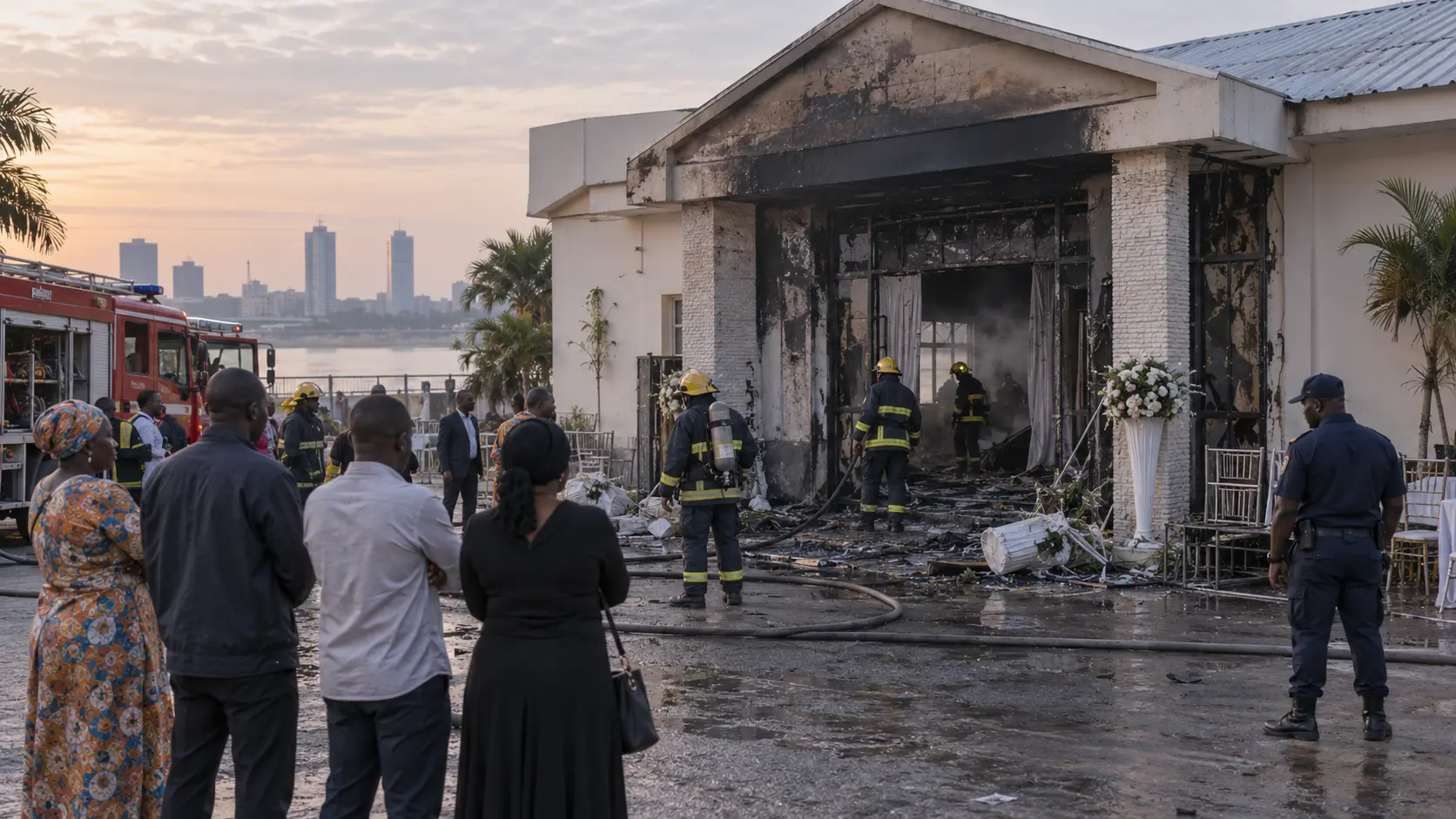
The fire began on Friday night, 4 September, and continued into the early hours of Saturday at the Panacée event hall near the national museum in Lingwala. Radio Okapi reported on Monday that the government’s count included 12 deaths, five people still hospitalised and 21 injured people described as stable. The mayor’s figure of 22 and a vice-governor’s initial reference to about 10 deaths show why no single number should yet be presented as final.
Survivors and officials described a sudden rush toward a restricted exit as smoke and fire spread. The mayor said the venue’s layout and narrow passage made evacuation difficult. Those observations are relevant to the safety inquiry, but they do not establish the fire’s origin or assign criminal responsibility.
Deputy Prime Minister and Interior Minister Jacquemain Shabani has now ordered systematic inspections of event halls and other public-gathering venues across the country. Radio Okapi reported that civil-protection and security services were instructed to close establishments that fail safety requirements, with an implementation report for Kinshasa expected within 15 days.
The order is a significant escalation from an investigation of one venue to a nationwide prevention exercise. For it to protect people, inspectors will need clear standards for occupancy, emergency exits, alarms, electrical installations, fire extinguishers and access for emergency crews—and a transparent record of which venues are closed, corrected and cleared to reopen.
The immediate priority remains a reconciled casualty list, treatment for injured guests and clear information for families. Investigators also need to preserve the scene, review permits and occupancy records, examine electrical systems and decorations, and establish whether safety equipment was present and usable. Witness accounts can guide that work, but the cause must come from evidence rather than speculation.
The tragedy raises a wider urban-safety question for a fast-growing city where event halls, churches, markets and homes often operate in dense buildings with limited emergency access. A 15-day reporting deadline may create urgency, but lasting safety depends on routine enforcement after public attention moves elsewhere.
For readers, the verified position is therefore precise but unsettled: the central government reports 12 deaths; the Lingwala mayor reported 22; injuries and hospital treatment are confirmed; the cause remains under investigation; and national venue checks have been ordered. Any headline that presents one provisional count as an undisputed final toll would overstate what authorities currently know.
The people who died were attending a celebration, not a spectacle. Responsible coverage should avoid circulating graphic images, respect the privacy of families and keep the focus on verified facts, support for survivors and the safety reforms required to prevent another crowded room from becoming a trap.