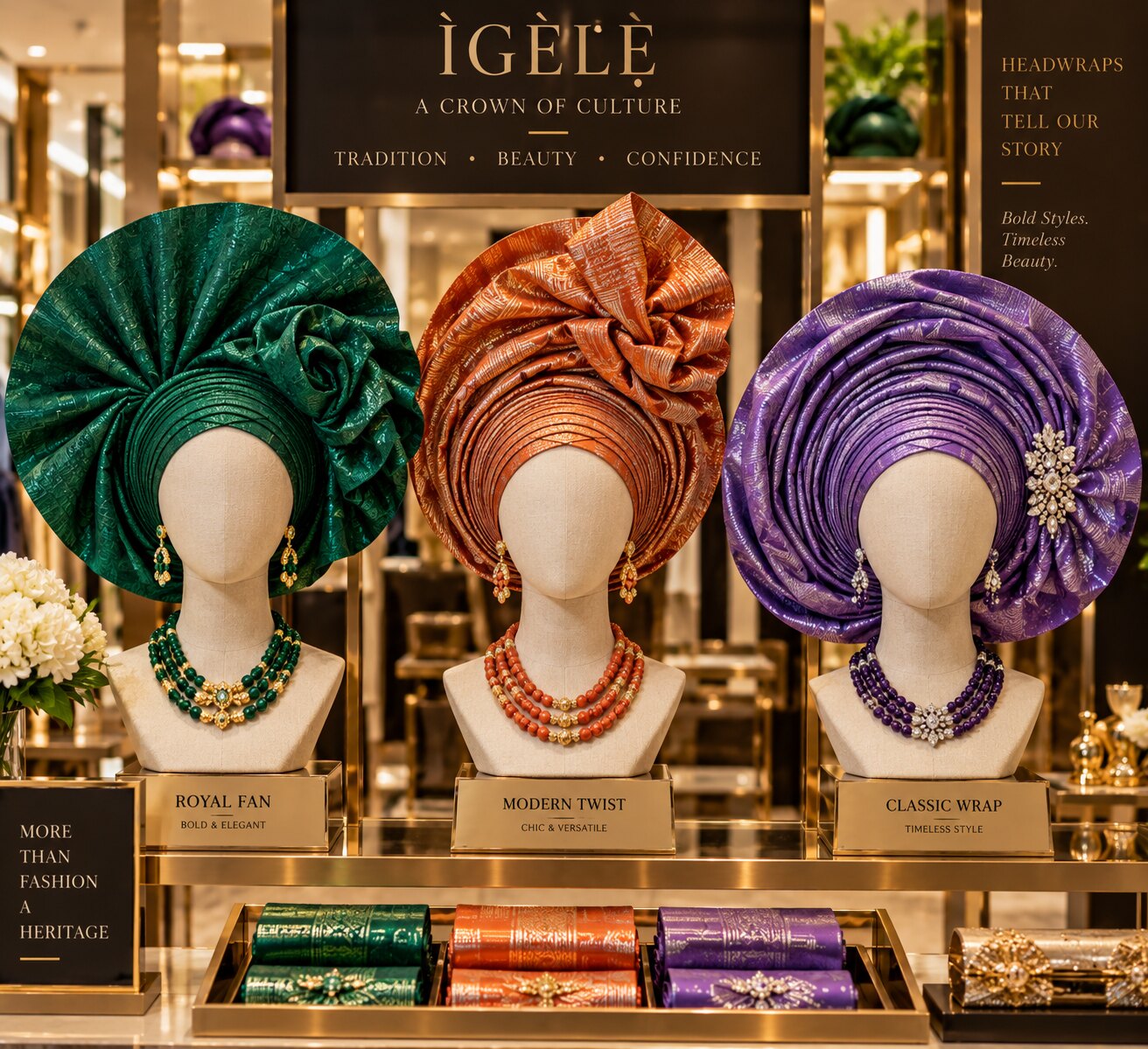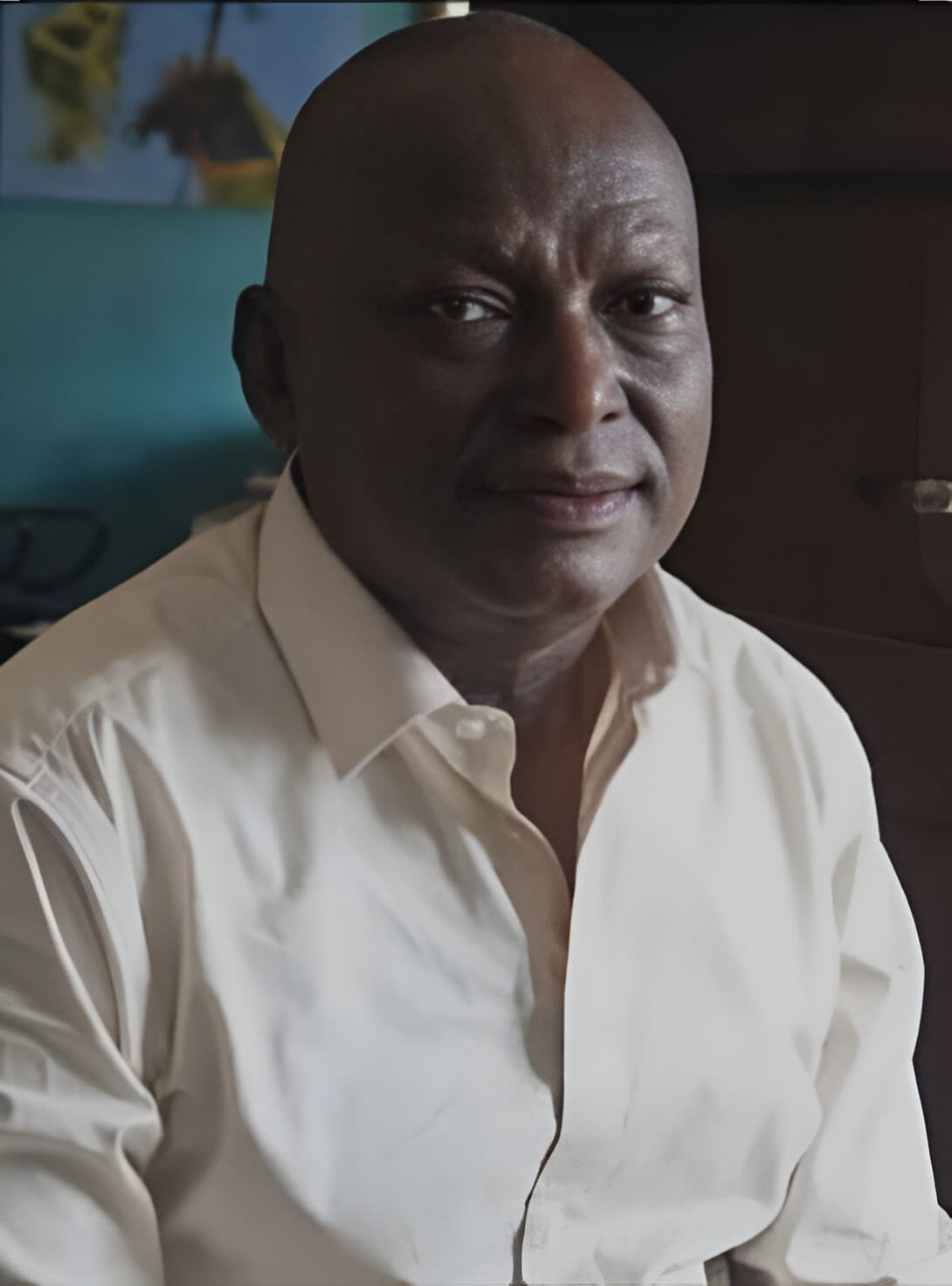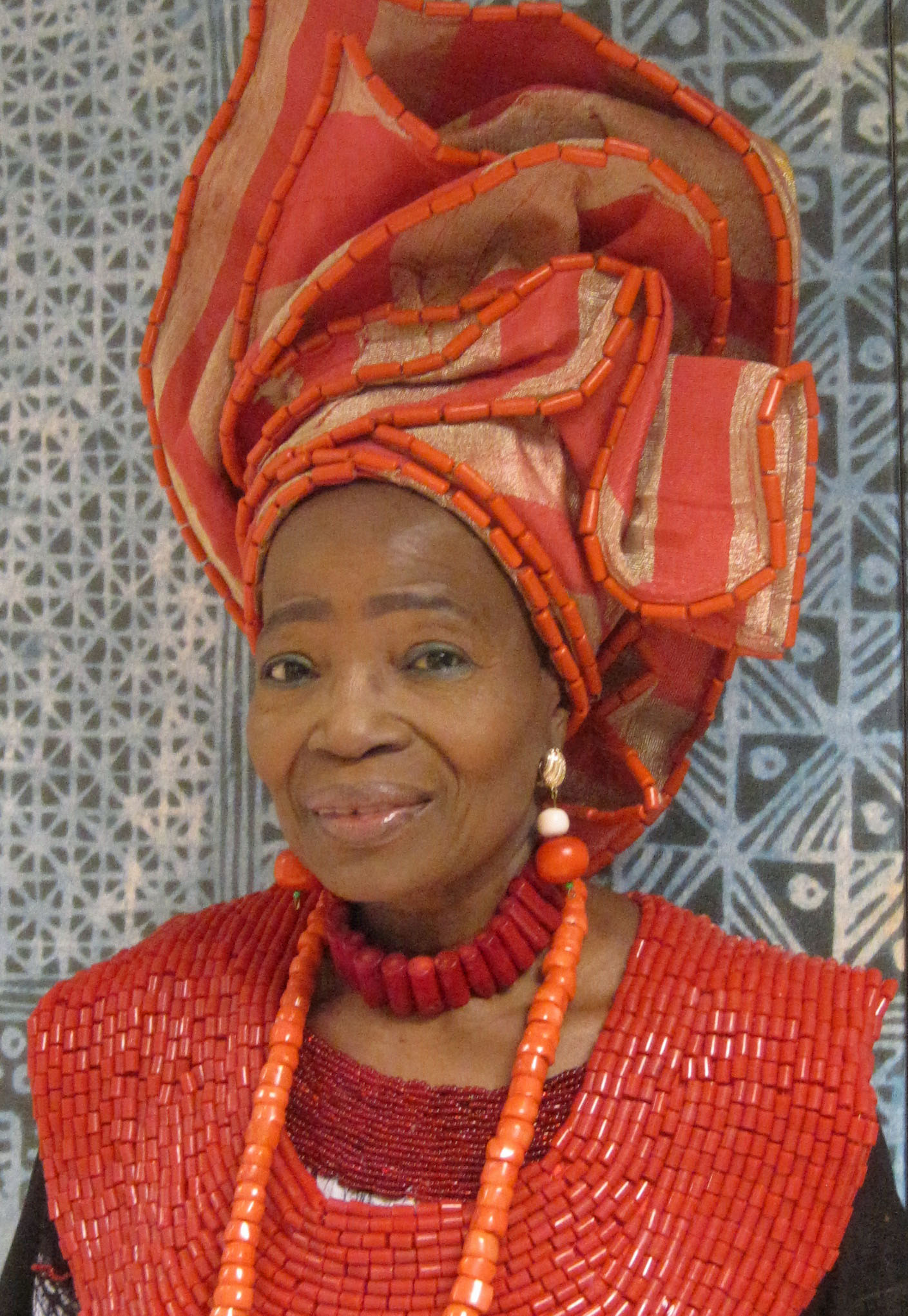
A gele can command attention before the person wearing it has spoken. Its scale, folds and silhouette make it an unusually rich subject for an exhibition about visibility. Nigerian artists Arinze Stanley and Dotun Popoola are bringing that familiar form into a joint show at Alexis Galleries on Akin Olugbade Street, Victoria Island, Lagos. Stanley’s own website and the gallery’s Artsy listing advertise October 24–November 7, 2026. This is an advance reading of the announced exhibition, not a first-hand review of a completed opening.
The show was already being discussed before this week’s coverage: BusinessDay’s October 11 report describes an October 9 media presentation, while New Telegraph returned to the exhibition on October 21. The distinction keeps the chronology honest. A later newspaper article does not make the programme a newly announced event. The current primary listings agree on November 7 as the end date; an October 16 Sun report gives November 11. Visitors should use the artist’s and gallery’s current schedule and reconfirm arrangements before travelling.
From something worn to something encountered
The gallery frames Gèlè around women’s identity and self-presentation, pairing Stanley’s portraits with Popoola’s sculptural approach. BusinessDay identifies Uche Obasi and Chidera Ogbu as co-curators and reports the artists’ intention to look beyond adornment. That is a useful curatorial proposition, but it remains a proposition to test in front of the work. Familiarity with a headwrap does not mean that every depicted woman has the same experience, ambition or relationship with the object she wears.
The change of medium offers one way into that test. A headwrap tied on a person is shaped by fabric, movement and the circumstances of wearing it. A drawn fold is made through marks and tonal decisions; a sculpted fold becomes a physical arrangement of surfaces and space. Our analysis is that this translation can make ordinary visual knowledge newly noticeable. It can also simplify it. The interesting question is what each artist chooses to preserve, exaggerate or leave out.
Technical mastery is the beginning of the argument
Stanley’s official biography describes a practice centred on charcoal and graphite, with expanding work in colour. BusinessDay reports that this exhibition gives him room to explore beyond his primary medium. For a viewer, technical resemblance is only the first point of entry. Close attention can move from the apparent texture of cloth to the face, posture and relationship between the two. A portrait’s detail matters most when it contributes to the subject’s presence rather than becoming a demonstration detached from her.
Popoola’s metal sculpture creates a different set of expectations. The announced work turns the headwrap into a form that can be considered through volume and silhouette, rather than solely through the surface of an image. Weight, balance and the treatment of space become part of the artistic argument. These are suggested ways to approach the advertised work, not claims about the final installation’s lighting, dimensions or arrangement, which we have not independently inspected.
The language of queens and crowns, prominent in the exhibition’s advance statements, has an immediate appeal. It can confer dignity on a subject too often treated as decoration. Yet praise can become another narrow role if every woman must appear regal to deserve attention. A searching exhibition can leave space for individuality, reserve, uncertainty and ordinary confidence as well as grandeur. Whether these works achieve that range is a question for looking, rather than a verdict that follows automatically from the theme.
Look for the wearer as well as the crown
A second useful distinction concerns authorship. The artists’ transformation of the gele does not erase the skilled work of the people who weave, choose, arrange and tie the cloth in lived settings. Those practices and the decisions of wearers form the cultural world from which the exhibition draws. Recognising them need not reduce a contemporary artwork to a heritage illustration. It can instead help viewers notice how an artist builds a new interpretation from something sustained by many people’s knowledge.
Visitors can approach the pairing without needing to agree with every phrase in the gallery’s statement. Look at where the eye rests, whether the wearer competes with or controls the elaborate form, and how that relationship changes between an image and a sculpture. Read the individual work labels before assuming that two similar-looking pieces share a material or process. Ask about photography, access and visiting arrangements directly; no admission price, private viewing appointment or availability to purchase is verified in this preview.
The opportunity in Gèlè is the encounter between a recognisable cultural form and two distinct artistic practices. Its critical value will depend on what that encounter lets viewers see, rather than on a claim that a familiar subject has finally become worthy of art. The headwrap already carries meaning in daily and ceremonial life. A thoughtful exhibition can make some of that meaning newly legible while allowing the person beneath it to remain more than a symbol.