Fulani communities extend across the Sahel and West Africa, from Senegal and Guinea through Mali, Niger and Nigeria to Cameroon and beyond. They are internally diverse: some families remain mobile or seasonally transhumant, others are settled farmers, traders, scholars and urban professionals, and many combine herding with other work. In Nigeria, pastoral Fulani households are found across the northern states and along migration corridors farther south. Any account that treats millions of people as one wandering group misses this range.
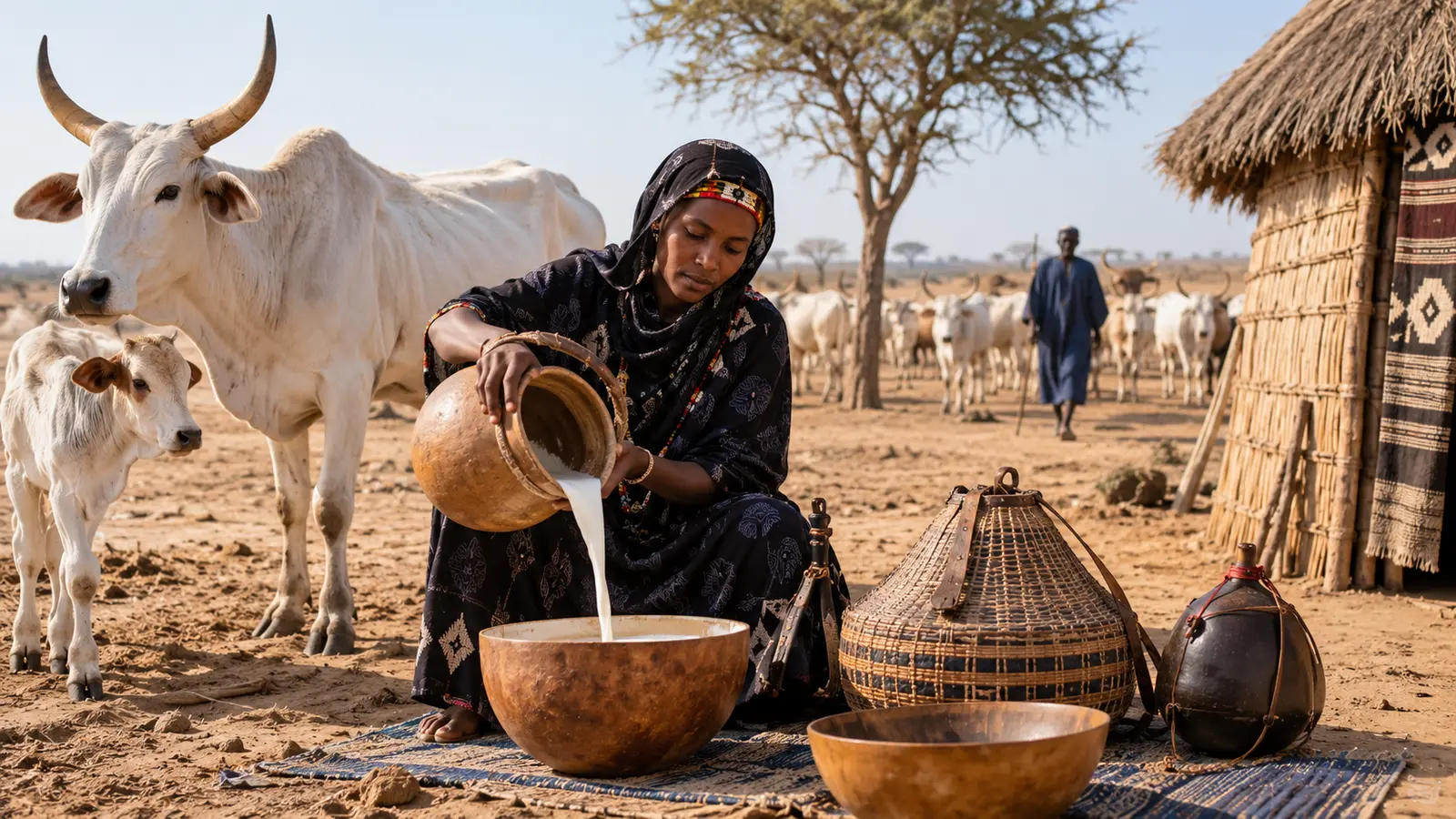
Milk begins with a relationship between herd, pasture, water and season. Cattle are commonly milked by hand, often in the morning, with the calf and the animal’s condition determining how much can safely be taken. Fresh milk may be consumed, soured or processed. In Nigeria, nono—fermented milk—is often eaten with fura, balls made chiefly from millet and spices that are crumbled or blended into the milk. Butter and other products may be made where volume, equipment and local practice allow.
Women are central to this dairy economy. In many pastoral households they process milk, decide how much is kept for children, and sell the surplus in nearby settlements or through intermediaries. The income can pay for grain, seasoning, medicine, school costs and household necessities. A calabash of nono is therefore both food and working capital. Its value depends on animal health, the length of the journey to market, hygiene, customer trust and whether the seller has access to cooling.
Movement shapes the cuisine because cattle feed changes with rainfall and grazing. During a productive season, more milk may be available; during drought, conflict or a difficult migration, yields fall and household nutrition suffers. Fura supplies grain energy alongside dairy protein and makes a portable, filling meal, but recipes and proportions differ. Other Fulani foods reflect what a particular community grows, exchanges or can carry—there is no single menu across the entire Fulani world.
The modern economic problem is not that pastoral knowledge has become obsolete. It is that the milk often enters the market without cold chains, veterinary coverage, clean water, testing or bargaining power. Spoilage shortens the selling radius; insecurity restricts movement; shrinking grazing routes intensify disputes; imported powdered milk competes with local fresh supply. Collection centres, hygienic containers, solar chilling, veterinary services and women-led cooperatives can turn more of the existing production into safe, paid value without forcing every household into an industrial model.
Memory survives through taste, but survival should not be romanticised. A bowl of fura da nono can carry childhood, hospitality and the map of a family’s movement; it can also reveal exhausting labour and fragile margins. The future of Fulani dairy culture lies in protecting mobility where it remains viable, negotiating land and water fairly, reducing violence, and investing in processing systems owned or meaningfully shared by producers. Heritage becomes durable when the people who carry it can also build a secure living from it.