
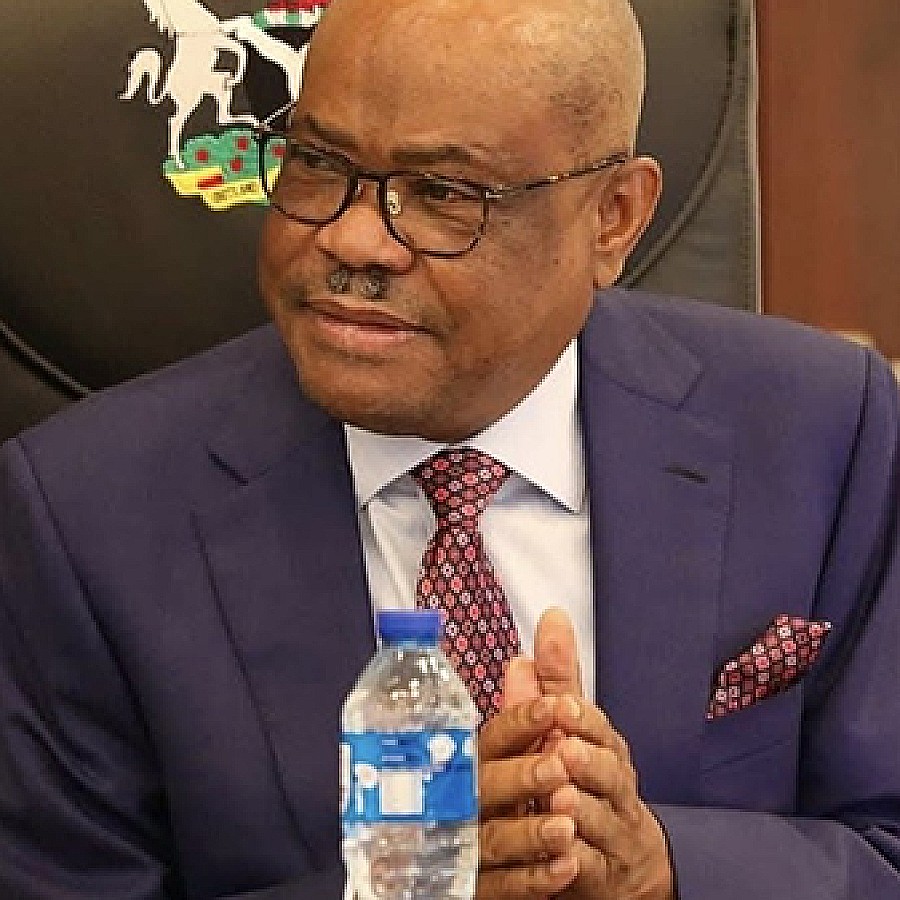
Abuja’s development story is often told through roads and construction sites. For a young graduate seeking work, a mother running a small business or a family paying school and medical bills, the more immediate question is how public investment changes daily life. Under Federal Capital Territory Minister Ezenwo Nyesom Wike, the useful way to examine that question is to connect the infrastructure programme with the institutions responsible for education, healthcare and enterprise support.
This is a review of documented projects and programmes as of 14 September 2026. It draws on FCTA reporting and published programme guidance. Government announcements establish what officials have commissioned, scheduled or offered; they do not, by themselves, establish every household’s experience. Delivery also involves Minister of State Dr Mariya Mahmoud, the territory’s agencies, contractors, health and education workers, and its six area councils.
Infrastructure that connects people to services
One completed example is the rehabilitation and expansion of the Karu township roads, inaugurated on 29 June 2026 by Vice-President Kashim Shettima on President Bola Tinubu’s behalf. The FCTA account identifies the corridor from Karu Interchange to Customs Clinic Junction and associated roads, including Hospital Road. That is a concrete investment in a residential satellite town, with potential benefits for journeys to work, trading and access to care. Claims about shorter travel times still need to be tested against residents’ actual journeys.
Other roads remain works in progress. During an inspection reported on 22 August 2026, Wike reiterated a December delivery timetable for the Apo-Karshi and Bwari-Kubwa corridors. The latter includes the Chikakore connection. For commuters and enterprises considering those routes, the deadline is a commitment to monitor. This review does not treat either project as completed or use the construction announcement as evidence of an open recruitment exercise.
Basic services extend beyond transport. The Karu Satellite Town Water Supply Network was commissioned on 22 June 2026, with the official account naming Karu, Orozo, Jikwoyi and Kurudu among the communities covered by the expansion. Water infrastructure can support food businesses, sanitation and household welfare. Its lasting value depends on dependable supply, functioning connections and maintenance. Commissioning a network is an important milestone; service hours, water quality and the cost of connections are the next practical questions for residents.
Education support must reach the student
Education offers a direct connection between public spending and opportunity. At an FCT Scholarship Board meeting on 16 July 2026, director Hannah Peter David outlined preparations for the 2025/2026 scholarship cycle and support for financially disadvantaged students. She described a policy allocation of 80 per cent for indigent indigenes and 20 per cent for indigent residents. Those categories matter: being a student in Abuja does not automatically confer an award, and the board’s rules must be checked for the relevant level of study.
The same meeting included an appeal for higher scholarship award rates. That appeal should not be confused with an approved increase. Officials also discussed payment difficulties and application procedures. Families seeking help should obtain the board’s current notice, confirm which cycle is accepting applications and follow the requirements for their category. The July meeting report does not establish that applications remain open on the date of this article.
For Wike’s administration, the wider education challenge is to connect financial assistance with effective learning. A useful public account would show which schools receive improvements, whether pupils have teachers and learning materials, and how support reaches rural communities. For students approaching graduation, practical experience, digital competence and the ability to demonstrate a skill should complement the qualification. These are priorities for assessing policy, rather than a claim that a particular placement programme has already delivered those outcomes.
Healthcare needs roads, equipment and people
Healthcare investment provides another measurable starting point. Wike commissioned 12 ambulances for FCT hospitals at the administration’s secretariat on 29 January 2026. The official report links emergency transport to the road programme. The connection is straightforward: a vehicle and its medical team must be able to reach a patient and a receiving facility. A meaningful assessment should also examine staffing, dispatch arrangements, fuel, maintenance and the hospital’s capacity to receive the patient.
A separate maternal and child health initiative was launched on 25 June 2026 with UNICEF and the United States Department of State. The FCTA account describes work on nutrition governance, frontline worker capacity, data and community engagement, with attention to pregnancy and the first two years of a child’s life. Health Services and Environment Secretary Dr Adedolapo Fasawe presented the programme as an effort to strengthen services. Its launch confirms the initiative, while subsequent coverage and health outcomes require implementation evidence.
These investments also show why education, healthcare and economic participation belong in the same discussion. Time spent travelling for care, caring for a sick relative or searching for an available service affects a household’s ability to earn. Graduates trained in health, administration or technology may have relevant skills, but clinical work requires the appropriate professional qualifications and appointments. A hospital project or health programme should never be advertised as a job opening unless the responsible employer has issued one.
Women’s enterprise: skills, customers and staying power
For women seeking a livelihood, the Abuja Enterprise Agency provides a concrete institutional example. Project Arise, organised with the Sey-Cecilia Foundation, scheduled five days of training at the agency’s Jahi headquarters from 9 to 13 February 2026. It targeted at least 200 widows and vulnerable women, with activities including soap making, confectionery and leatherwork, alongside business guidance. That was a dated training programme with a target group; the announcement does not establish 200 successful businesses or a new intake today.
The next step after training is often the harder one: finding customers, pricing honestly, recording costs and financing repeat production. At the Abuja Business and Investment Summit/Expo’s women’s event, reported on 7 August 2026, Minister of State Mahmoud emphasised access to finance, markets, technology and mentorship. Those are useful tests for empowerment policy. Results should include continuing sales and viable enterprises, rather than attendance figures alone, while programme design should account for transport, care responsibilities and accessibility.
The agency’s published portal guide describes business information applicants may need and different support categories, including operations and technology support. It is an official route for checking programme requirements. However, an undated instruction page does not establish that a funded application round is currently open. A prospective applicant should confirm the named scheme, eligibility, deadline and approved submission channel directly with the agency before treating it as an available grant.
Where graduates can begin
Graduates currently serving in the National Youth Service Corps have a separate, identifiable route through its Skills Acquisition and Entrepreneurship Development department. NYSC’s official description covers training, mentoring, attachments to training organisations and help accessing available funding opportunities. Corps members can ask their SAED officials about the current training options and conditions. This is an NYSC programme, not an FCTA employment guarantee, and its corps-member pathway should not be advertised as an unrestricted offer to every graduate.
For graduates outside service, a practical starting point is to prepare a short skills portfolio and a realistic business or employment plan before approaching the relevant support institution. Engineering and built-environment graduates can investigate supervised technical work with legitimate firms; accounting and technology graduates can test demand for bookkeeping, stock records or digital services among small businesses. These are possible markets to assess, not vacancies verified by this publication. Start with a defined customer problem, clear costs and evidence of competence.
The strongest connection between Wike’s capital programme and graduate opportunity would be transparent pathways into work: published training notices, fair selection, clearly identified employers and reported outcomes after training. Contractors and agencies can make their requirements easier to find, while residents can ask for project status and service information through the appropriate public offices. A visible road, a reliable water connection, a functioning clinic and a student able to continue learning are related parts of the same public-service agenda. Their combined value will be measured in the opportunities people can actually use.