The bunch of bananas is only one possible product of the plant. In Uganda’s Mukono District, TEXFAD works with the pseudostems left after harvesting, extracting fibres for textiles and handicrafts. Its catalogue makes the idea tangible: lampshades, rugs, coasters and yarn, rather than an abstract promise that agricultural waste can become valuable.
TEXFAD describes itself as a handwoven-textile enterprise and training organisation. Its published location is Misindye, Sonde, in Mukono. The work therefore belongs to a particular production setting, linking a crop-associated material with extraction, spinning and weaving skills.
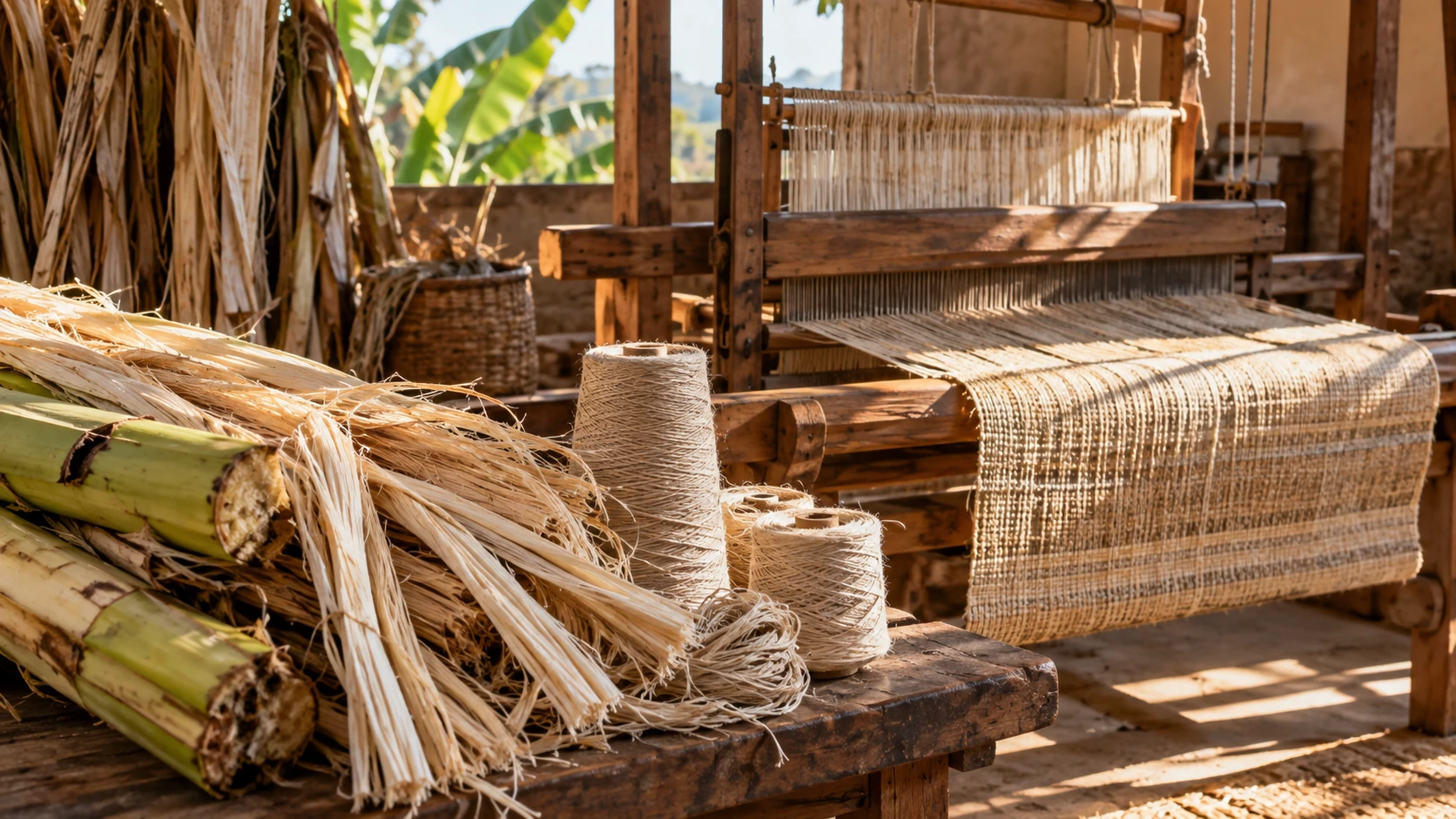
The company’s illustrated banana-fibre project shows stems prepared for extraction, fibres laid out to dry, handspun yarn and finished objects. These stages matter. A harvested stem does not become cloth simply by being labelled sustainable; the useful fibre must be separated and prepared for a textile process.
Its range also includes fabric identified as a blend of 75 percent banana fibre and 25 percent cotton. That detail helps explain why material descriptions deserve care. A banana-derived product can contain other fibres, and the characteristics of a finished textile depend on the combination and construction, not merely the crop named on the label.
The economic opportunity begins before the loom. Collecting bulky stems, moving them to an extraction point and drying the fibre all require labour and organisation. A credible business calculation should establish whether payments cover that work. Agricultural leftovers may have a low initial price without being cheap to turn into a consistent industrial input.
Farmers also need choices about what leaves the field. A buyer should not assume that every residual material has no existing use or value. Agreements can identify what is available, when it can be collected and how the return is shared. The strongest supply relationship would improve farm income without making unexamined promises about environmental benefits.
For craftspeople, design and finishing influence the selling price. A well-made lampshade or rug competes on usefulness and appearance, not only on its origin story. Training that connects material handling with costing, consistent dimensions and customer feedback could help a workshop turn occasional interest into repeat orders.
TEXFAD’s attraction is the visible connection between agriculture and manufacturing. It encourages a reader to look again at what remains after a harvest and ask which skills could give it another use. The inspiring part is the sequence of work: extracting, drying, spinning, weaving and finding an object someone actually wants to own.