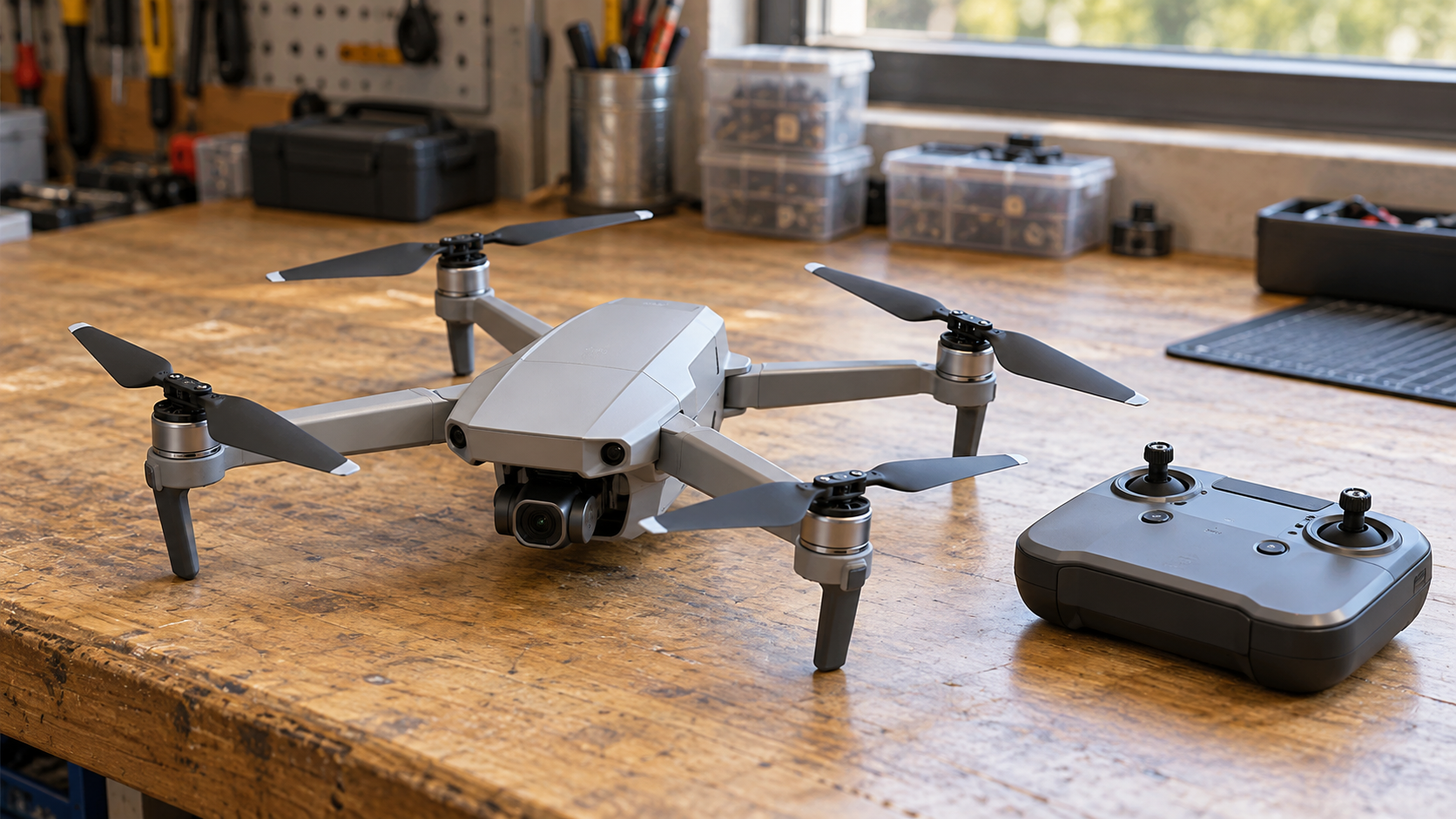
Kaduna’s latest technology announcement is a skills story as much as an equipment story. Reporting published on October 19, 2026, describes the commissioning of the NASCAV unmanned aerial vehicle training facility at the Air Force Institute of Technology. Its significance lies in the capacity people are expected to acquire—not in assuming that the unveiling itself proves better security, higher farm output or new employment.
Radio Nigeria Kaduna reports that NASENI chief Khalil Suleiman Halilu said two cohorts of drone pilots had already been trained through the agency’s partnership with Caverton Helicopters. That reported history places the ceremony within an existing training relationship rather than making it the first-ever contact between the partners. The account does not provide an independently audited employment outcome for those cohorts.
Commissioning is different from breaking ground
A second project was at a different stage. The broader NASENI Skills Development Centre in Rigachikun, Igabi Local Government Area, had a groundbreaking, not a completion ceremony. PUNCH’s October 19 report by Godwin Isenyo describes the governor calling for sound construction, timely delivery and preparation for operation. The two facilities should not be collapsed into one newly finished campus.
Channels Television also distinguishes the skills-centre groundbreaking, the UAV facility’s commissioning and the launch of a separate empowerment programme. Keeping those stages apart is more than a wording preference. Readers deciding what has actually changed need to know whether an institution is operating, still being built or announcing a programme whose delivery requires its own evidence.
The possible applications are broad. Radio Nigeria reports Halilu identifying agriculture, infrastructure monitoring, healthcare, environmental surveillance and security. Channels likewise reports potential uses beyond defence, and says the defence minister was represented by the AFIT commandant. Those are officials’ stated opportunities and institutional roles, not proof of a particular drone mission, health delivery or security result.
Participation must lead to usable capability
Governor Uba Sani’s statement that women make up at least 60 per cent of participants is reported by both broadcasters. The figure should remain attributed, not presented as this newsroom’s audit. A useful follow-up would ask about completion, the skills assessed and what participants can subsequently do. Representation is important information; it does not by itself establish the quality of every training experience.
The governor also referred to 4,050 August graduates of Kaduna’s existing vocational-training institute. PUNCH places those graduates across its Rigachikun, Soba and Samaru Kataf campuses and multiple trades. They are not 4,050 new UAV graduates from this October commissioning. Preserving that distinction keeps the scale of the drone initiative separate from a wider state education programme.
For prospective learners, the reports reviewed here do not establish a current application window, course fee, admission requirements or guaranteed job. This is therefore an account of reported institutional activity, not an enrolment or recruitment notice. The next test is documented training quality and usable capability: what learners can operate and maintain, how their competence is assessed and whether it leads to sustained opportunities.