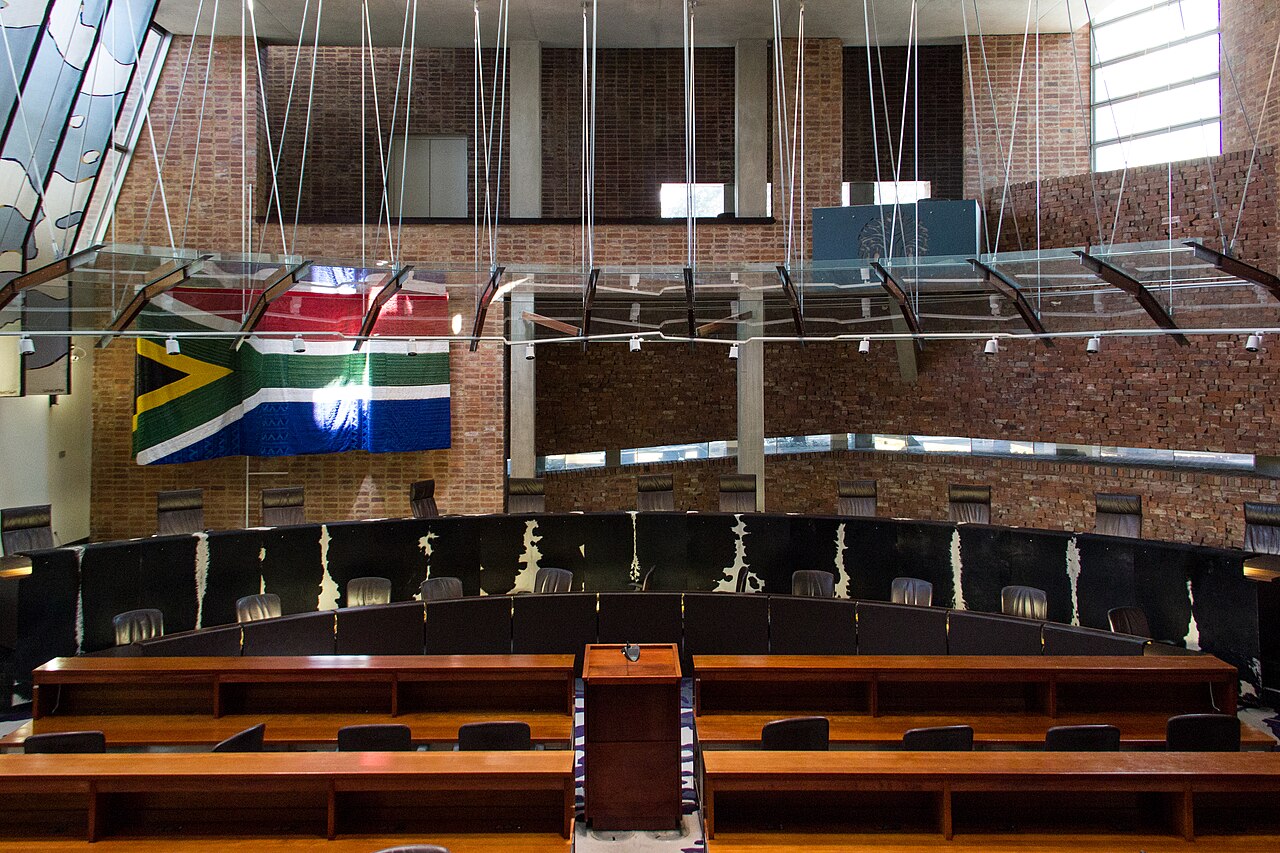
South African pupils brought the question of school social-media restrictions to the Constitutional Court in Braamfontein, Johannesburg, on Sunday, October 4, for the final of the 15th Annual National Schools Moot Court Programme. The setting was real, but the legal problem was a student simulation. The competition does not itself create a court order, decide an actual dispute or change what families are legally allowed to do online.
Basic Education Minister Siviwe Gwarube said the theme raised important policy questions, according to SABC's October 4 coverage. Its report named finalists from Ndabankulu Senior Secondary and Umtata High in the Eastern Cape, Tygerberg High in the Western Cape and Klaas Mothapo Secondary in Limpopo. Their task was to develop legal arguments, rather than vote on a government policy or implement a restriction.
A school-hours problem, not a nationwide ban
The South African Human Rights Commission's September 29 advisory described a problem involving a school's cellphone and internet policy, including age-based restrictions on social-media use on school premises during school hours. Preliminary oral rounds took place at the University of Pretoria on October 1 and 2. The programme, organised with the education and justice departments, involved about 300 schools through provincial rounds over seven months.
Justice Minister Mamoloko Kubayi also supported the debate, SABC reported later on October 4, linking the topic to digital rights, online safety and children's interests. The broadcaster explicitly said South Africa had not implemented a national social-media ban for under-16s. A minister recognising a difficult question is different from the government announcing an enforceable rule; readers should not interpret the competition's venue or political attention as proof that such a ban now exists.
Safety and rights belong in the same conversation
The constitutional framework helps explain why the argument matters. Section 14 protects privacy, section 16 protects expression, and section 28 gives particular weight to a child's best interests. Section 36 requires restrictions on rights to meet a standard of reasonableness and justification, considering factors including their purpose and less restrictive alternatives. Those provisions establish questions to examine; this article does not determine whether a particular school's policy is lawful.
Our analysis is that the useful public debate goes beyond whether a phone should be switched off in class. A school-hours rule, a platform age limit and a national prohibition have different reach. A serious proposal would need to explain who it covers, what harm it addresses, how it would be enforced and what exceptions or review procedures it permits. Without those details, the word 'ban' can conceal very different policies.
What parents and schools can take from the debate
For parents, learners and school leaders, the immediate practical step is to distinguish an institution's existing written rules from a headline about possible future policy. Families can ask how their school handles cyberbullying complaints, emergency contact, personal information and disagreements over device use. These are questions for discussion and checking locally, not new obligations imposed by Sunday's student competition. The debate also offers pupils a way to articulate the rights and responsibilities behind rules they encounter themselves.
A separate official initiative provides context for the safety concerns. In another September 29 announcement, the Human Rights Commission said its forthcoming report draws on a children's online privacy and safety conference held in Johannesburg on March 28, 2026. The announced themes include personal-data protection, grooming, cyberbullying and platform design. That is a broader examination of online environments, not evidence that the moot court has adopted a national age restriction.
The next announced milestone is October 22
The commission has scheduled the report's launch for October 22, 2026, in Parktown, Johannesburg. As of this article's October 4 publication, that launch remains a future event, and the announcement does not establish that recommendations have become law. The next useful developments to follow are the published report and any clearly identified government proposals or legislative action. For now, the new story is that pupils and ministers are publicly testing the questions—not that South Africa has settled them.