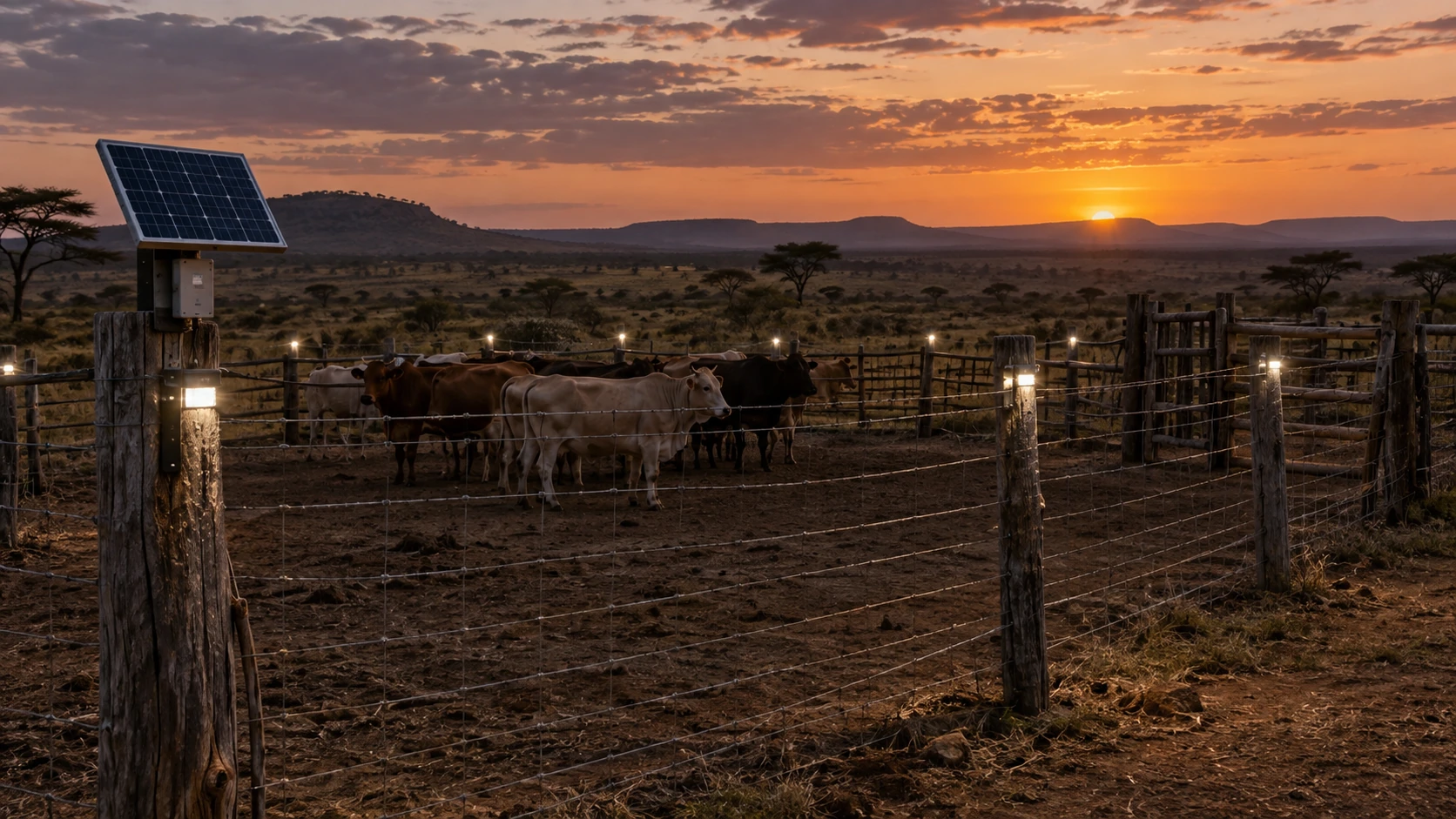
For a livestock-keeping family, an animal lost overnight is an economic loss as well as a frightening encounter. Richard Turere approached that problem from the enclosure outward. The Kenyan Maasai inventor developed Lion Lights, a flashing-light system intended to discourage predators from approaching livestock.
The World Intellectual Property Organization’s August 2023 profile identifies Turere as the founder of Lion Lights and describes his effort to reduce conflict between people and wildlife. It is a conservation story grounded in a household concern: protecting animals on which a family depends.
The mechanism uses a changing pattern of light as a deterrent. It does not imprison a lion, track every animal or make the landscape risk-free. Its purpose is to influence an approaching predator’s behaviour before an attack occurs. That is a different proposition from dealing with a predator after livestock has already been killed.
The design’s appeal is its attention to coexistence. Retaliatory killing can follow livestock losses, so protecting a herd and protecting wildlife need not be competing goals. WIPO presents Turere’s work in that context; it does not establish that one lighting system eliminates every kind of human–wildlife conflict.
A strong field evaluation would compare losses before and after installation while recording other changes, including fencing and husbandry. It should also examine neighbouring enclosures. If risk merely moves to a household without lights, the community needs a wider plan than a successful demonstration at one compound.
For the person buying or maintaining a system, practical questions are straightforward. Who replaces a damaged light? How will a fault be noticed before nightfall? Is help available locally? Those details deserve as much attention as the inventor’s public recognition because they determine whether the device remains useful after installation.
There is a promising model of technical education here. Livestock keepers possess detailed observations about the animals and places around them. Electronics training can help turn those observations into testable devices. Treating that experience as useful knowledge could bring more rural problems into engineering classrooms and more engineering assistance back to rural livelihoods.
Turere’s invention is compelling because it begins with a clearly defined task. It asks how a family might sleep with less fear of losing its herd, while allowing wildlife to remain part of the surrounding landscape. The light is small; the relationship it is trying to change is much larger.