The announced 4 September 2026 Netflix premiere date for Moses Inwang’s Ordinary People has now passed. ARISE News’s August preview described an eight-part thriller set around the residents of Mirage Estate, and Netflix carries an official title page. This update examines the production and the possibilities of its format; it is not a claim to have reviewed the completed season.
According to the director’s account reported by ARISE, the idea began six years before the announcement and the project took three years to make. Those are different measures: development time is not the same as continuous shooting. His account suggests a sustained commitment, but duration alone cannot establish how well the finished drama works.
The reported ensemble includes Ramsey Nouah, Chidi Mokeme, Adunni Ade, Michelle Dede, Uche Montana and Jackie Appiah. An estate provides a practical dramatic container for such a cast: neighbours can share roads, security arrangements and social spaces while concealing sharply different private lives. The premise supplies proximity; writing has to supply the reasons those people cannot simply walk away.
Eight episodes allow consequences to accumulate. A lie introduced early can change a friendship, force another lie and eventually alter the balance of power in the neighbourhood. That is the opportunity of serial storytelling. A succession of emergencies will feel less substantial if each episode resets the characters to where they began.
A strong ensemble also needs unequal amounts of information. Viewers may know something a neighbour does not, or misunderstand an event until another perspective arrives. Suspense then grows through anticipation and revision. The important question is whether each revelation changes the meaning of an earlier choice, rather than merely adding another secret to the pile.
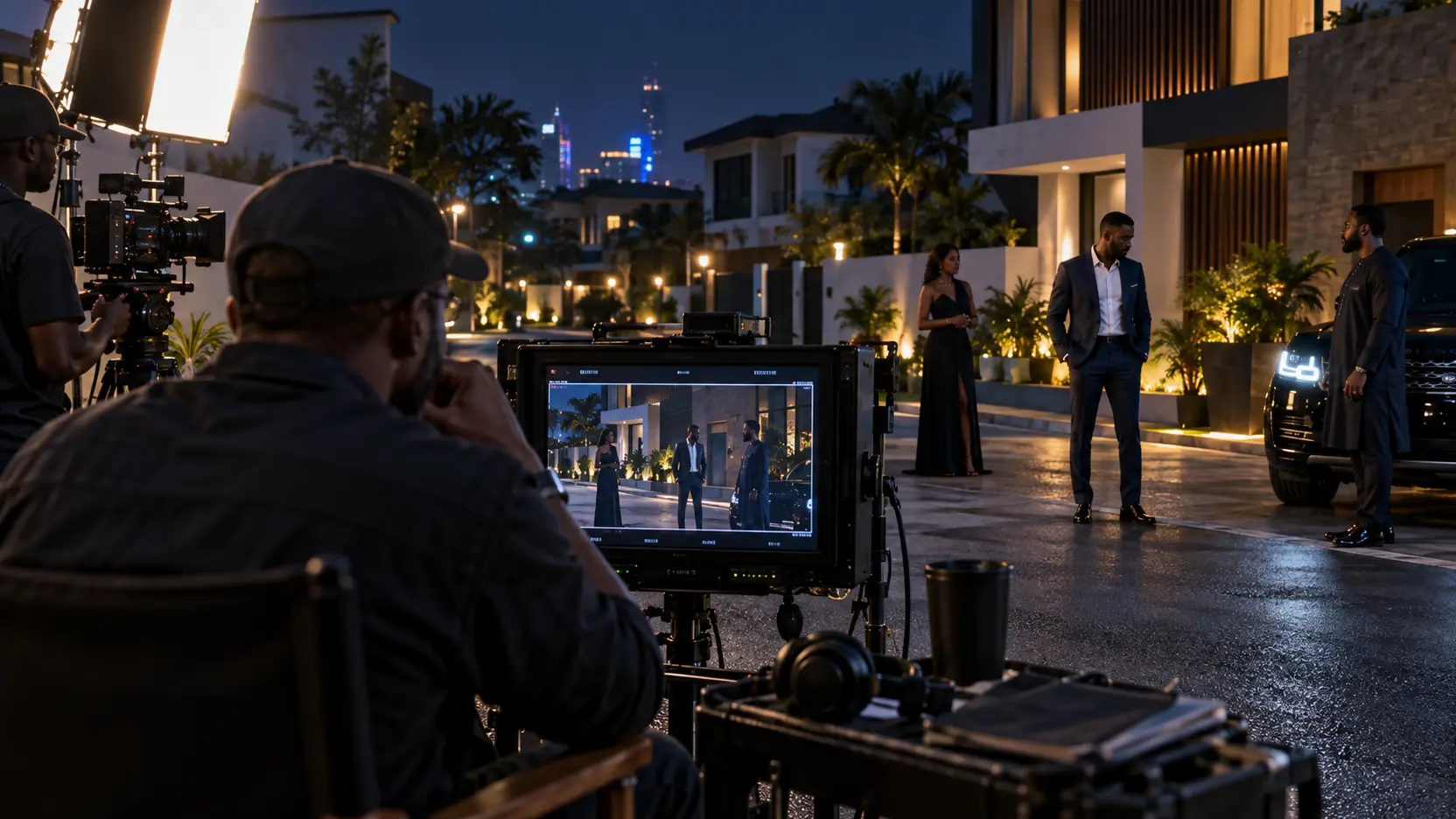
The demands extend beyond the screenplay. Performance continuity, costume changes, the geography of houses and the rhythm of editing help an audience navigate a season. A character who moves between episodes must still feel like the same person living through an unfolding period of time. Much of that coherence is built by crew members whose work rarely leads the promotional campaign.
The series’ scale should also be judged through the clarity of its world. A large cast can deepen a community, but it can crowd out emotional development if every recognisable face requires a separate subplot. Scenes earn their place when they reveal desire, change a relationship or create a consequence that the story remembers later.
For Nigerian production companies considering longer formats, the useful lesson is to budget for the connective work: story planning, script revision, continuity records and post-production across the whole season. Attractive individual episodes are only part of the task. A series must persuade viewers that the next hour belongs to a larger, deliberately shaped experience.
Inwang’s bet is that this neighbourhood can hold attention over time. Viewers can test that proposition by looking beyond the trailer’s highlights: whose choices drive events, which relationships develop, and whether the final turns grow from what came before. The most persuasive long-form thriller makes its length feel like an opportunity the story has earned.