Damilola Orimogunje’s Dear Ajayi appears in the 2026 competition programme of Giornate degli Autori, the independent Venice sidebar. Its official schedule lists a public screening and Q&A on 10 September, followed by another public screening on 12 September. Both are forthcoming as of 9 September. This selection should not be described as a place in Venice’s main Golden Lion competition.
There is a recent precedent for the attention a carefully described festival appearance can generate. Cannes lists Akinola Davies Jr’s My Father’s Shadow in its 2025 Un Certain Regard selection and records a Caméra d’Or Special Distinction. The category and distinction matter: precise language allows readers to understand the achievement without turning every festival honour into the same award.
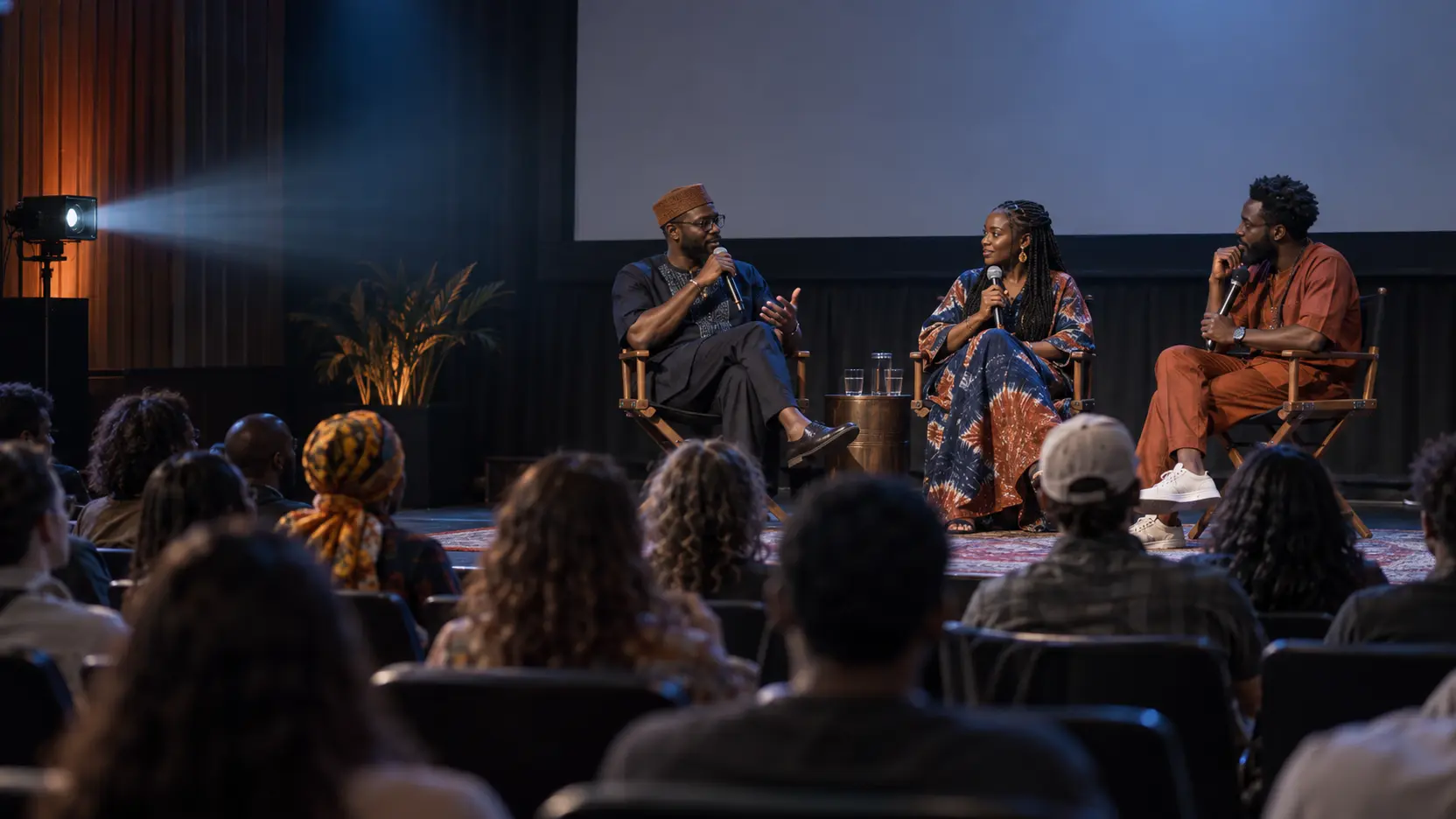
Festivals offer a film a particular kind of first encounter. An audience arrives at an appointed time, watches together and may hear the filmmaker discuss the choices behind the work. Critics and programmers can place it in conversation with other cinema. That context can be valuable for a film whose strengths are difficult to compress into a short promotional clip.
Industry access is another possibility, but it needs preparation. A producer with clear credits, a concise synopsis, suitable stills and a reliable screening copy is better placed to respond when interest arrives. Meetings are more useful when the team can explain what is available and what kind of release it hopes to build. A laurel alone cannot do that work.
Selection and distribution remain separate events. A well-received screening may lead to further invitations or discussions, yet none of those is automatically a completed acquisition or a wide release. Reporting should identify the stage actually reached. Filmmakers likewise need a plan for following up attention after the festival’s immediate publicity has moved elsewhere.
The route also has costs. Subtitling, delivery materials, travel and the time spent pursuing opportunities can strain a small production. A focused selection of appropriate festivals may serve a film better than collecting submissions indiscriminately. Programme fit, audience and the people likely to encounter the work deserve consideration alongside the fame of a festival’s name.
International visibility should lead to a conversation about Nigerian access too. Viewers at home may hear about a film for months without knowing when they can see it. A realistic plan for local screenings, community encounters or a later distribution window helps connect the achievement to the culture that produced it. Not every route will be identical, but the question should remain present.
Festivals can also widen the range of work that receives sustained discussion. A family drama, a formally adventurous debut or a quiet regional story may benefit from a programme that gives it room to be encountered on its own terms. That value does not require declaring commercial entertainment less serious. A healthy industry supports different ambitions and different paths to viewers.
Dear Ajayi’s scheduled September encounters are an occasion to watch what happens next: the conversations, subsequent bookings and eventual opportunities to see the film more widely. The festival route matters most when a moment of recognition becomes a continuing relationship. The achievement is worth celebrating accurately, and the audience beyond the premiere is worth planning for.