A costume gives an audience information before the first line is spoken. The official 2026 programme for Dear Ajayi names Ajah Enene-Orimogunje for costumes, placing a practitioner’s name beside a story set in the 1990s. That visible credit is a useful prompt: Nigerian film coverage should ask how clothes serve a character as readily as it asks who wore the most striking outfit.
The starting point is the life inside the garment. What work does this person do? What can they afford, what do they preserve, and how do they want others to see them? A wardrobe becomes persuasive when the answers fit together. A polished appearance may express prosperity, aspiration, professional obligation or an effort to conceal difficulty; the story supplies the meaning.
Period work adds another layer of research. A garment fashionable today cannot simply stand in for an earlier decade because it looks traditional. Cut, fabric, fastening, accessories and styling all deserve attention. Family albums and testimony from people who lived through the period can help, particularly when the production needs ordinary clothing rather than ceremonial dress.
Regional and cultural specificity matters just as much. A familiar textile or silhouette should not become a shortcut that treats Nigerian communities as interchangeable. Costume choices need to make sense for the character, occasion and setting. Good research leaves room for personal variation: people borrow styles, migrate, adapt inherited clothes and sometimes deliberately dress against expectation.
Imagine a fictional character attending a job interview after a difficult week. A carefully pressed shirt, repaired cuff and uncomfortable borrowed shoes could communicate effort without an explanatory speech. If the next scene shows the same shirt loosened at home, the change might reveal relief or exhaustion. The example illustrates how small decisions can develop a character over time.
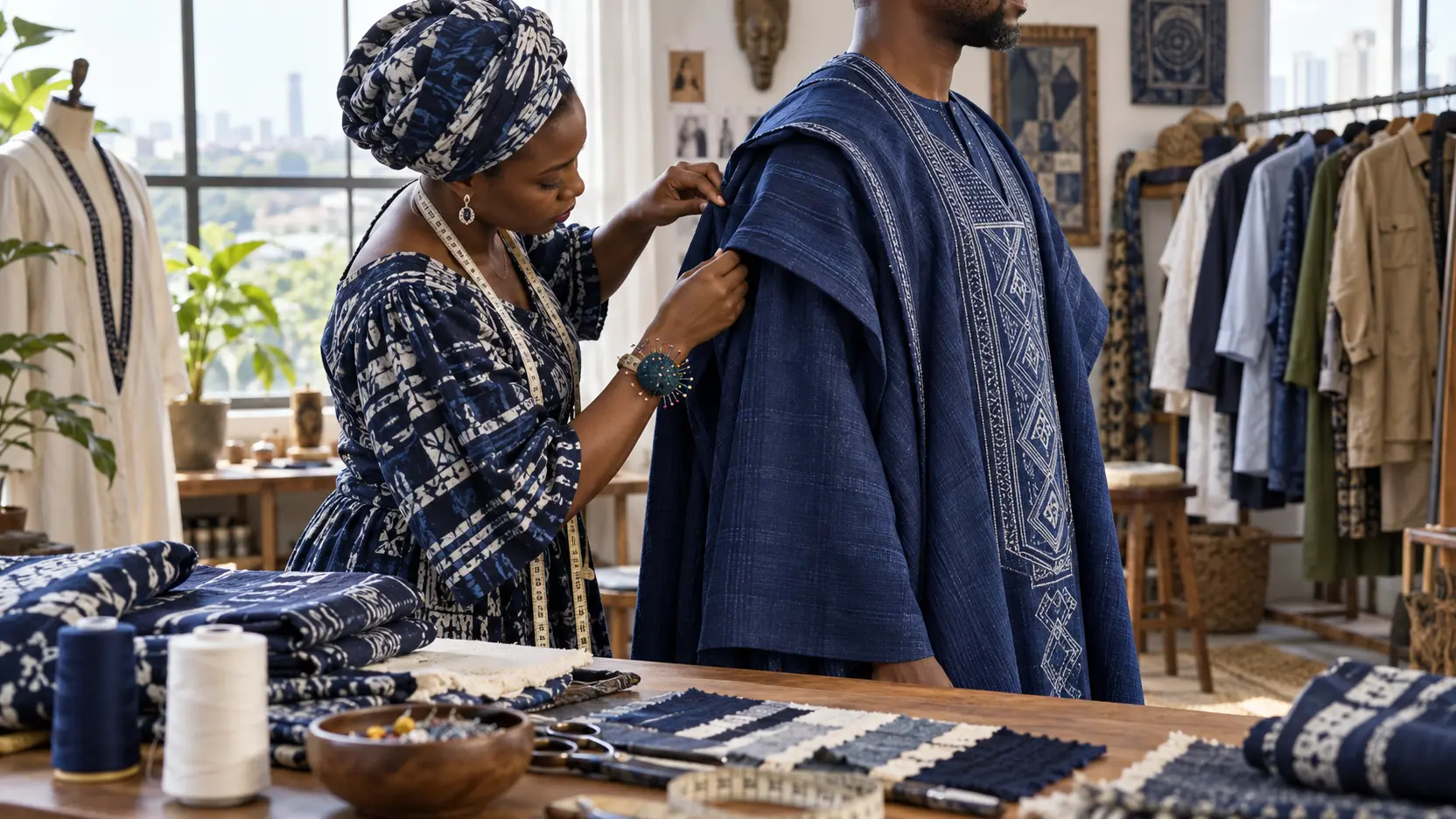
Fittings are where the concept meets performance. Actors need to sit, walk, run or complete the scene’s physical tasks in their clothes. Fabric can affect sound recording, while colour and texture interact with lighting and the set. Costume therefore belongs in an ongoing conversation with other departments, rather than arriving as a finished fashion statement just before filming.
Continuity is equally exacting. Scenes may be shot out of story order, and clothes need to reflect the correct stage of a character’s day or journey. Photographs, garment records and duplicates help the team reproduce a look after a break or repeated action. The audience may never notice this labour, but it notices when a change breaks the scene’s logic.
Credit should extend to the people who realise the design: tailors, dressers, textile specialists and others whose contributions are part of the production. Clear acknowledgement helps viewers discover the craft and helps practitioners build a legible body of work. For newcomers, a portfolio becomes more informative when it shows research, fittings and the reasoning behind choices, alongside finished images.
The ambition is clothing that feels inseparable from the person on screen. Spectacle has its place, but an everyday outfit can be just as expressive when its fit, condition and history are considered. Giving costume the time and respect it deserves allows Nollywood characters to enter a room already carrying a life the audience can begin to read.