The price of money can change the price of almost everything else. A weaker naira can reach a family through imported medicine, school fees, transport equipment or a subscription charged in dollars. A stronger session may ease some pressure, but only when the improvement reaches the rate and fees a real customer can obtain.
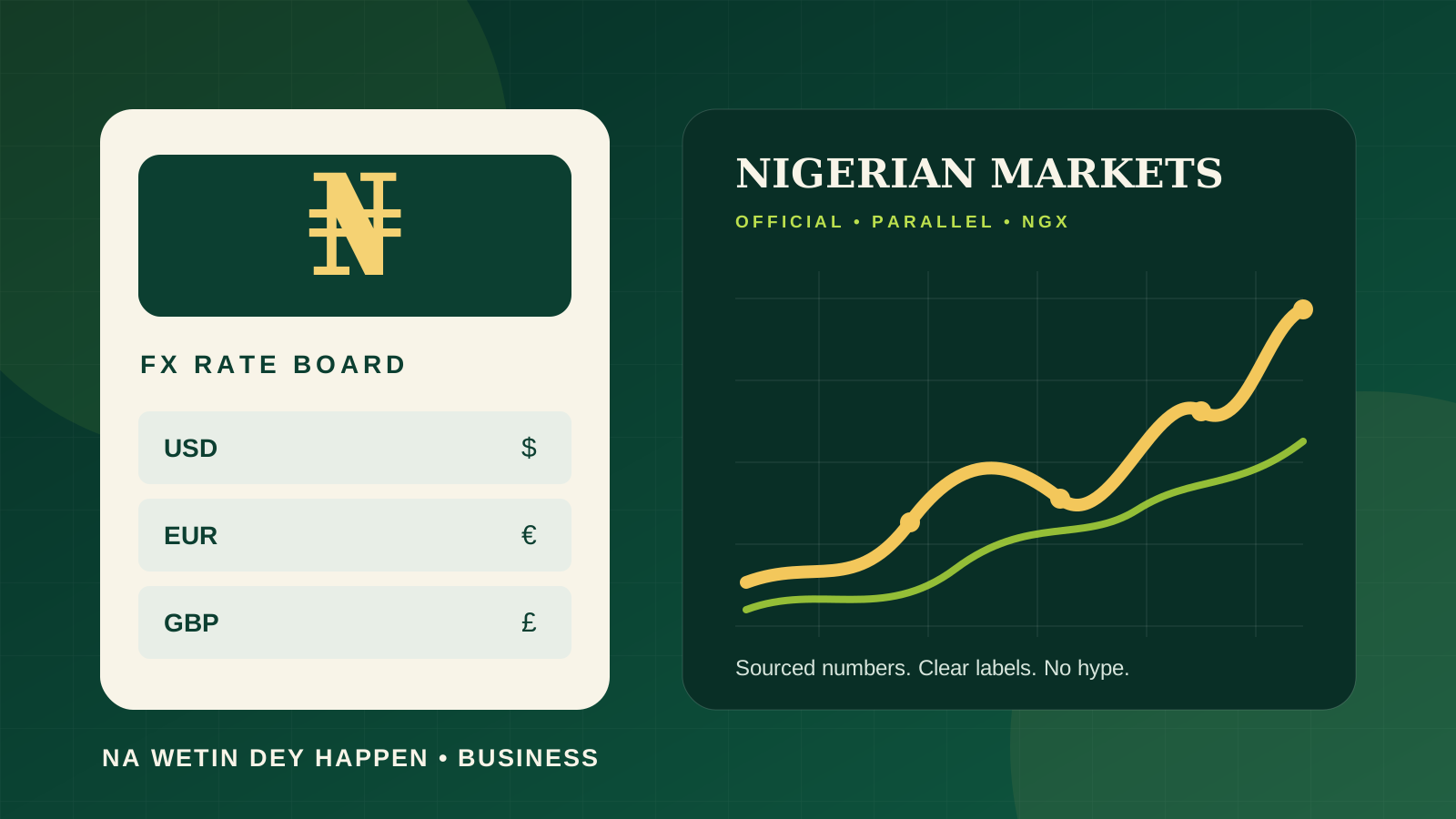
That is why Na Wetin Dey Happen has opened a dedicated Markets & FX page under Business. The page begins with three currencies closely watched by Nigerian households and companies—the US dollar, euro and pound sterling—then connects the foreign-exchange picture to the latest completed session on the Nigerian Exchange.
One currency, several kinds of quote
The first discipline is refusing to call every number 'the exchange rate'. The Central Bank of Nigeria says the daily Nigerian Foreign Exchange Market rate is a volume-weighted average and the official rate for the day. It is an important benchmark, but a bank, card processor, remittance service or licensed bureau de change may add its own spread and fee.
For 25 September, the official NFEM dollar close was reported at ₦1,328.67 to $1. Our euro and sterling official references are transparent editorial cross-rate calculations: we combined that dollar close with the European Central Bank's same-day reference rates of €1 to $1.1403 and €1 to £0.86045. The results—about ₦1,515.08 per euro and ₦1,760.80 per pound—are comparisons, not executable retail offers.
The parallel market needs a different label. It is an informal market operating alongside regulated channels, and quotes can vary by city, amount, time, cash availability and the people involved. The initial dashboard records user-reported averages of ₦1,378/₦1,390 for the dollar, ₦1,560/₦1,600 for the euro and ₦1,840/₦1,882 for sterling, showing dealer-buy and dealer-sell sides separately.
Why the parallel gap matters
At the indicative sell side, those quotes sit about 4.6% above the official dollar reference, 5.6% above the calculated euro reference and 6.9% above the calculated sterling reference. That gap matters to importers, travellers and families receiving money, but it must not be mistaken for a national index or a guaranteed price. We will not direct readers to anonymous traders or present a user comment as an official rate.
Foreign exchange is only half the new page. The Nigerian Exchange's All-Share Index closed the 25 September session almost flat at 252,113.41 points, down 0.015%, while equity market capitalisation finished around ₦163.66 trillion. Trading reached about 708.81 million shares across 42,434 deals, and 39 gainers outnumbered 27 decliners even as the broad index slipped.
Stocks are ownership—not a betting slip
A stock is a unit of ownership in a company. Its displayed price does not tell a reader whether the business is profitable, indebted, well governed or fairly valued. Dividends are not guaranteed, prices can fall and a liquid market today may be thinner tomorrow. Our selected-share watchlist is therefore a starting point for questions, never a list of instructions to buy.
Nigeria's Securities and Exchange Commission says listed shares are bought and sold through licensed stockbrokers. A prospective investor should verify the operator, understand every fee, read company disclosures, keep contract notes and decide how much loss can be absorbed without disturbing rent, food, school or emergency savings.
We have also built the page to show its own limits. NGX public prices are delayed; informal FX reports may move before the next update; the official benchmark may differ from a customer's final bank quote. Each table carries its market date, the page carries its check time and the methodology explains every calculated figure.
A daily habit built on verification
Readers should return daily not for a promise of easy money, but for a clearer view of change. Follow the direction of the naira, watch how the gap between markets widens or narrows, observe which sectors move the stock index, and ask what those movements mean for businesses and households beyond the trading screen.
The new Markets & FX desk will improve as the record grows. Na Wetin Dey Happen will correct figures when stronger evidence appears, preserve dated snapshots and keep commercial promotion separate from editorial data. Follow daily—and bring the same healthy scepticism you would bring to any claim about your money.