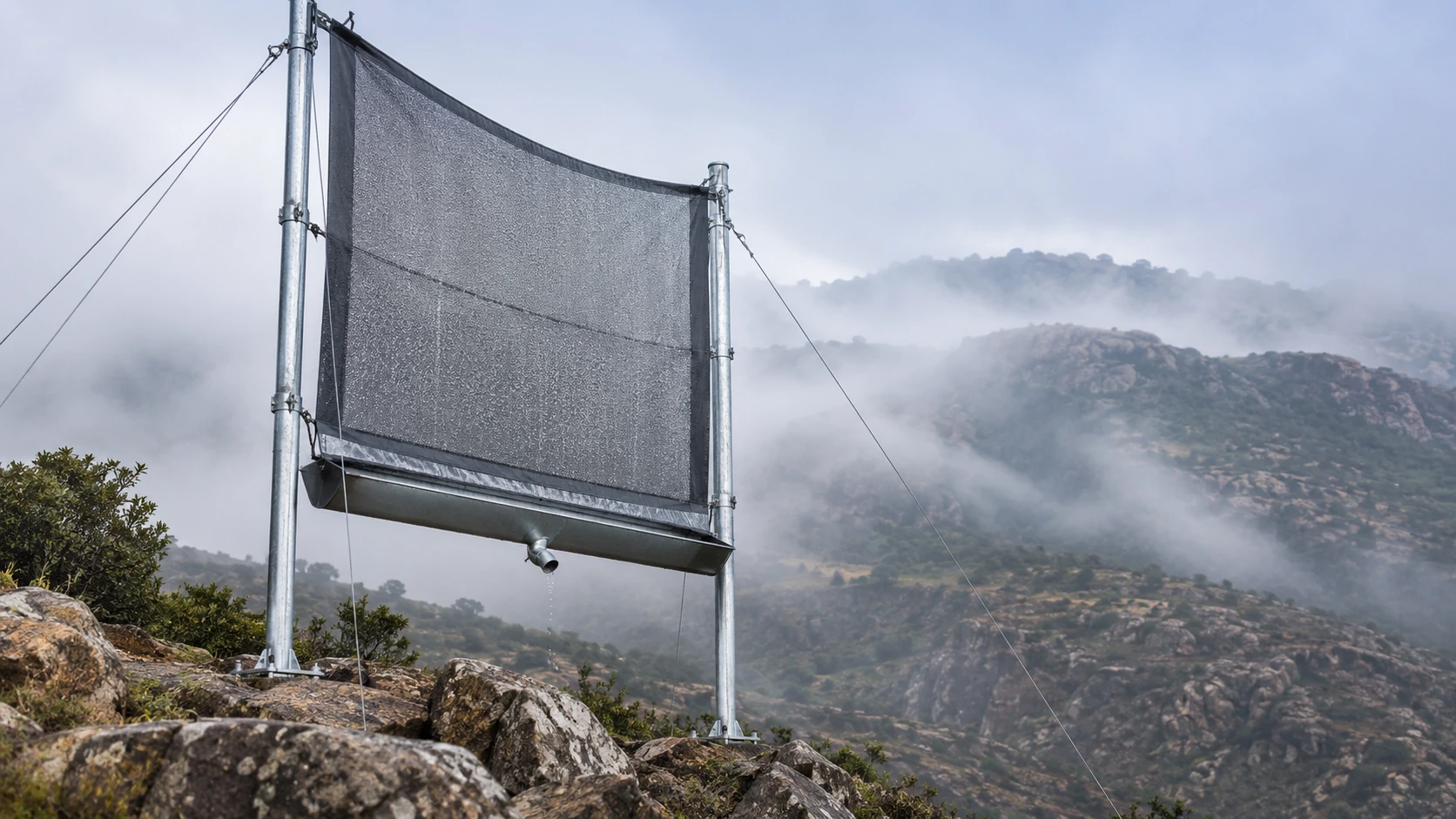
A water supply can begin without a borehole or a river intake. In southwest Morocco’s Aït Baamrane region, Dar Si Hmad developed a system that catches droplets from passing fog. The image is striking: mesh standing in mountain air, collecting moisture that would otherwise move past the villages.
UN Climate Change’s 2016 project account describes a women-led organisation responding to persistent water stress. At that stage, its network supplied more than 400 residents in five villages. Those are historical project figures, not a freshly verified count of households served today.
Wind carries fog droplets onto specialised mesh. They collect and run down into a receiving system, after which storage and pipes make the resource available for use. The project adapts an established collection technique to local conditions; it does not create water from dry air or make rain fall.
The UN account describes reservoirs, household connections and training, including mobile-phone reporting by women responsible for water management. It also records the time previously spent reaching distant wells. The engineering achievement extended beyond the net to the arrangement that carried water into daily life.
That distinction matters when another community considers copying the idea. A photograph of a successful collector cannot establish whether a different hillside receives enough fog. Site measurements, seasonal records and practical access for maintenance should come before large purchases. The relevant resource is the fog that actually passes through the proposed installation.
Storage deserves particular attention because collection and household demand do not follow the same clock. A project should explain how it handles periods of low yield, how water quality is checked and who repairs the distribution network. These are ordinary water-service questions, even when the source looks extraordinary.
The economic value includes time as well as litres. Shorter water-collection journeys can make room for other activities, but a project should ask residents which changes they value rather than assume how women will use saved hours. Affordable charges and a clear maintenance fund can help protect the service after the initial enthusiasm fades.
Dar Si Hmad’s example broadens the imagination without suspending practical judgement. A locally suitable resource became useful because people combined observation, infrastructure and organisation. The most remarkable object is not necessarily the mesh on the mountain; it is the household tap at the end of that chain.