Libya’s Tripoli-based Government of National Unity announced on Sunday, 6 September, that five people had been arrested in an investigation into a series of drone attacks on oil and electricity infrastructure in Tripoli and the western city of Zawiya. The government described the detainees as Libyan and foreign nationals but did not identify them or disclose the foreigners’ nationalities.
The government said a Defence Ministry security and intelligence operation had dismantled what it called an organised sabotage cell. That is the government’s allegation at this stage, not a court finding. Authorities have not publicly released the evidence against the five suspects, and no convictions have been reported.
According to the official account carried by Africanews, Anadolu Agency and Libya Herald, investigators link the group to explosive-drone attacks on oil storage tanks in Tripoli and Zawiya and to an attack on the Zawiya power plant. The government also said other plans were disrupted before they could be carried out, including an alleged attempt to strike the South Tripoli power station and threats against other facilities and public figures.
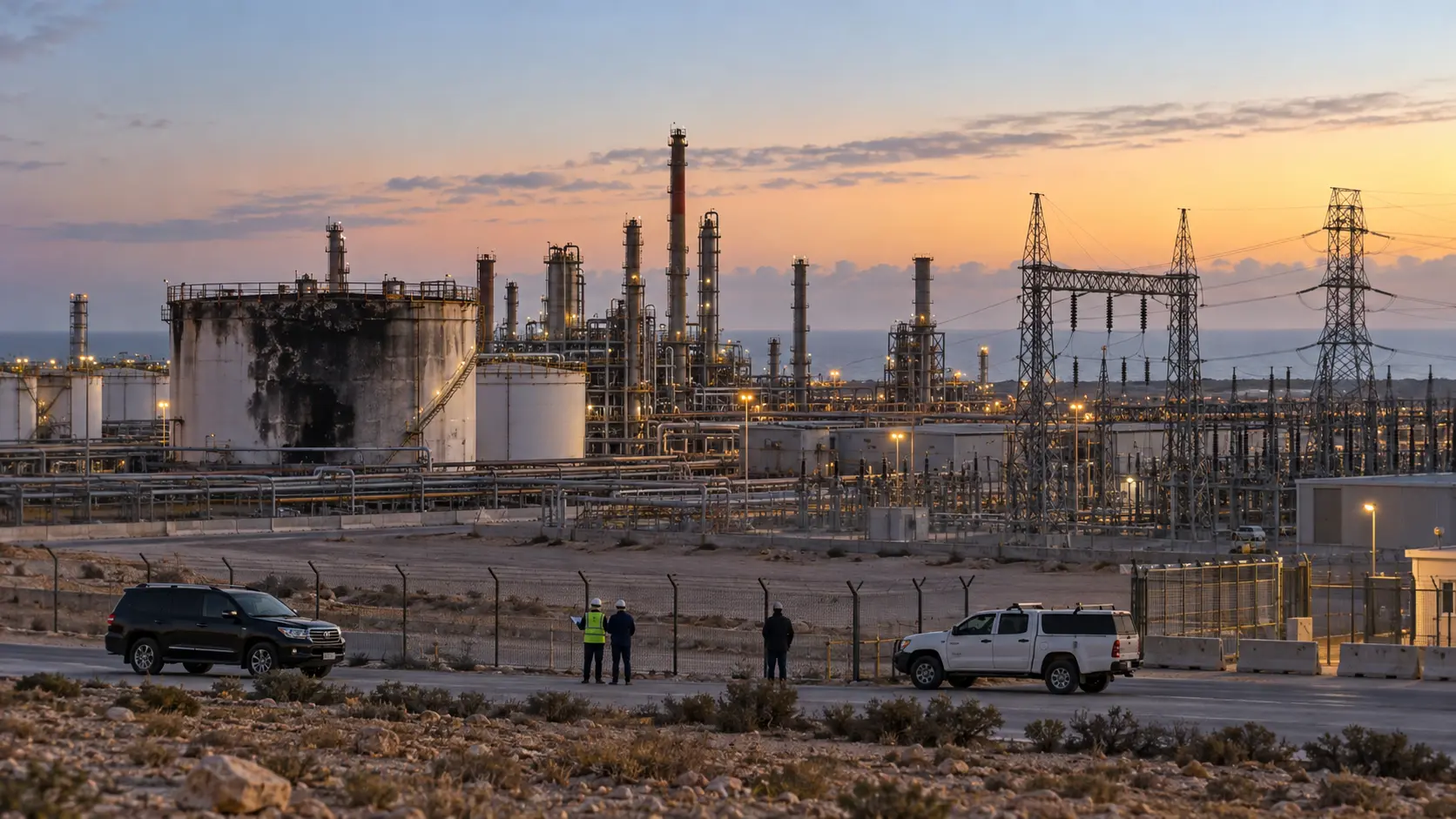
The announcement follows weeks of attacks on western Libya’s energy network. In August, drones struck facilities around Zawiya, a city about 45 to 50 kilometres west of Tripoli. Libya’s National Oil Corporation said repeated attacks caused fires and damage at fuel tanks, while the General Electricity Company reported that a Zawiya power substation was destroyed and taken out of service.
The Zawiya complex matters far beyond one city. Its refinery can process about 120,000 barrels a day, and the area also contains an export terminal, fuel storage and electricity infrastructure. Damage or prolonged shutdowns can deepen fuel shortages, interrupt power and water services and add pressure to an economy heavily dependent on oil revenue.
Libya’s government said the attacks were connected rather than isolated and promised to pursue people who planned, financed or facilitated them. It also said fuller details would be released after preliminary investigations. Until then, claims about sponsors, political affiliations or foreign responsibility should be treated as unverified.
The inquiry unfolds within Libya’s continuing political division. The Government of National Unity controls Tripoli and much of the west, while a rival administration in the east is backed by military commander Khalifa Haftar. Local armed groups also retain influence over territory and infrastructure, making attribution of security incidents especially sensitive.
For residents, the immediate issue is the protection of essential services. Summer attacks on fuel tanks, power equipment and water-linked infrastructure can translate quickly into blackouts, shortages and higher risk for workers and emergency crews. Transparent damage assessments and timely repairs are therefore as important as the criminal investigation.
The verified position at publication time is limited but significant: five people are in custody; the Tripoli-based government alleges they were part of a coordinated sabotage network; earlier drone attacks damaged energy facilities; and the investigation remains open. The suspects must be treated as accused, not guilty, unless a competent court determines otherwise.