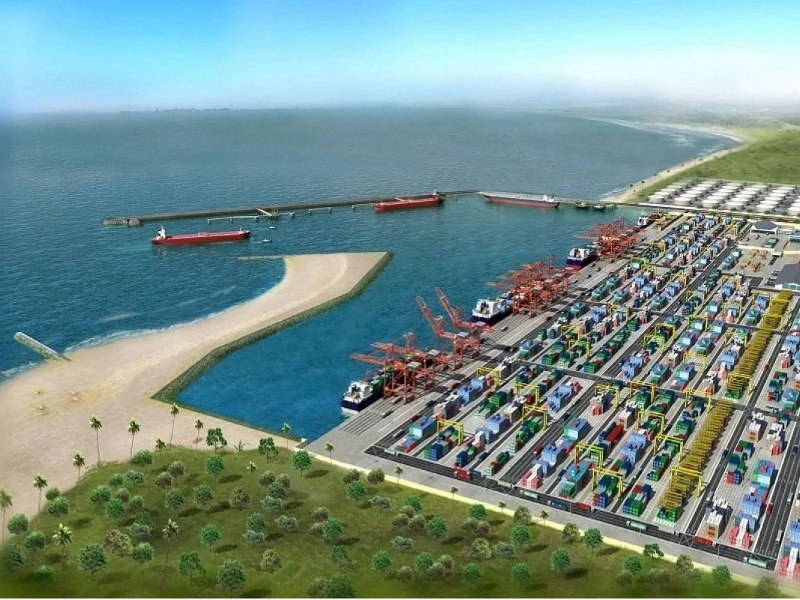
A ceremony in Lamu County on Wednesday, September 30, 2026 put political weight behind one of East Africa’s largest proposed industrial investments. Kenya’s President William Ruto joined visiting African leaders, former Nigerian president Olusegun Obasanjo and Aliko Dangote to break ground for the Dangote East Africa Petroleum Refinery. The event confirmed the project’s public launch; it did not resolve every legal and environmental question surrounding the land.
The project is valued at $16 billion in Associated Press reporting and is designed to process 700,000 barrels of crude oil a day if completed. Dangote said construction was expected to take 40 months. Those figures describe the sponsors’ plan, not operating capacity that exists today, and the timetable remains exposed to approvals, financing, litigation and the physical demands of building at that scale.
A continental-scale promise
The economic case is easy to understand. East African economies import large volumes of refined fuel while African crude is often processed elsewhere. Dangote presented the refinery as a way to keep more industrial value, jobs and supply capacity on the continent. President Ruto has projected about 60,000 jobs, according to Kenya Broadcasting Corporation; that is a government forecast rather than a verified employment count.
Regional politics will shape the feedstock and the market. AP reports that the proposed refinery would draw crude from neighbouring producers. Uganda’s President Yoweri Museveni said his country would continue pursuing its own smaller refinery and argued that the region can support more than one. Dangote said Lamu was chosen over an earlier Tanga proposal because of its deep-sea access and ground capable of supporting heavy equipment.
The ceremony did not settle the land dispute
The launch took place against an unresolved land case. KBC reports that 133 Chandavai residents asked the Malindi Environment and Land Court to stop activity on parcel LR No. 13061, asserting ancestral ownership and raising compensation and resettlement concerns. The court declined to stop the ceremony but ordered the parties to maintain the prevailing status quo pending an inter partes hearing on October 14.
That distinction is central. Photographs of leaders turning soil prove that the ceremony occurred; they do not establish that unrestricted construction may proceed on disputed land. The Financial Times reported that Dangote Group acknowledged site activity could be affected while the order remains in force. The residents’ claims, including allegations about compensation arrangements and environmental assessment, remain allegations before the court, not final judicial findings.
What must be proved next
Environmental campaigners have also warned about possible effects on Lamu’s coastal and marine ecosystem, AP reports. The available reporting does not establish that the project has caused such harm. It does establish that environmental approval, public disclosure and community participation will be central tests of legitimacy for a refinery planned beside a sensitive coast.
The next meaningful evidence will come from the October 14 court hearing, publication of the project’s environmental and resettlement safeguards, and verifiable construction milestones. Until then, the accurate description is neither that the refinery has been stopped outright nor that all obstacles have been cleared: a major project has been launched, while the legal conditions governing the disputed site remain unsettled.