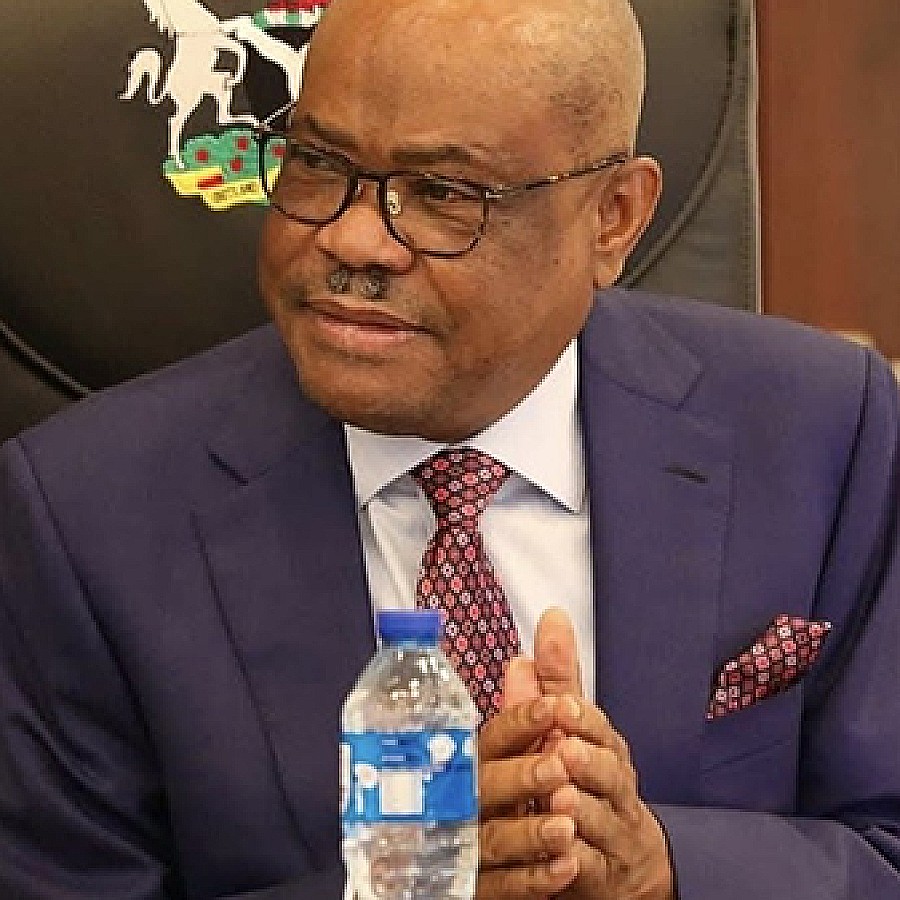

A council chairman’s work becomes visible in ordinary places: the route to school, a functioning clinic, a market with usable facilities and the local office where a resident can get a clear answer. For Joshua Ishaku, also known as Joshua Ishaku Musa, these are central tests of the grassroots development agenda he has set out for Bwari Area Council in the Federal Capital Territory.
Ishaku took office after being sworn in by FCT Minister Nyesom Wike on 15 June 2026, succeeding John Gabaya. At the handover, reported by the News Agency of Nigeria the following day, he promised people-centred policies, an open-door approach and regular town hall meetings. This article examines the documented starting point of that administration and the opportunities to turn those commitments into better services. It is a public-service analysis, not an interview or a completed-term performance assessment.
A new administration, an inherited delivery programme
The new chairman inherited responsibilities already in motion. On 11 February 2026, Gabaya presented a ₦30.6 billion budget proposal to the council legislature, according to NAN’s report published on 12 February. The proposal allocated about ₦22.9 billion to capital expenditure and ₦7.6 billion to recurrent spending, using the report’s rounded figures. Its stated emphasis included completing projects carried over from 2025. These are proposed allocations; the report does not establish the final enacted amounts or subsequent spending.
That distinction gives residents a useful way to follow continuity. A project register could identify the original award date, responsible government body, approved cost, money released, work completed and the remaining deadline. It would allow Ishaku’s administration to explain what it inherited and what it has added, while helping residents identify the right office when work stalls. This is an accountability recommendation, not a claim that such a comprehensive public register already exists.
Ishaku also inaugurated the council’s 10th Legislative Assembly in June, with NAN reporting the event on 18 June 2026. The ten councillors provide an important link between ward priorities and the executive. His subsequent remarks at the Jahi-Gwarimpa Interchange commissioning, reported by Abuja Digest on 25 June, pledged attention to infrastructure and human capital development. The practical task is to translate that broad commitment into named projects and services that residents can track.
Connecting major infrastructure to neighbourhood needs
One major investment now serving the area is the Bwari Township Water Supply Network, commissioned on 14 July 2026. President Tinubu was represented by First Lady Oluremi Tinubu at the ceremony. The Guardian and the FCTA account describe a network linking Bwari township and adjoining communities to treated water from the Lower Usuma Dam, executed by CGC. This is an FCTA-led infrastructure project commissioned during Ishaku’s early tenure; it should not be presented as a project he initiated and completed alone.
Local follow-through matters after that ceremony. Residents need understandable information about the communities served, connection procedures, faults and service interruptions. Council engagement can help public authorities hear where delivery is uneven and coordinate responses. Reliable water can support household hygiene, schools, clinics and enterprises, but neither a commissioning report nor a network’s total length proves that every settlement or home has a working connection.
The Bwari-Kubwa road, including the Chikakore connection, is another part of the area’s development picture. The minister’s inspection reported on 22 August maintained a December 2026 delivery target. That remains a scheduled outcome. At council level, attention to adjoining access routes, drainage, waste handling and market surroundings would help communities benefit from the larger corridor. These are complementary priorities; this report does not describe an unverified council contract or claim the unfinished road is already open.
Schools and healthcare: the everyday work of government
Education requires the same care with responsibility and dates. A local Abuja Affairs report dated 22 April 2026 records Gabaya’s renewal of the tenure of Local Education Authority secretary Tanko Isuwa. That decision preceded Ishaku’s inauguration. The report does not establish a new school-building achievement under the current chairman. It does show that school administration is an inherited institution whose everyday performance matters alongside the political transition.
A useful education agenda for the new administration would make school needs specific: classrooms requiring repairs, teaching gaps, furniture, safe water, usable toilets and access for children with disabilities. Engagement with the LEA, relevant FCT education authorities and school communities can turn broad promises into priorities. Progress is best explained school by school, with dates and responsibilities, while parents need a clear place to raise concerns. These are proposed measures for evaluating service, not a list of works verified as completed.
Healthcare offers a documented example of the role expected of area councils. In an August 2026 meeting reported by NAN through Peoples Gazette on 24 August, FCTA officials and UNICEF urged all six councils to take ownership of local food and nutrition programmes. The discussion covered local work plans, coordination, monitoring and attention to pregnant women and young children. It places grassroots implementation within the wider FCT health effort, rather than treating care as something delivered only from the city centre.
For Bwari, the practical questions are whether residents can identify their nearest functioning service, when trained staff are available, how referrals work and where a missed service can be reported. Water, sanitation and community information should support that effort. The material reviewed for this article does not establish a council-wide clinic staffing or medicine-availability record under Ishaku. Publishing such information would help residents use services and give the administration a fair basis for demonstrating improvement.
Women and young people need a route beyond the launch
A more recent local report points to a potential women’s and youth skills initiative. Abuja Affairs reported on 3 August 2026 that Susan Joshua Musa, the chairman’s wife, had partnered with ABTreated Fashion House on a tailoring and entrepreneurship programme known as BAC-TSAED. It described a visit and implementation discussions, and quoted the chairman’s support. This is an attributed report of a partnership initiative; a confirmed current intake, participant total, funding amount and graduation outcome were not established in the sources reviewed.
Anyone interested in that initiative should obtain a current written notice from the organisers or the council before making plans. Useful details include eligibility, training venue, dates, cost, equipment provision and the contact responsible for applications. A programme linked to the chairman’s wife should also be clearly identified by its actual organiser and funding arrangement. Readers should not assume it is an open council grant or a guaranteed distribution of sewing machines.
Women’s empowerment can include trading, food production, digital work, professional services and business ownership, as well as vocational training. A strong programme would follow participants beyond the opening event: can they price their work, attract customers, obtain equipment and keep records? Suitable training times, safe access and care responsibilities affect participation. Those design choices are especially relevant when the purpose is lasting income rather than a short course certificate.
Turning graduate skills into local economic value
For graduates seeking enterprise support, the Abuja Enterprise Agency’s official portal guide is one identifiable FCT resource. It describes business information and different categories of support, including operations and technology needs. An existing business should be ready to explain its activity, operating costs and the problem support would solve. The guide is undated, so applicants must confirm whether a named round is funded and accepting submissions. This article has not verified an open Bwari-specific graduate grant or recruitment window.
There are also local business ideas worth testing without waiting for a public appointment. A graduate with suitable skills might help small traders maintain accounts, produce product photographs and catalogues, or organise stock records. Education graduates could investigate legitimate learning-support work, while suitably trained technical graduates could approach established firms for supervised experience. These are suggestions for assessing demand, not confirmed vacancies. A small paid pilot, a clear written scope and an honest cost calculation provide stronger evidence than an attractive business slogan.
Ishaku’s proposed town hall approach could bring these strands together. Residents can ask for ward-level service priorities; young people can ask how training and employment notices will be published; women’s groups can identify obstacles to participation. The council can distinguish its own commitments from those of the FCTA and private partners, then report progress in terms residents recognise. For Bwari’s new administration, an effective development record will combine visible infrastructure with dependable services and economic opportunities people can access on clear, fair terms.