
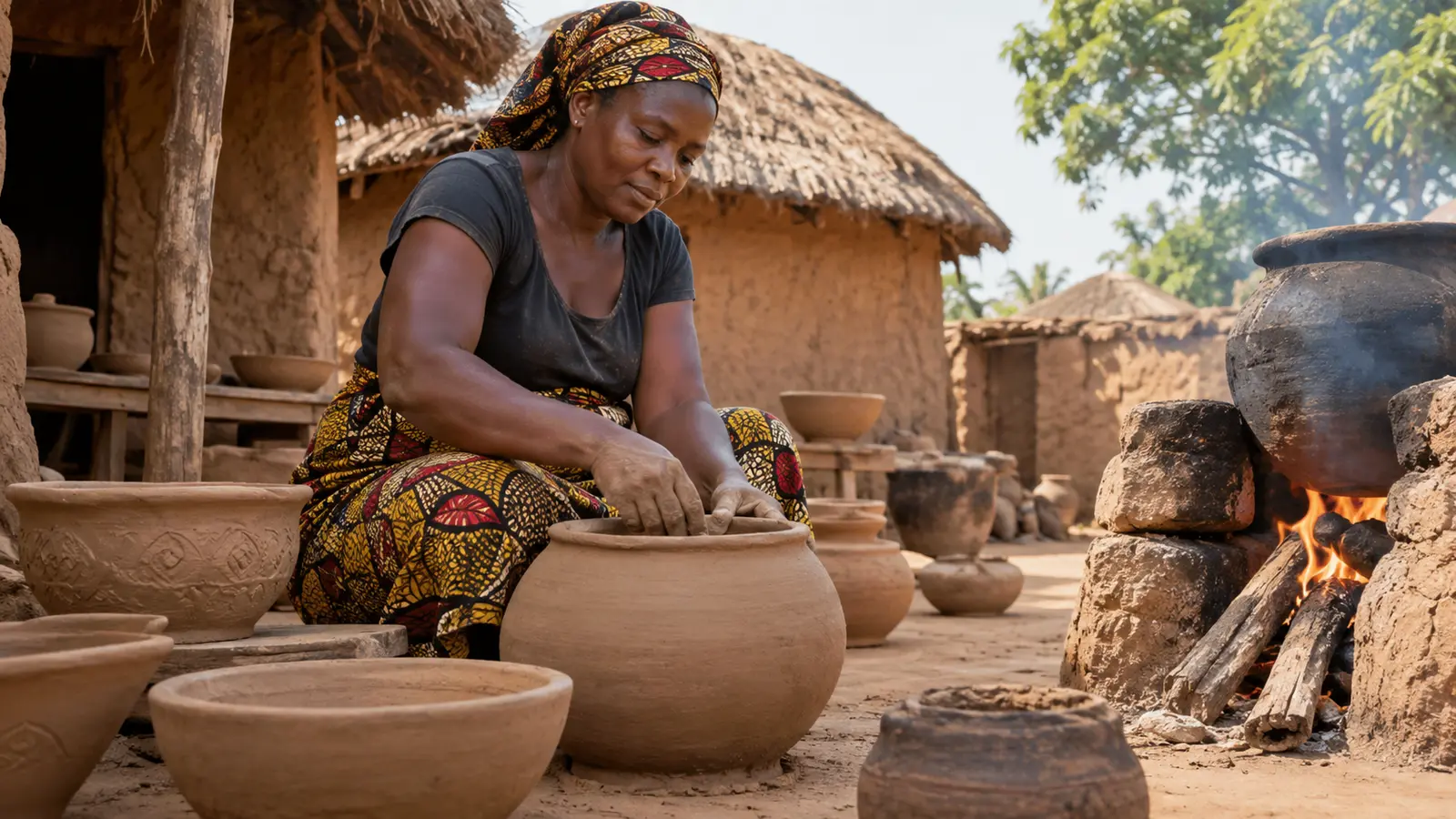
There is no single Nigerian pottery tradition. Clay vessels are made in communities across the country, but some of the best-documented centres include the Gbagyi pottery families of Suleja in Niger State, the women potters of Abuja’s Gwari communities, the Dikwa and Borno traditions of the northeast, Nupe settlements along the Niger, Yoruba towns in the southwest and Igbo communities such as Afikpo and Ishiagu in the southeast. Each place works with its own clay deposits, vessel shapes, surface marks and rules about who may make or use particular objects.
The work begins before a potter touches a finished lump of clay. Makers identify earth with the right plasticity, dig it—often seasonally—remove stones and roots, then soak, pound, sieve or knead it. Many Nigerian potters build without a fast wheel. A base is pinched or moulded; coils are added and compressed as the wall rises; a gourd, scraper or smooth stone thins and burnishes the surface. Incised lines, roulette impressions, slips and pigments may be applied before the pot is dried slowly enough to prevent cracking.
Firing exposes the maker’s judgement. In open firing, thoroughly dried vessels are stacked with wood, grass, husks or dung and covered so heat builds around them. Fuel, wind, moisture and spacing affect whether the pot survives. A sudden temperature change can destroy days of labour. Some workshops now use kilns, but open firing remains practical where electricity, capital and formal studio equipment are scarce. Smoke and fuel exposure also make cleaner, more efficient firing technology an important health and environmental investment.
The finished objects answer local needs: water pots cool their contents through evaporation; cooking pots distribute heat; bowls serve food; storage vessels hold grain, oil or medicines; specially governed forms enter marriage, burial, religious or chiefly practice. Modern ceramicists also produce planters, lamps, tiles and sculptural work for hotels and urban interiors. That wider market can raise income, but only when buyers can identify the maker instead of purchasing an anonymous ‘African pot.’
Pottery supports clay diggers, fuel suppliers, transporters, market women, decorators, studio assistants and traders as well as the principal maker. Yet its value is frequently hidden inside household or informal labour. Breakage in transit, weak packaging, seasonal demand and competition from plastic and aluminium reduce margins. Tourism shops may charge a premium that never reaches the village workshop. Cooperatives, geographic labelling, safer kilns, design training and direct digital sales can improve the share retained by producers.
Civilisation has not overcome pottery; it has changed the conditions under which pottery must justify itself. Plastic displaced many everyday water and storage vessels, while gas and electric cooking altered household demand. At the same time, concern about plastic waste, architectural interest in terracotta and a new market for handmade interiors have created other uses. Survival will not come from freezing potters in the past. It depends on treating their knowledge of earth, heat and form as technology—worthy of documentation, fair prices and adaptation led by the makers themselves.