
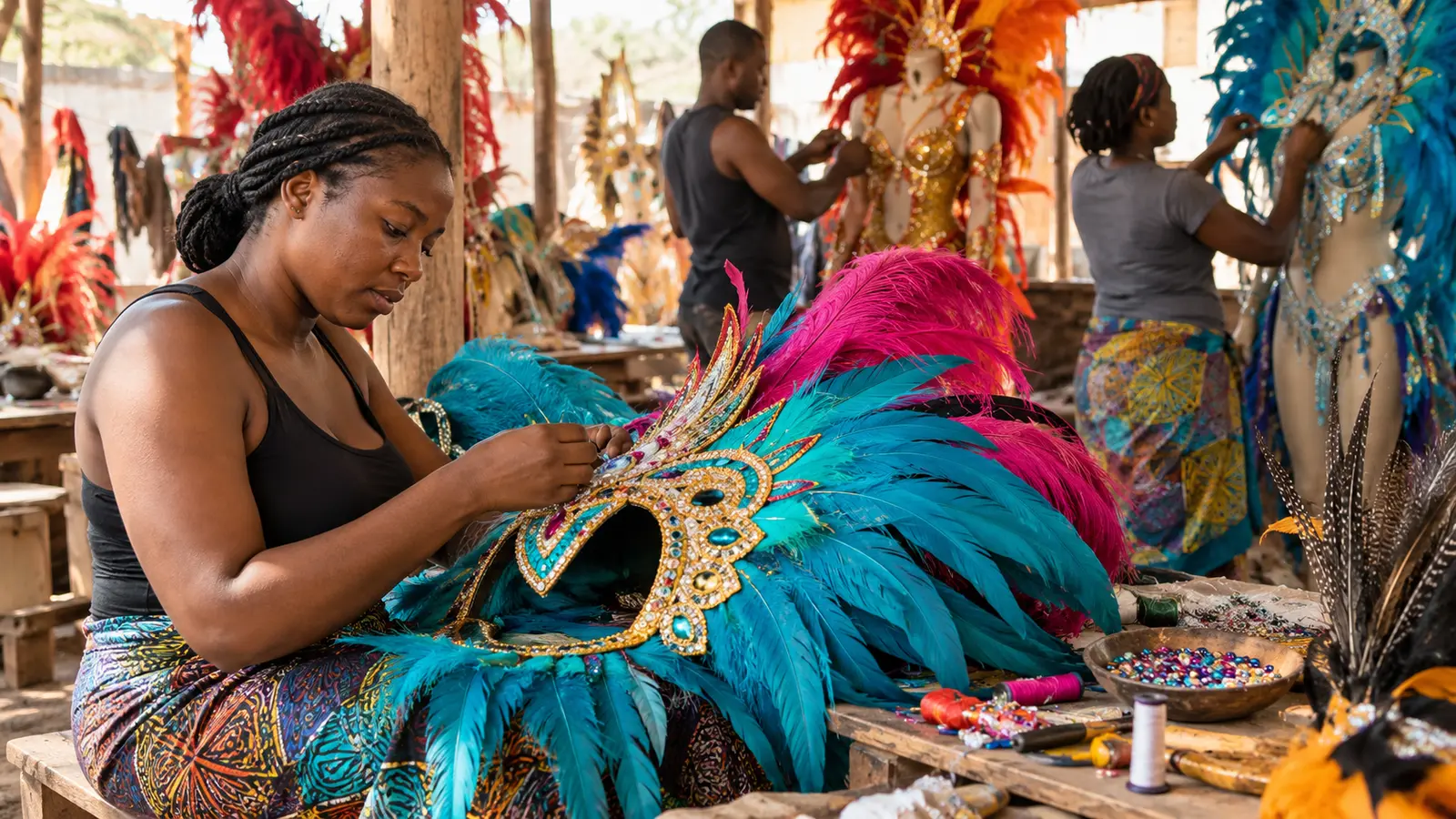
Calabar Carnival is seen in December, but much of its creative work begins months earlier. Participating bands interpret an annual theme, divide the parade into visual sections and turn sketches into costumes that hundreds of performers can wear while dancing for kilometres. Designers test colour combinations and silhouettes first; tailors and apprentices then translate those ideas into repeatable patterns.
The workshops behind the parade bring together sewing, beadwork, painting, carpentry, metalwork and prop construction. Fabric, raffia, feathers, foam, wire, sequins and recycled materials may be cut, stitched, dyed, glued or welded into headdresses, wings and moving structures. A costume must do more than photograph well: it has to balance on a body, survive heat and movement, allow the dancer to see and breathe, and be repairable when something tears on the route.
Choreography develops alongside the clothes. Band leaders organise dancers into sections, musicians and DJs establish cues, and rehearsal captains repeat formations until performers can hold spacing in a crowded street. Makeup artists, hairdressers and dressers plan how large groups will be prepared on time. Technicians test sound, lighting and floats; marshals, medics and stage crews prepare for the practical risks hidden by the spectacle.
Calabar is a city rather than one ethnic identity. The Efik are historically prominent in the Cross River estuary, alongside Efut, Qua and other communities that have made the city home. Efik life grew around riverine trade, fishing, farming and market exchange; contemporary livelihoods also include public service, education, tourism, hospitality, transport and the creative trades. Women have long been central to food and textile markets, while family workshops and apprenticeships continue to pass on tailoring, decoration and performance skills.
The city’s visual culture is larger than the carnival. Efik ceremonial dress includes the women’s flowing onyonyo gown and men’s wrapper-based usobo ensemble, often completed with carefully chosen beads, hats or walking sticks. Regional carving, masquerade, music and symbolic traditions also carry histories that deserve accuracy and consent. Carnival designers may draw on local memory, but sacred or restricted forms should not be reduced to costume motifs simply because they are visually striking.
Carnival season creates a temporary economy around this labour. Fabric sellers, welders, carpenters, printers, dancers, caterers, drivers, photographers, hotels and street vendors all earn from the gathering. The strongest cultural policy would treat them as skilled workers: commissioning early, paying transparently, documenting authorship, providing safe workspaces and helping makers turn a December contract into year-round enterprise.
That is the discipline behind the colour. What reaches the parade route is the final public layer of budgeting, prototyping, fitting, rehearsal, correction and collective memory. To report Calabar Carnival only as spectacle is to miss the people whose hands make spectacle possible.