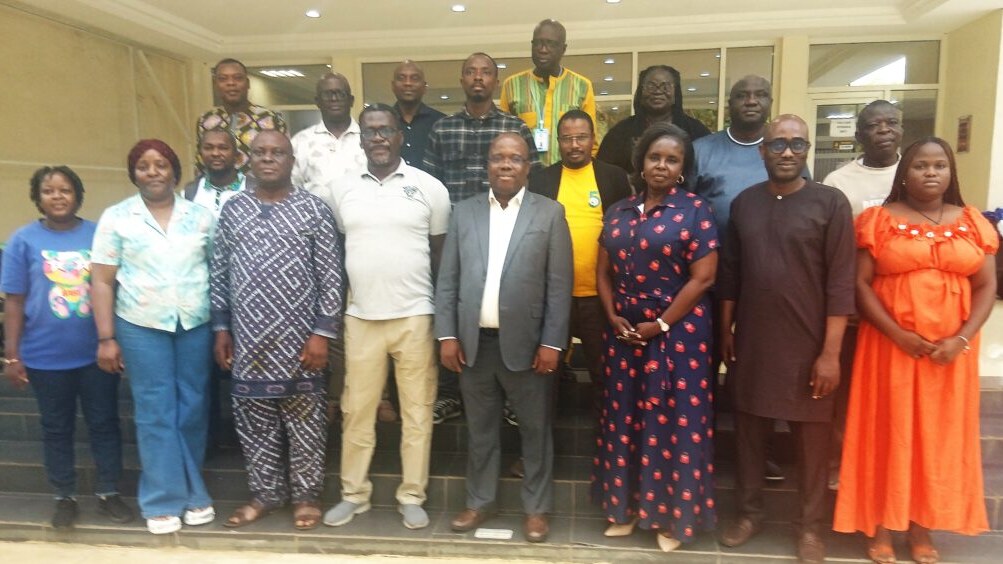
The East African Community Secretariat has handed 16 Japan-funded patrol vehicles to its eight partner states for use at key and porous border points. The October 23 delivery gives each country two vehicles under a project implemented by the United Nations Office for Project Services. The equipment is real and allocated; the wider gains claimed for security and trade are still expectations to be tested in operation.
The eight members named by the EAC are Burundi, the Democratic Republic of Congo, Kenya, Rwanda, Somalia, South Sudan, Tanzania and Uganda. Equal allocation means two vehicles per state, but it does not show which border locations will receive them, how large each patrol area is or whether every state faces the same operational need.
Two vehicles for each partner state
EAC Secretary General Stephen Mbundi said the vehicles should be deployed exclusively at designated border areas. That instruction creates a useful public standard. Partner states should be able to identify the assigned posts, the agency responsible, the date each vehicle entered service and the safeguards against diversion to unrelated official duties.
The initiative sits within a project called ‘Creating a Secure Trading and Customs Environment in the East African Community through Enhancing Border Security.’ Japan funded the initiative and UNOPS supported procurement. The EAC release does not publish the total acquisition cost, maintenance budget, vehicle specifications or a country-by-country delivery schedule.
According to the EAC, technical assessments at One-Stop Border Posts identified transport and mobility gaps that limited patrols and responses to cross-border crime. Vehicles are a direct answer to mobility. They cannot alone fix shortages of trained staff, intelligence sharing, communications, fuel, maintenance, lawful procedures or cooperation between agencies on opposite sides of a border.
The equipment answers a documented mobility gap
The Secretariat expects the vehicles to improve patrol coverage and response to smuggling, trafficking and other illicit activity. Those are stated objectives, not measured effects. A future reduction in reported incidents could reflect deterrence, displacement to another route, changes in detection or unrelated conditions; credible evaluation will need activity and outcome data together.
The project is also presented as support for safer movement of people and goods. Border enforcement and trade facilitation can reinforce each other when officers direct resources toward serious risks while compliant travellers and traders receive predictable processing. They can conflict when security measures produce arbitrary delays, informal charges or blanket suspicion of small-scale cross-border trade.
The African Union message delivered at the Tana Forum this weekend made a related distinction: informal traders sustain families and local economies, and treating their livelihoods indiscriminately as security threats can deepen exclusion. That principle gives the vehicle programme a rights and service test alongside its enforcement test.
Security and legitimate trade must be measured separately
For businesses, the useful indicators are practical. Traders should see whether emergency response improves, whether closures or inspections become more predictable, and whether movement through designated posts becomes safer without longer unexplained delays. The handover does not change customs law, visa rules, tariff schedules or documentary requirements by itself.
For public accountability, agencies should publish deployment registers, operating responsibility, fuel and maintenance arrangements, mileage, downtime, patrol areas and complaint channels. Aggregate reports can then separate patrol activity, seizures, referrals, prosecutions, rescued trafficking victims and assistance to stranded travellers. A photo of a handover cannot answer those questions.
What an accountability record should show
The programme also needs a sustainability plan. A vehicle that lacks servicing, spare parts, trained drivers or protected fuel funding can quickly stop providing value. UNOPS procurement may support readiness at delivery, but each partner state will ultimately need to show how the equipment stays operational and how officials are held responsible for its use.
The October 23 handover is a concrete regional intervention and a modest one: 16 vehicles across eight states with vast and varied borders. Its importance lies in whether it closes the mobility gaps identified by assessments and produces better service at named locations. Until those records exist, the accurate conclusion is delivery completed, impact unproved.
The first useful public update should therefore identify where every vehicle is based and who is responsible for it. Later reports should connect patrol logs with border-service indicators, complaints and independently reviewable outcomes, so residents and traders can distinguish equipment delivery from lasting operational improvement.