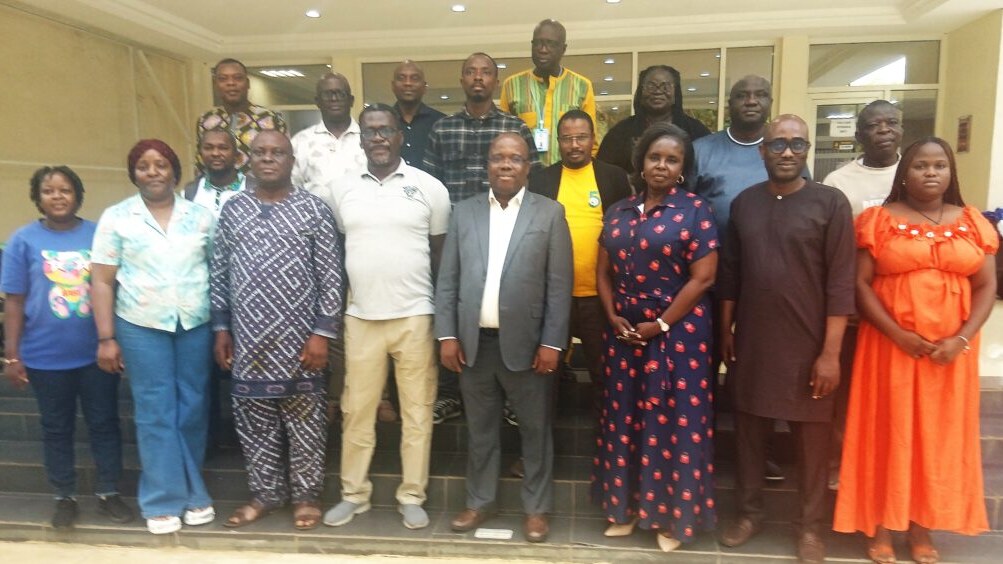
The African Development Bank Group and UK Export Finance have signed their first co-financing framework, creating a channel through which the institutions can identify, assess and develop possible projects together. The memorandum of understanding was signed on October 21 at the fifth UK–West and Central Francophone Africa Trade and Investment Forum in Conakry, Guinea, and the AfDB announced it on October 23.
Abdul Kamara, the AfDB’s officer in charge of the vice presidency, signed for the bank, while UKEF chief executive Tim Reid signed for the British export-credit agency. The agreement covers potential sovereign and non-sovereign operations in the AfDB’s regional member countries. In practice, that could include public borrowers as well as eligible private-sector transactions.
What the framework is designed to do
The framework is meant to help both institutions bring their financing instruments to the same prospective deal. Co-financing can increase the amount available, spread risk and align technical appraisal. It can also create a more complicated package, because each institution may bring its own eligibility rules, due diligence, currency, repayment and procurement conditions.
The announcement names energy, infrastructure, water and sanitation, health, digital infrastructure, critical minerals, resilient supply chains, agriculture and trade finance as priority areas. These are fields with large financing gaps, but a list of sectors is not a pipeline of approved projects. No country is promised a project simply because its needs fit one of those headings.
What the announcement does not commit
Most importantly, the memorandum itself is a framework, not a funding award. The published release gives no aggregate commitment, no named first project, no country allocation, no interest rate, no debt terms and no disbursement schedule. It should therefore not be described as billions of pounds already committed to Africa or as money already available to a government or company.
A future transaction would still have to be found, structured and approved. A sovereign deal could affect public debt and contingent liabilities. A private-sector deal would require a viable sponsor and revenue model. UKEF participation may also reflect its mandate to support United Kingdom exports, so the eventual procurement and local-content balance will matter.
The AfDB and UKEF say the partnership is intended to mobilise finance and help close infrastructure gaps. That ambition is credible as a purpose, but delivery can be measured only when a project has a borrower, a financing amount, approvals, conditions and a route to implementation. A memorandum makes cooperation easier; it does not substitute for those decisions.
The sectors in view
The institutions also bring different roles to the table. The AfDB is a multilateral development bank owned by African and non-African member countries, while UKEF is the United Kingdom’s export-credit agency. Their interests can overlap around a viable project, but the framework does not make their mandates identical or remove the need for each side’s approval process.
The range of named sectors creates both opportunity and scrutiny. Energy and digital infrastructure can raise productivity; water, sanitation and health projects can improve daily life; agriculture and trade finance can support firms and food systems. Critical-minerals and supply-chain projects also raise questions about environmental protection, community consent, processing location and how much value remains in producing countries.
What borrowers and citizens should watch
For governments considering the facility, the useful questions are practical: Is the finance concessional, commercial or blended? Which currency carries the repayment risk? What share of procurement is tied to British goods or services? What social and environmental safeguards apply? And will project documents, guarantees and liabilities be published before public commitments are made?
For businesses, the framework may eventually open routes into larger transactions, but it is not an application window announced to the general public. Companies should wait for a specific procurement notice, lender invitation or project sponsor communication and should never pay an intermediary who claims that the memorandum guarantees access to funds.
For journalists and investors, the next meaningful update will be documentary rather than rhetorical: a named operation, board approval, financing agreement, procurement notice or financial close. Repeating the memorandum’s sector list as if it were a portfolio would obscure the difference between institutions agreeing how to work together and institutions committing capital to a particular asset.
The October 21 signing is meaningful because it creates the first formal framework between these two institutions. Its value will be judged by the quality, transparency and additionality of the projects that follow. Until then, the accurate headline is institutional: AfDB and UKEF have opened a co-financing channel, while the money, projects and terms remain to be defined.