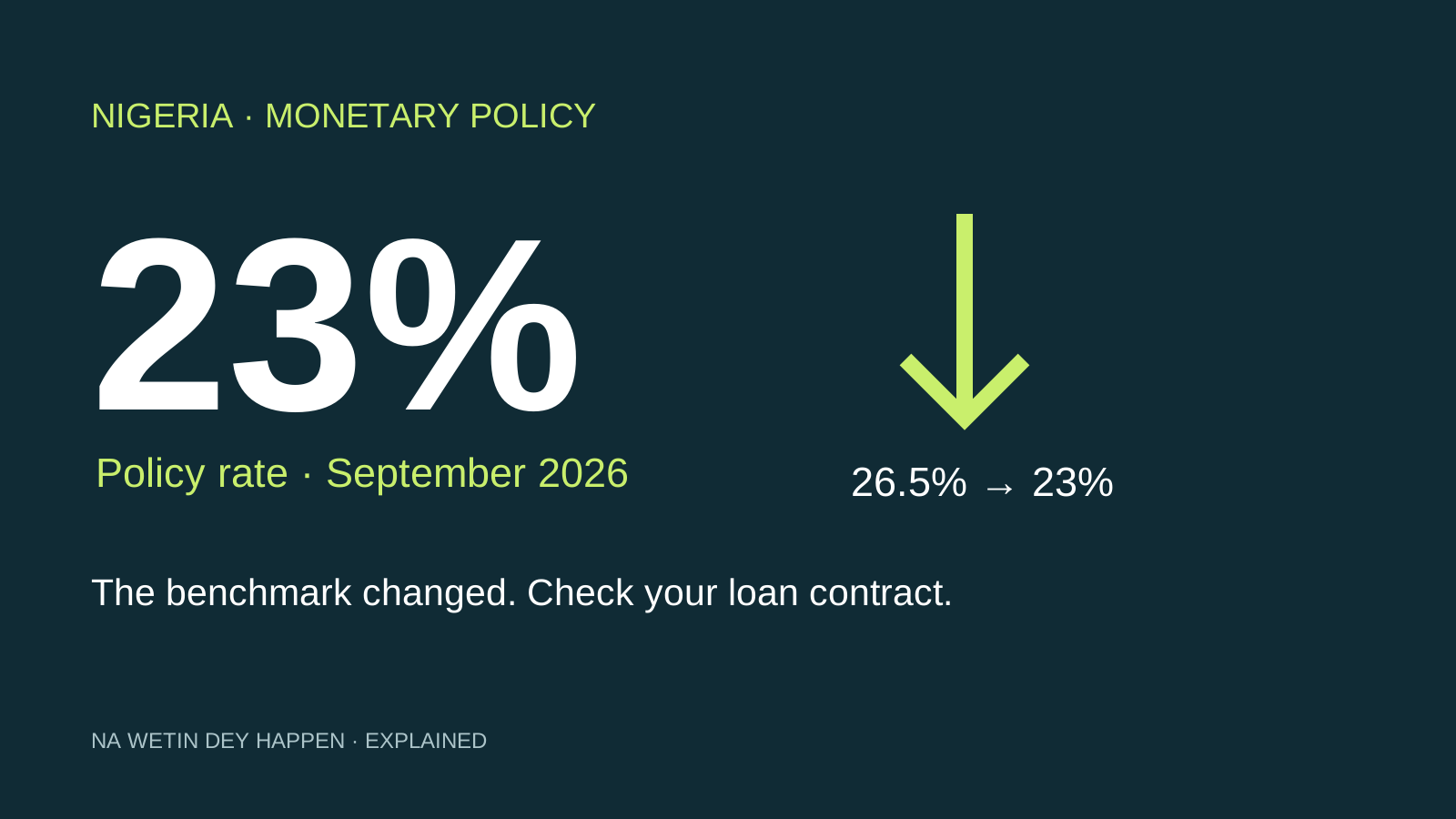
The Central Bank of Nigeria’s latest published Monetary Policy Committee decision resets the Monetary Policy Rate to 23 per cent. The decision was taken at its September 21–22, 2026 meeting. For anyone borrowing to stock a shop, finance equipment or manage a household expense, the headline is important—but it is only the beginning of the comparison.
The CBN’s decision list shows that July’s meeting retained the rate at 26.5 per cent. The new benchmark is therefore 3.5 percentage points lower. The bank describes September’s action as a reset. Its published summary also changes the standing-facilities corridor to 50 basis points above and 300 below the benchmark while retaining the stated reserve requirements.
The contract is the starting point
None of that means every existing loan now costs 23 per cent. A borrower’s contract sets the applicable rate, the circumstances in which it can change and the fees that accompany it. Start with the signed agreement and the lender’s current written repayment schedule. A newspaper headline cannot replace either document.
Ask the lender whether the loan is fixed or variable, which benchmark a variable rate follows, and when the next review takes effect. Then ask for the total repayment in naira, including mandatory fees and any insurance charge. Two offers carrying the same advertised interest rate can leave a borrower with different amounts to repay.
A worked example, not a promised saving
A simple illustration shows why the distinction matters. Reducing a flat annual charge on ₦1 million from 26.5 per cent to 23 per cent would reduce that charge by ₦35,000. This is arithmetic, not a bank quotation or an estimate of a typical borrower’s saving. A reducing-balance loan, different term or additional fee changes the calculation.
Savers should make a separate comparison. A policy decision is not a promise about the next rate on a deposit account, and an attractive quoted yield says little about early-withdrawal restrictions. Check the institution, term, access conditions and applicable charges before moving money. A return that looks generous may be unsuitable if the money is needed for rent or school fees.
What to do with the headline
The useful response to the CBN announcement is a better question to a lender, not an assumption that credit has become affordable. Obtain the revised offer in writing, compare its total cost with the old one and consider the effect of weaker sales or interrupted income on repayment. This explainer is general financial education, not a recommendation to borrow or invest.