Somaliland is trying to turn strategic usefulness into sovereign recognition. President Abdirahman Mohamed Abdullahi, known as Irro, has offered an unusually public menu: an airport bearing Donald Trump’s name, opportunities around Berbera port and access to mineral investment. The immediate political question is not whether these offers are eye-catching. It is whether Hargeisa can obtain a lasting diplomatic commitment before giving away concessions whose value may outlast the administration it hopes to persuade.
Our assessment is that this is a serious attempt to change the terms of a long-running dispute, but also an unequal negotiation. Somaliland wants a decisive change in international status. The United States can seek practical cooperation in smaller, reversible steps. That difference creates a risk for Hargeisa: becoming more useful to Washington without becoming more recognised. It also creates a test for Washington: whether the benefits of recognition would outweigh its regional diplomatic and security costs.
What is an offer, and what has actually changed?
The chronology matters. The New York Sun’s October 17, 2026 headline renewed attention to the package, but the airport-naming idea and wider offers were already described in Yinka Adegoke’s September 16 Semafor interview with Irro. They should not be presented as a newly completed October transaction. This article independently examines the political bargain; it does not reproduce the Sun’s subscription-only reporting.
Semafor’s account described investment opportunities and the possibility of negotiating future military access. It did not establish that a U.S. base had been agreed. Nor did the sources reviewed for this analysis establish a completed airport renaming, a signed mineral-for-recognition contract or Trump’s acceptance of the package. Offers, negotiations and implemented decisions are separate political events, even when a headline compresses them into one.
The clearest verified change in the recognition landscape is Israel’s recognition on December 26, 2025, documented by Israel’s government and the African Union’s response. That decision does not establish American recognition. The State Department’s 2026 report to Congress explicitly places constructive engagement with Somaliland inside continued recognition of Somalia’s sovereignty and territorial integrity. We found no verified U.S. recognition decision that supersedes that position in the material reviewed for publication.
The airport name is the invitation; geography is the argument
Putting a U.S. president’s name on an airport is inexpensive compared with a long commercial concession or a military-access agreement. Its political purpose is to make an otherwise distant sovereignty dispute personally memorable. Our reading is that the gesture seeks attention at the highest level and a chance to escape the slow machinery of conventional diplomacy. That is an interpretation of the strategy, not evidence of a private promise or an allegation of personal financial benefit.
Personal attention can open a door, but it cannot by itself supply a durable relationship. Even an administration inclined towards a bargain would still need to consider what access it needs, what it would cost to protect personnel, how agreements would survive political changes and what happens to its existing relationships. A ceremony could be organised quickly; dependable defence, trade and diplomatic arrangements require much more institutional work.
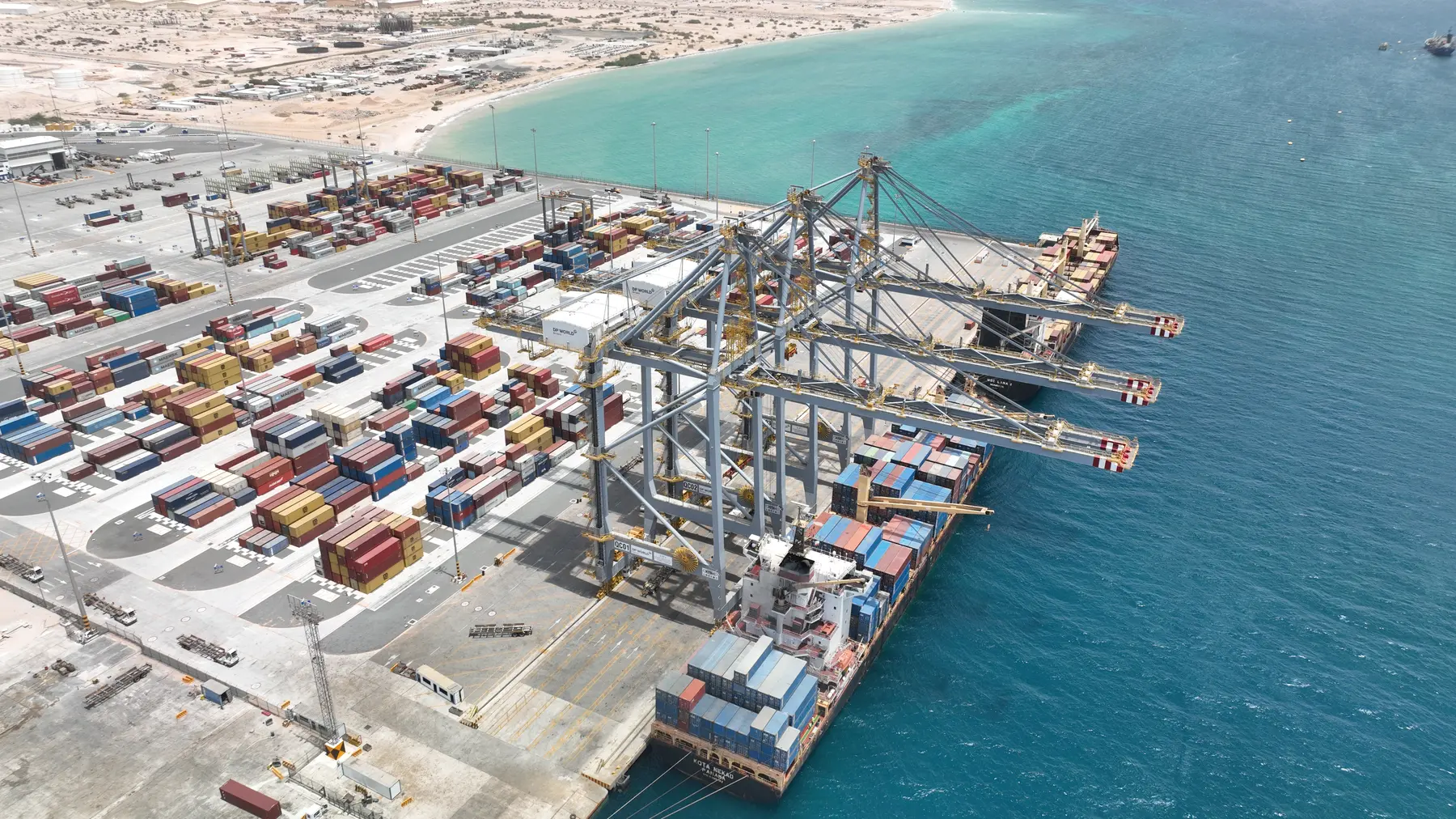
Berbera gives the approach more substance than symbolic flattery alone. Its Gulf of Aden location offers proximity to the approaches to the Red Sea; it is not itself the Bab el-Mandeb strait. Geography can make an additional logistics option attractive. It does not automatically make that option indispensable. The negotiating question is the value of a specific, usable arrangement compared with alternatives, rather than the dramatic appearance of a port on a strategic map.
Washington can separate access from recognition
The State Department report exposes the central bargaining difficulty. Its published position permits positive relations and further engagement with Somaliland while preserving the framework of Somalia’s territorial integrity. That means cooperation and recognition are not inseparable in existing U.S. policy. Hargeisa’s challenge is to persuade Washington that a formal change of status offers enough additional benefit to justify departing from that framework.
From an American policymaker’s perspective, incremental engagement offers flexibility: discuss investment, assess logistics and maintain contacts before making an irreversible diplomatic commitment. From Somaliland’s perspective, the same flexibility can look like permanent postponement. If useful cooperation is available without recognition, the stronger party has less reason to pay the political price of recognising. That is a structural problem in the proposed exchange, not proof that negotiations must fail.
A carefully sequenced bargain would therefore matter more than an expansive opening offer. What commitment comes first? Which benefits depend on an explicit recognition decision? Can an agreement be suspended if promised steps do not occur? Those are questions this analysis argues legislators and citizens should ask. We have not seen a published agreement answering them, and an attractive negotiating position should not be mistaken for enforceable terms.
Africa’s border argument has two competing histories
The historical argument is more complicated than a simple contest between separatism and national unity. The U.S. Office of the Historian records that the Somali Republic emerged in July 1960 from the union of the formerly British Somaliland protectorate and the former Italian-administered trust territory. Somaliland’s claim to restored sovereignty, advanced after its 1991 declaration, draws political force from that distinct prior territorial history.
Recognition advocates can therefore argue that they seek restoration of a former boundary, rather than an unlimited right to redraw Africa’s map. Their opponents answer that the internationally recognised state is the united Somali Republic and that its territorial integrity remains protected. Both positions invoke the political importance of borders; they disagree about which historical settlement should govern. A serious analysis must explain that disagreement rather than dismiss either side as irrational.
The African Union’s position is explicit. Its Commission chair rejected recognition on December 26, 2025, invoking Somalia’s unity and the continental principle of inherited borders. The Peace and Security Council reiterated its opposition at its January 6, 2026 ministerial meeting. These are consequential institutional positions, not an international court judgment resolving every aspect of Somaliland’s legal case. They nevertheless raise the regional cost of a unilateral American move.
For Mogadishu, this dispute concerns who has authority to speak for territory and enter agreements affecting it. Somalia’s Foreign Ministry has rejected Israel’s recognition and warned of destabilisation. Those are the Somali government’s positions and forecasts, not outcomes established by this article. Politically, however, expecting Somalia simply to acquiesce in an externally brokered settlement would underestimate the sovereignty claim around which its objections are organised.
Berbera is a working port, not an unclaimed prize
Berbera also has an existing commercial life. DP World’s own port information describes container, storage and intermodal services, with a first-phase capacity of 500,000 twenty-foot-equivalent units. Its two-million-unit figure is labelled as a second-phase capacity, not a reason to report that future scale as already operating. The port is an established business involving existing rights and obligations; it is not an empty asset that can be handed over without consequences.
Any proposed American role would need to be defined precisely. Commercial port access, an investment, an exclusive concession, naval visits and a permanent military installation create different obligations. Treating them as interchangeable obscures both the possible benefit and the potential liability. A sound agreement would explain who controls operations, who pays for additional infrastructure and security, and how civilian trade is protected from military disruption.
There is also a regional alternative to recognition-led access. The Ankara Declaration of December 11, 2024, brokered by Türkiye between Ethiopia and Somalia, envisaged Ethiopian commercial access to the sea through arrangements under Somalia’s sovereign authority. The declaration is not proof that every contemplated arrangement has been implemented. It does demonstrate that access and sovereignty can be negotiated separately—an important counterpoint to the argument that recognition is the only route to a useful port relationship.
Minerals create a second bargaining problem
Mineral offers raise a different valuation problem. A prospect is not a producing mine, and geological potential is not an audited reserve that can be priced as immediately available wealth. Before any investor or government could sensibly value an actual concession, it would need evidence about deposits, extraction costs, infrastructure, environmental obligations and enforceable rights. This article verifies no reserve estimate or mineral valuation supporting a price for recognition.
That uncertainty can work against a government eager for a quick diplomatic breakthrough. If concessions are granted before their commercial value is understood, the public may bear decades of opportunity cost for a political benefit that remains uncertain. Conversely, an investor promised an exceptionally favourable deal may still withhold capital if ownership, security or export arrangements are disputed. Recognition rhetoric cannot remove those commercial questions by itself.
The practical political safeguard would be transparent, separately valued agreements. Naming rights, port services, defence access and mineral licences should each have a clear purpose and approval process. Publishing terms, explaining revenues and liabilities, and providing legislative scrutiny would help citizens assess the exchange. These are our recommendations for accountable bargaining, not claims that such safeguards have already been adopted or that any undisclosed deal is necessarily improper.
The domestic test: whose consent counts?
Somaliland’s electoral record offers a stronger legitimacy argument than an airport dedication. The UCL-led international observation mission’s March 20, 2025 assessment described the November 13, 2024 election as peaceful and well managed, with an accepted opposition victory. That evidence supports the case that functioning institutions deserve serious international engagement. It also means those institutions should have a substantive role in scrutinising any major bargain made in their name.
The same observers identified shortcomings, including election delays, restrictions on political competition and problems requiring electoral reform. The democratic argument is strongest when it includes those findings rather than treating a successful transfer of power as proof that every governance question has been settled. An external recognition campaign should strengthen domestic accountability, not make criticism of concessions appear disloyal to the national cause.
Las Anod is an especially difficult reminder that consent cannot be assumed across all claimed territory. Amnesty International’s April 20, 2023 investigation reported indiscriminate shelling by Somaliland forces and civilian harm during fighting involving Dhulbahante-affiliated fighters; it called for investigation and protection of civilians. That is an attributed historical finding, not a new casualty report or a statement about today’s territorial control. It belongs in this debate because local political grievances cannot be erased by an agreement with an outside power.
The principle should be consistent: if Somaliland’s argument asks outsiders to take its population’s political wishes seriously, it must also take seriously the wishes and rights of communities contesting its authority. Recognition by a powerful government could change diplomatic treatment without resolving that problem. A sustainable settlement needs mechanisms for local consent, civilian protection and accountability alongside any negotiation over ports or resources.
Three possible paths—and the signs that would distinguish them
The first possible path is continued functional engagement without recognition. The sign would be additional contacts, investments or limited cooperation while official sovereignty language remains unchanged. This would give Washington practical options but leave Hargeisa’s central ambition unmet. It is structurally easier under the published U.S. framework; calling it a possibility is not a prediction that a decision has already been made.
The second path is explicit U.S. recognition accompanied by negotiated agreements. The decisive evidence would be an authoritative American recognition act and published terms—not a favourable remark, visiting delegation or proposed congressional text. Even then, recognition would not automatically resolve African Union opposition, Somalia’s objections or the terms on which other states cooperate. A bilateral breakthrough and a broadly accepted settlement are different achievements.
Nor would American recognition automatically produce United Nations membership. The UN’s own account explains that admission requires a General Assembly decision following a Security Council recommendation. Wider diplomatic support would therefore remain consequential. Somaliland’s relationship with Taiwan adds a further strategic dimension to courting Washington, but it would be speculative to announce a future Chinese veto or a settled Security Council alignment without an actual decision process.
The third path is a negotiated regional accommodation, potentially combining practical arrangements with a process addressing political status. It would be harder to advertise as an immediate triumph and would require willingness from actors whose positions remain far apart. Its potential advantage is durability: terms accepted closer to the dispute are less dependent on one foreign leader’s enthusiasm. Evidence would mean substantive negotiations and published agreements, not merely another appeal for dialogue.
The real price of a durable bargain
For African audiences beyond the Horn, the issue is who helps determine the conditions of recognition. If diplomatic status appears purchasable through access to strategic assets, governments and aspiring states may be encouraged to compete through concessions rather than build regional consent. Yet treating all borders as beyond political discussion can also leave persistent grievances unanswered. The useful continental response is a credible process for assessing claims and protecting people, rather than either an auction or indefinite avoidance.
Somaliland has a plausible reason to seek a different approach: strategic assets and functioning institutions can create an opening that formal diplomacy has not delivered. The political danger is confusing attention with commitment and concessions with leverage. Berbera may earn a hearing in Washington. Whether that hearing produces a durable benefit depends on what Hargeisa retains, what Washington actually commits to, and whether the people and neighbours most affected can live with the resulting settlement.