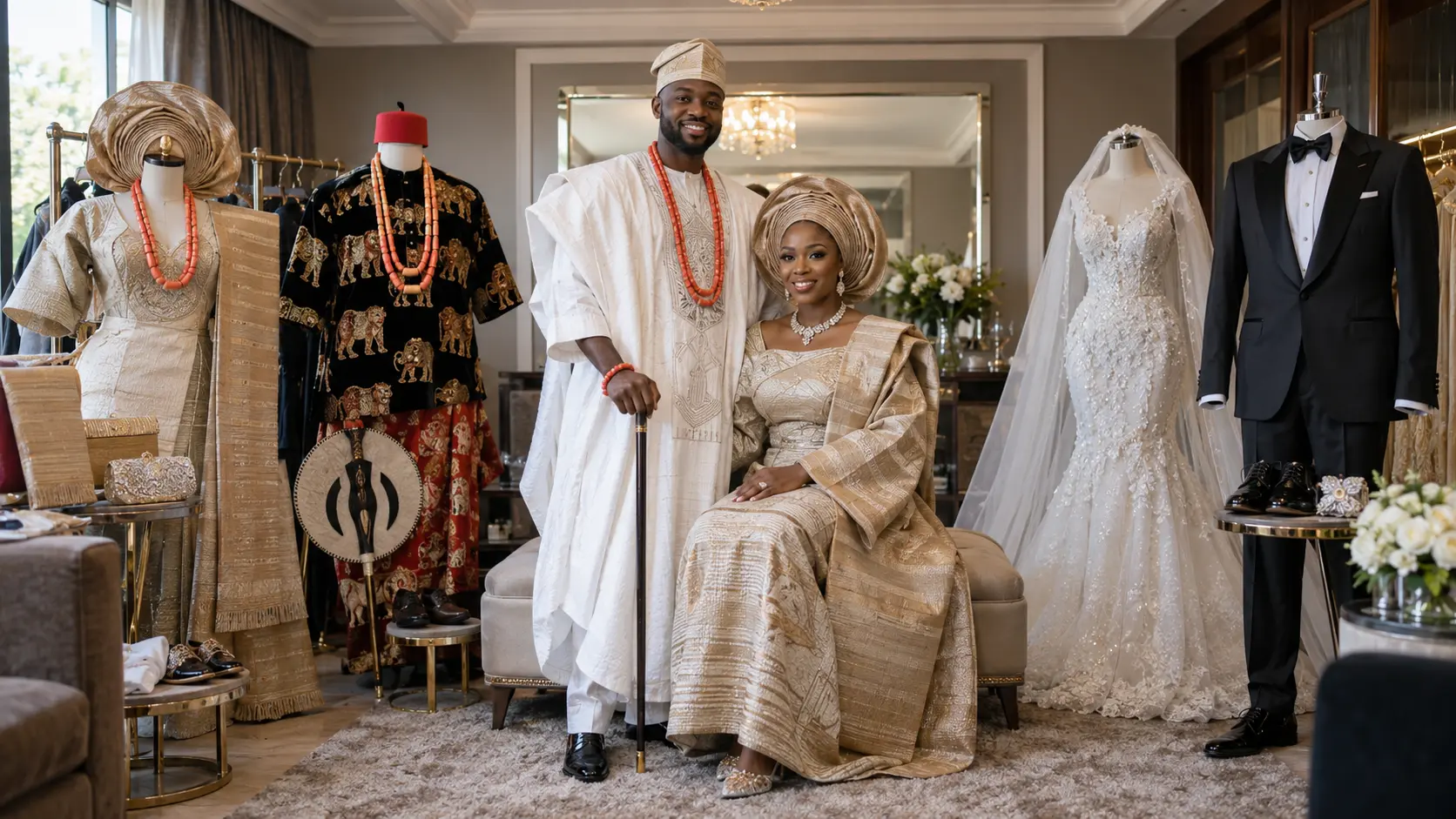
A Nigerian bridal designer is asked to solve several problems at once. The garment must photograph beautifully, survive hours of greeting and dancing, respect the ceremony, fit the wearer and often communicate two families’ expectations. That is why bridal work is better understood as design, engineering and cultural interpretation—not the simple purchase of an impressive dress.
Deola Sagoe’s House of Deola has made this argument through Komole, a body of ceremonial work that reinterprets Yoruba dress and handwoven traditions through contemporary structure and finishing. Its influence lies not in freezing a historic silhouette, but in showing that inherited cloth can support formal design authorship, research and luxury production on Nigerian terms.
Design begins with interpretation
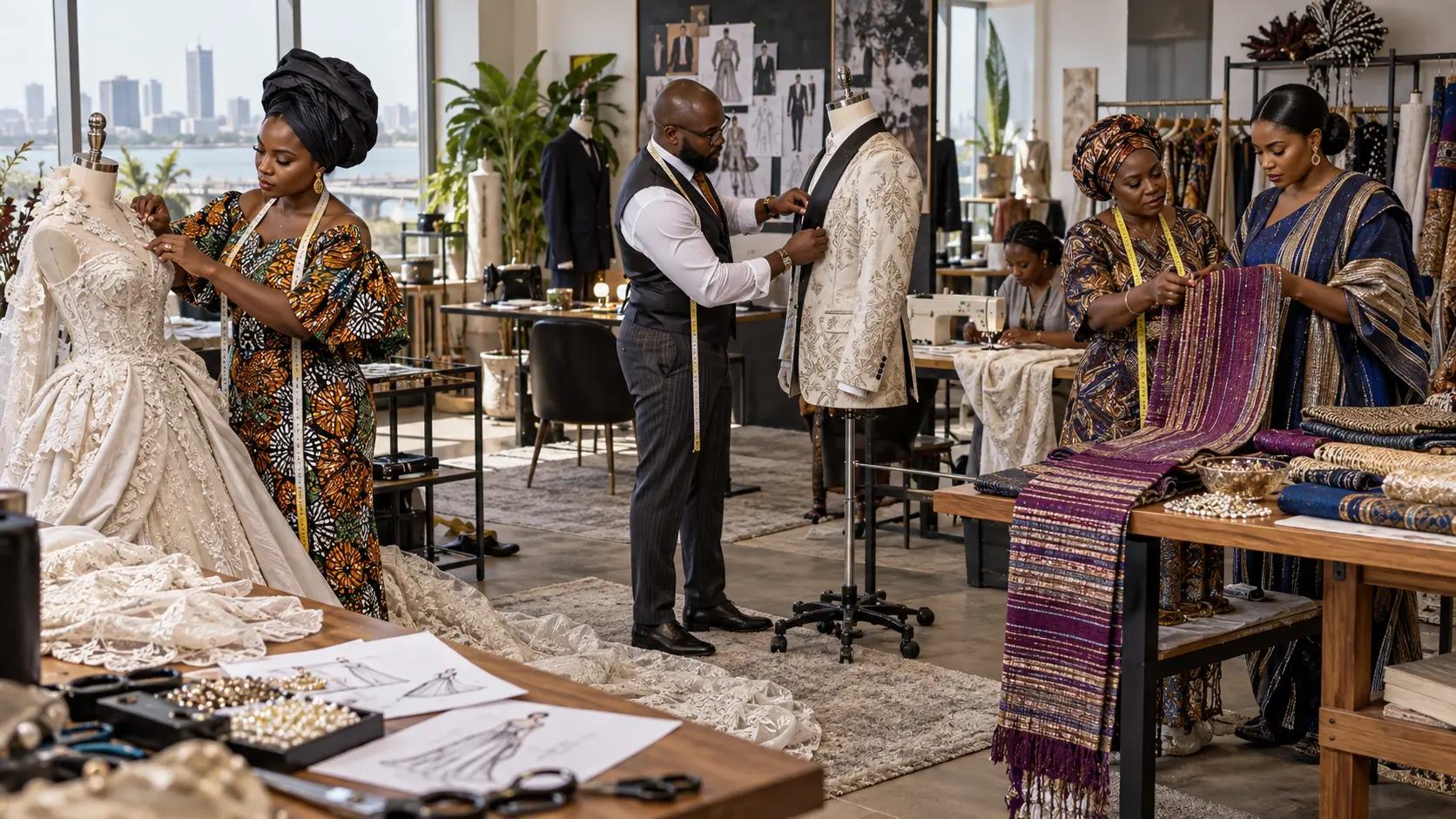
Mai Atafo’s ATAFO works across menswear, womenswear and bridal garments. The brand says it launched a bridal line in 2011 and has built its reputation around fit, tailoring and bespoke service. That breadth matters at weddings, where the groom’s construction, the couple’s visual relationship and the clothes worn by parents deserve the same precision usually reserved for the bride.
Veekee James represents another highly visible model: sculptural custom gowns supported by a formal consultation and production process. Her studio tells clients to begin the usual bridal process about six months before delivery, and says most clients complete consultations and fittings remotely. That detail reveals how diaspora demand has changed the Nigerian atelier from a walk-in local service into a cross-border measurement, communication and logistics business.
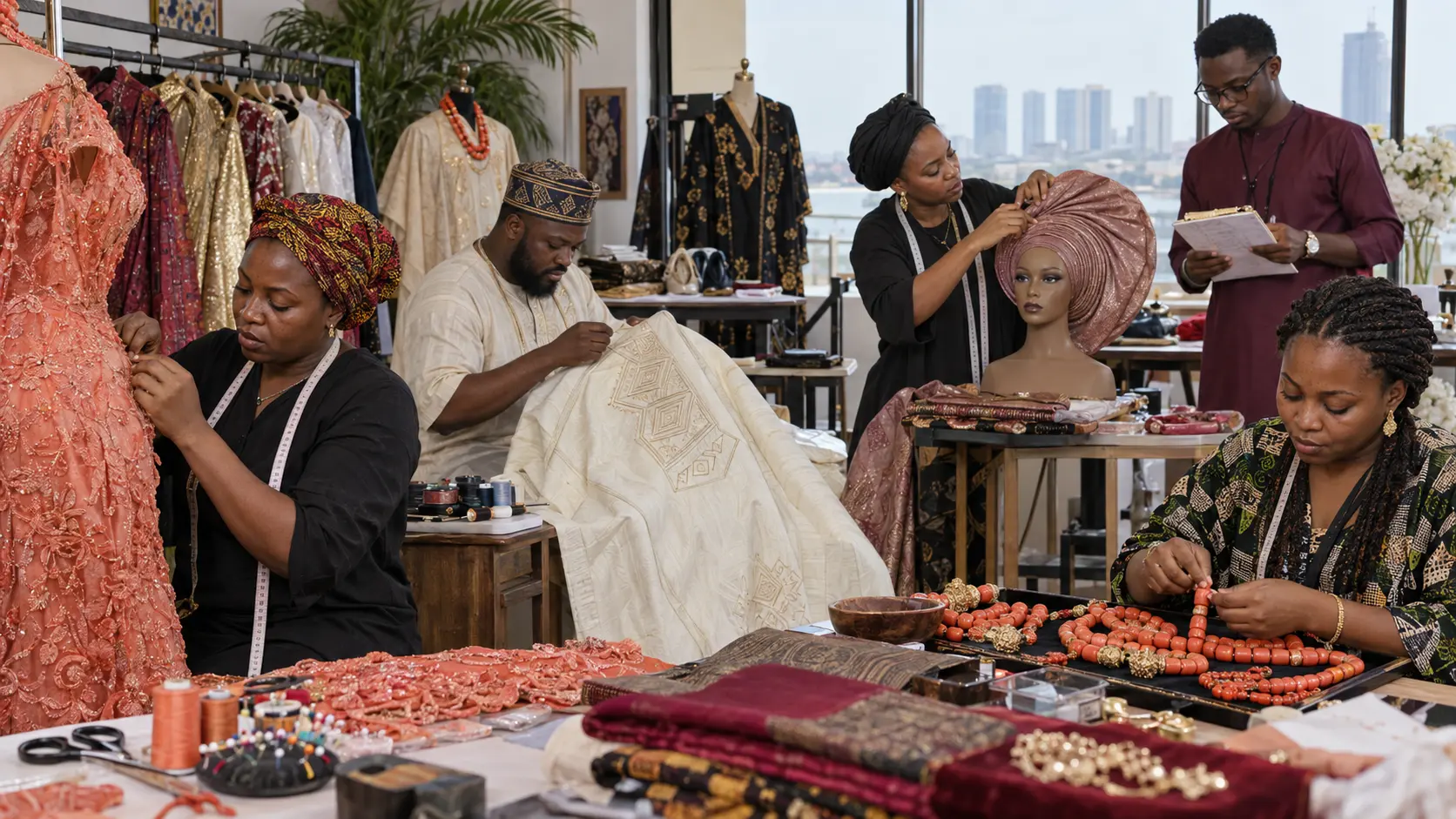
Toju Foyeh and a wider generation of Nigerian labels have expanded the vocabulary further through bridal, occasion and traditional work. Red-carpet visibility and celebrity weddings help studios find customers, but the finished garment still depends on pattern cutters, machinists, hand embellishers, corset specialists, ironers, fitters, photographers and assistants whose names rarely travel as far as the designer’s.
Studios connect artisans to global clients
The cultural impact is visible in both directions. Designers borrow knowledge from weavers, bead makers, dyers and family dress traditions; their international clients and images then change what local brides request. This circulation can sustain craft, but it can also detach patterns and materials from their makers. A successful collection should generate credit and orders down the supply chain, not merely harvest cultural atmosphere.
Bridal fashion also trains a workforce. A studio that can repeatedly deliver complex garments to fixed dates must develop quality control, scheduling, client records, procurement and apprenticeship. Those capabilities can move into ready-to-wear, costume, exports and manufacturing. The wedding gown is therefore a demanding product through which a broader creative business learns discipline.
The industry’s vulnerabilities are equally real. Imported lace and embellishments expose prices to exchange rates; unreliable power increases production cost; copying is rapid; and social-media expectations can push clients toward silhouettes that ignore comfort or cultural purpose. Contracts, deposits, alteration limits and intellectual-property documentation are not unromantic details—they protect both maker and bride.
Credit is part of cultural preservation
The next stage of Nigerian bridal influence should be measured by more than viral reveals. It should include named artisans, safer workshops, serious apprenticeships, accurate delivery, exportable craftsmanship and garments that remain meaningful after the photographs are posted. Designers become cultural institutions when their success preserves skill and expands opportunity beyond one famous label.