| Question | Nigeria: 2027 general elections | United States: 2026 midterms |
|---|---|---|
| When? | INEC lists January 16 for presidential and National Assembly polls; February 6 for governorship and state assembly polls. | November 3, 2026, is the federal general election date. |
| Is the presidency being elected? | Yes. The national contest determines the next presidential mandate. | No. Trump is not a presidential candidate on the midterm ballot. |
| What power is at stake? | Executive leadership and legislative representation, with state contests on their own ballot schedule. | Control of the House and Senate, alongside state and local offices depending on the jurisdiction. |
| Who runs the process? | INEC administers the federal and state general elections. | State and local election authorities administer voting; the FEC does not run polling stations. |
| What should readers avoid? | Treating a handful of by-elections or coalition announcements as a national result. | Treating a national opinion poll as a count of seats already won. |
Where the contests stand on September 26
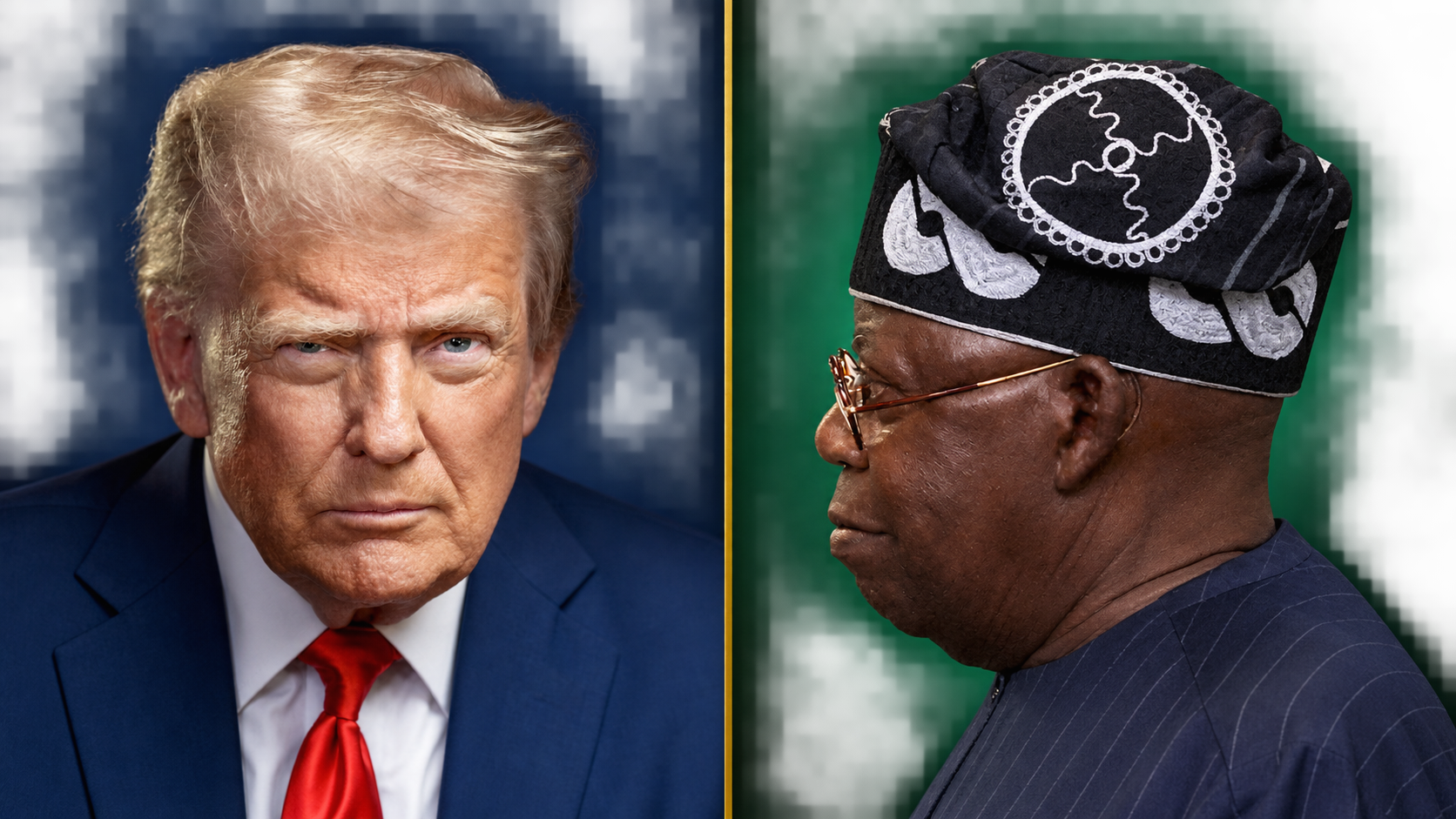
Nigeria and the United States are entering consequential election periods, but their voters are being asked to make different decisions. Nigeria is approaching a general election that includes the presidency. Americans are approaching a midterm election that can change the balance of power around their president without choosing a new one. That distinction is essential to understanding the political pressures on Bola Tinubu and Donald Trump.
As checked on September 26, INEC’s public calendar lists January 16, 2027, for the national election and February 6 for governorship and state assembly voting. The commission’s separate presidential and National Assembly notices identify the federal contests. Readers should use those current official materials when checking dates rather than circulate older timetables. Voice of Nigeria’s report on the campaign schedule places the presidential and National Assembly campaign opening on August 19, 2026, and the state-level opening on September 9.
In the United States, the Federal Election Commission identifies November 3, 2026, as the next regular federal general election date. All 435 voting House seats are contested in the congressional cycle; Senate terms are staggered, with roughly one-third regularly contested, alongside special elections. The political question is whether Republicans can retain congressional power or Democrats can gain a chamber and impose stronger legislative and investigative checks.
Nigeria: local victories and an unfinished opposition bargain
Nigeria’s immediate electoral picture includes the September 19 by-elections in constituencies across Gombe, Bauchi, Delta and Kano, which INEC lists as concluded. In its September 20 account, the Presidency said the APC won four of the five seats and the Allied Peoples Movement won one. The results gave the governing party a positive story to tell, while also showing that the APC did not take every seat contested.
Tinubu interpreted the APC victories as support for his administration and its reforms. That is an incumbent’s political reading of the results. Five constituency contests cannot, by themselves, establish national voting intention or settle a presidential race. Local candidates, participation levels and constituency conditions matter; a credible national assessment requires much broader evidence.
The opposition’s continuing argument is over coordination. Politics Nigeria reported in August that ADC spokesman Bolaji Abdullahi remained open to a broader coalition. A September 22 Naija News report described renewed G100 efforts to bring together Atiku Abubakar, identified in that report as the ADC candidate, and Peter Obi, identified as the NDC candidate. It also reported Obi’s position that an agreement would require the involvement of the parties, not simply a personal decision to stand aside.
The evidence supports a description of continuing negotiations, not a declaration that a single opposition ticket has been completed. Our analysis is that any alliance would have to resolve practical questions as well as leadership ambitions: whether party organizations cooperate, whether supporters accept the arrangement, and whether it offers a coherent governing programme. Neither a press conference nor shared criticism of Tinubu answers those questions automatically.
America: the battle for Congress
For Trump, November’s stakes are institutional. A president can dominate the campaign while remaining absent from the ballot. Republicans can defend the administration’s record and argue that congressional continuity is needed to carry it forward. Democrats can ask voters for the power to scrutinize that record and contest legislation. Each congressional candidate must still win a specific district or state.
Recent U.S. coverage describes a competitive fight with advantages distributed unevenly. The Wall Street Journal reported on September 21 that Republican committees and allied groups were deploying a fundraising advantage in battleground contests. Its September 14 analysis described Democratic opportunities alongside financial and internal-party difficulties. Together, those reports caution against equating political momentum with a settled election result.
Control of even one chamber would give the opposition greater influence over legislation and oversight. The Senate also has a distinctive role in confirmations. But a congressional defeat would not itself remove Trump from office, just as retaining Congress would not erase constitutional limits or guarantee agreement on every presidential proposal. Midterms redistribute governing power; they do not constitute a new presidential election.
The shared test is the household economy
The strongest shared theme is the distance between a government’s account of its performance and people’s daily experience. Nigeria’s governing party presents its reforms as a case for continuity, while the ADC spokesman’s account emphasizes living costs and insecurity. Voters can assess those competing claims against the conditions they encounter rather than accept either side’s interpretation as established fact.
In the United States, Pew Research Center’s survey of 3,554 adults, conducted July 6–12 and published July 23, found that economic issues were the matters registered voters most wanted congressional candidates to discuss. Its findings are a dated snapshot, not September polling and not an election prediction. They nevertheless help explain why household affordability remains a useful lens for examining the campaign.
The comparison is analytical, not a claim that the two economies or electorates are identical. Food, transport, housing, healthcare and employment can affect how people judge leadership, but their relative importance varies. An informative campaign should make policy commitments measurable: what would change, who would benefit, how it would be financed and when the public could judge delivery.
Trust, turnout and the limits of the comparison
Electoral administration is another area where the similarities have limits. Nigeria has a national commission overseeing these general elections. U.S. voting is administered through state and local systems. The FEC directs Americans to their own election authorities for registration, polling information and certified results; it is not an American equivalent of INEC running voting across the country.
That difference matters when allegations, deadline notices and supposed results circulate online. Readers should distinguish a party statement, an opinion survey, a media projection and an official declaration. None is interchangeable with the others. Political actors may challenge procedures, but an allegation requires evidence before it becomes a factual account of wrongdoing.
Participation also connects the two stories. Large rallies and busy social accounts demonstrate visibility, not a complete electorate. A national U.S. polling lead does not directly allocate House seats, and a Nigerian coalition cannot simply assume every supporter will follow its leaders into a new arrangement. Organization, candidates, geography and actual participation shape the eventual outcome.
What to watch next
For Nigeria, watch INEC’s official notices, verified candidate information, the outcome of opposition negotiations and how the parties explain their programmes. For America, watch the competitive congressional races, campaign-finance disclosures and state election guidance. In both countries, scrutinize promises on their details and separate dated polling from current results.
The central question is accountability. Nigerians will choose who should exercise presidential and legislative authority for the next cycle. Americans will decide which lawmakers should work with, negotiate with or constrain Trump during the remainder of his term. The offices differ, but both contests invite a judgment on how power is used—and on whether the alternatives have earned public confidence.