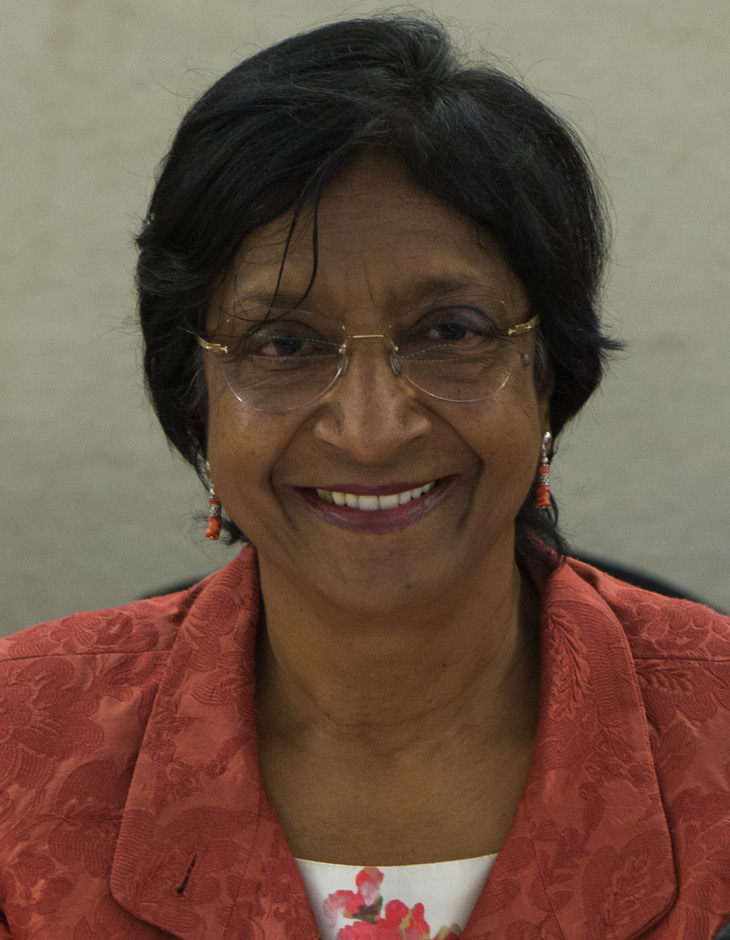
South African jurist Navanethem “Navi” Pillay has won the 2026 Nobel Peace Prize. The Norwegian Nobel Committee announced the award on Friday, October 9, recognising her work to advance peace and international law. It places an African legal pioneer at the centre of a global argument about accountability for atrocities and the role courts can play in resolving conflicts.
The committee’s case for the award centres on a long career across national and international institutions. It highlighted work on war crimes, crimes against humanity and genocide, and argued that legal accountability is essential to peace. That is the committee’s assessment of her contribution; the prize is neither a judgment in a pending case nor a substitute for the evidence and procedures those cases require.
Institutional sanctions and the limits in Treasury’s licenses
A separate development on October 9 sharpened the institutional stakes. The U.S. Treasury’s Office of Foreign Assets Control added the International Criminal Court itself, based in The Hague, Netherlands, to its Specially Designated Nationals and Blocked Persons List under the ICC sanctions programme. Earlier measures had targeted individual court officials. Secretary of State Marco Rubio defended the new step as protection against the court’s asserted authority over Americans. The Nobel award and sanctions were announced on the same day; their timing alone does not establish that one caused the other.
The designation is confirmed, but describing it as an immediate ban on every service would miss important exceptions. General License 13, dated October 9, authorises specified maintenance and wind-down transactions through 12:01 a.m. Eastern Daylight Time on April 7, 2027. Its examples include member-state payments, staff salaries and medical services, rent and routine services. This is a limited authorisation within the sanctions programme, not removal of the ICC from the sanctions list. Transactions involving other blocked persons still require their own authorisation where applicable.
General License 14 separately permits specified telecommunications, internet communications and enterprise-software transactions involving the court. Its scope includes services such as email and web hosting, and software supporting payroll, cybersecurity and data storage, subject to the license’s conditions and other legal requirements. These provisions qualify broad claims that all American technology must be withdrawn immediately. They do not establish that every supplier will continue service or that operational disruption is impossible.
The ICC’s October 9 statement rejected the institutional sanctions, describing them as an effort to obstruct its work. It said the new measure followed designations against thirteen judges and prosecutors. This is the court’s stated response to U.S. policy, not a judicial ruling on the sanctions’ legality. For African lawyers, member states and victims involved in international proceedings, the practical issue is whether financial and technical pressures impede accountability. The designation does not itself decide a criminal case, erase an arrest warrant or turn an allegation into a conviction.
From apartheid-era Durban to the international bench
Pillay was born in Durban in 1941 into a family of Indian Tamil heritage. Apartheid shaped the society in which she entered the legal profession. OHCHR’s biography records that she opened a law practice in Natal in 1967, becoming the first woman to do so in the province. Her early professional path gives the award a history rooted in South Africa’s experience of exclusion and resistance.
In 1995 she became the first Black woman appointed to South Africa’s High Court. Her later work took her to the International Criminal Tribunal for Rwanda and the International Criminal Court. These appointments connect domestic efforts to widen access to justice with international efforts to investigate individual responsibility for grave crimes.
The Rwanda judgment that changed legal history
One landmark was the Akayesu judgment, delivered by the Rwanda tribunal on September 2, 1998. Pillay sat with judges Laïty Kama and Lennart Aspegren on the chamber that convicted Jean-Paul Akayesu of genocide and crimes against humanity. The UN tribunal’s own historical record explains that the judgment established that rape and other sexual violence could constitute genocide. It was a collective judicial decision, not the work of a single judge.
That development matters because it changed how international criminal law could address violence against victims who had often been marginalised. The legal question was not simply whether horrific acts occurred, but how their purpose and circumstances met defined international crimes. The tribunal’s record anchors that history more precisely than a general description of humanitarian advocacy.
A precise distinction between courts
Pillay subsequently served as UN High Commissioner for Human Rights from 2008 to 2014. Today the Nobel announcement also draws attention to her work in the case brought by The Gambia against Myanmar under the Genocide Convention. The ICJ identifies her role as judge ad hoc in that case; this should not be confused with membership of the court’s permanent bench.
The courts also perform different tasks. International criminal tribunals address the criminal responsibility of individuals. The International Court of Justice deals with disputes between states. A charge, a provisional order and a final finding are distinct legal events. The Peace Prize does not settle the allegations in the Myanmar proceedings or any other ongoing dispute.
Why the award matters beyond one career
For African readers, the award invites attention to the continent’s contribution to international institutions through judges, lawyers and state-led litigation. Its significance extends beyond national celebration: Pillay’s career offers a concrete way to examine who can seek accountability, which court has authority and what evidence is needed. Those questions remain useful long after the announcement-day headlines.
The photograph accompanying this feature was taken at the Human Rights Council in Geneva on June 10, 2014, by U.S. Mission Geneva photographer Eric Bridiers. It is an authentic, public-domain archival image, clearly dated rather than presented as a photograph of today’s announcement. Our related coverage can be explored through the South Africa, Politics and Diaspora desks.