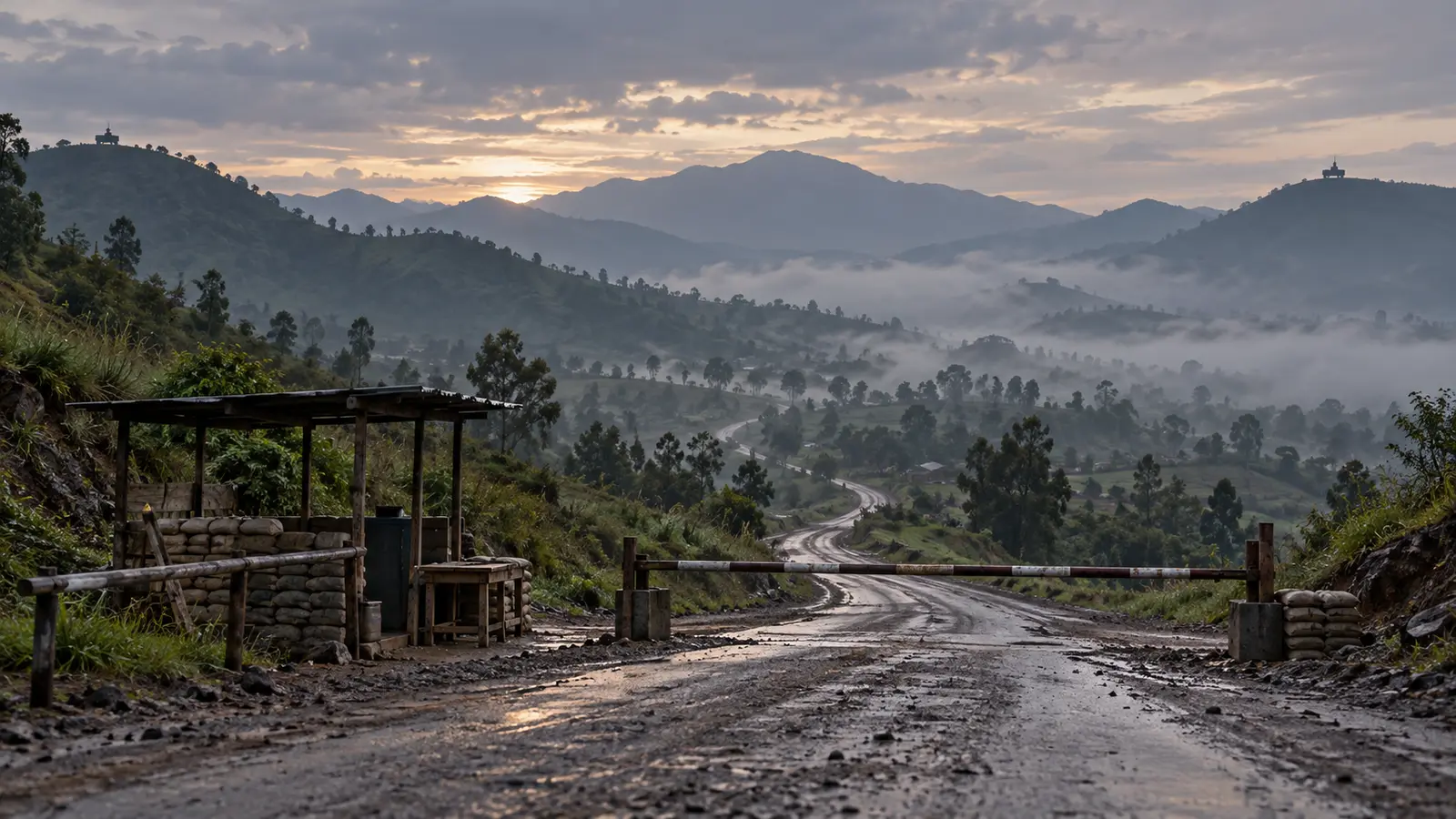
Fighting was reported on Thursday, October 8, around Ngungu and Kasaki in Masisi territory, North Kivu, between the Congolese armed forces and allied Wazalendo groups on one side and the AFC/M23 rebellion on the other. The local newsroom Actualite.cd said the clashes were concentrated in the Ufamandu I grouping after several days of tension.
The immediate battlefield picture remains incomplete. No independently verified casualty figure or civilian-displacement total had been published in the sources reviewed for this report, and neither side’s territorial claims should be treated as settled without corroboration. The reliable point at publication is that active fighting was reported around both communities on October 8.
What is reported on the ground
The clashes matter beyond two localities because they overlap with a fresh diplomatic mission. Three members of the African Union Panel of Facilitators—former Ethiopian president Sahle-Work Zewde, former Kenyan president Uhuru Kenyatta and former Botswanan president Mokgweetsi Masisi—held consultations in AFC/M23-controlled Goma on October 5.
The AU said the delegation met AFC/M23 representatives as well as MONUSCO, the UN humanitarian office, the International Committee of the Red Cross and the Expanded Joint Verification Mechanism Plus. The meetings covered the peace process, the security and humanitarian situation and measures intended to rebuild confidence.
A ceasefire under immediate pressure
In its October 7 statement, the panel called for strict respect for ceasefire commitments, cooperation with verification mechanisms and restraint from actions that could undermine the Doha process. It also stressed protection of civilians, safe humanitarian access, accountability for violations and the safeguarding of essential services and schools.
Reuters reported that the facilitators were expected to take the consultations to Kinshasa after meetings in Goma and Kigali. That sequence is intended to bring the rebel alliance, Rwanda and Congo’s government into the same mediation effort, even though they do not agree on responsibility for the conflict or the meaning of compliance.
What the AU delegation asked for
The timing exposes the gap between a negotiated framework and control on the ground. Congo’s government and AFC/M23 committed in Doha to a permanent ceasefire and further negotiations, while a separate process has involved Congo and Rwanda. Monitoring teams have begun operating, but fighting has continued in remote parts of North Kivu and South Kivu.
Ngungu sits on routes connecting parts of Masisi with other contested areas in North Kivu. Control around the town has changed during repeated offensives and counter-offensives, making new clashes a practical test of whether ceasefire verification can reach places where armed actors are still manoeuvring.
Why Ngungu matters
The conflict’s civilian cost cannot be reduced to diplomacy. The AU statement specifically linked the credibility of the process to tangible improvements for affected communities, including protection for women and girls, prevention of sexual and gender-based violence, access for relief agencies and functioning schools and services.
There are important limits to the available evidence. The reports do not establish a verified death toll, the number of people newly displaced, which side initiated the latest exchange or lasting control of Ngungu or Kasaki. Na Wetin Dey Happen will not convert uncorroborated battlefield claims into confirmed facts.
What remains unverified
The next evidence to watch is whether the AU delegation completes its Kinshasa consultations, whether the ceasefire verification mechanism records the Masisi clashes, and whether the parties publish specific remedial steps. A renewed promise to engage is not the same as a ceasefire holding; the fighting around Ngungu and Kasaki is the test now confronting the mediators.