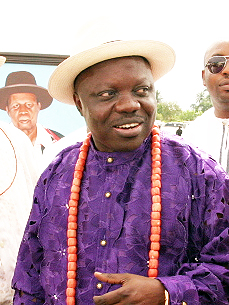
Macky Sall has withdrawn from the contest to become the next United Nations secretary-general. Senegal’s former president announced the decision on Saturday, October 17, following the Security Council’s informal vote the previous day. Senegal’s public news agency APS and AFP reporting carried by Channels Television separately report the withdrawal. It is a confirmed change in the field of candidates, not the conclusion of the selection process.
In his statement, reported by APS and Dakaractu, Sall said he had consulted Burundi’s President Évariste Ndayishimiye and Senegal’s President Bassirou Diomaye Faye. He presented his withdrawal as a way to help the Council converge on a candidate. Dakaractu dates the declaration to Marrakech on October 17; the announcement should therefore not be described as a new October 18 decision simply because this article appears today.
A test vote is not an appointment
The distinction between a test vote and a binding decision is central. Informal polls let Council members signal encouragement or opposition before a formal recommendation. Africanews reports that none of the seven candidates in Friday’s round had the backing of every permanent member. That demonstrates the difficulty of assembling support at that stage, rather than a final legal exclusion of every contender.
Sall’s statement interpreted the test votes as pointing toward a candidate from Latin America and the Caribbean, possibly a woman. That was his assessment, not an announcement that such a candidate had been chosen. AFP’s October 17 account names Costa Rica’s Rebeca Grynspan among the leading contenders but also describes permanent-member opposition. We are not treating reported informal rankings as an official result.
How the decision will be made
The UN Charter sets out two institutional steps. Article 97 provides for the General Assembly to appoint the secretary-general following a Security Council recommendation. This is not a direct worldwide election, and an individual campaign’s decision cannot substitute for either body’s action. A clear recommendation and appointment record will matter more than speculation about who may enter or leave the race next.
There is also a timetable behind the diplomacy. AFP reports that Guterres’s second term ends on December 31, 2026. Africanews identifies Uganda’s Olara Otunnu as the remaining African contender after Sall’s withdrawal. Neither fact guarantees a region the next appointment: a candidate still needs the necessary institutional support. No successor or date for the final decision has been verified for this report.
Africa’s stake goes beyond one candidacy
Sall said he remained committed to peace, development and international cooperation, and argued for Africa to have a stronger place in global governance, according to APS. His departure narrows one route to that ambition but does not decide how African states will engage with the next UN leadership. The next substantive milestone is an official Council recommendation, followed by General Assembly action—not another rumour about a favourite.