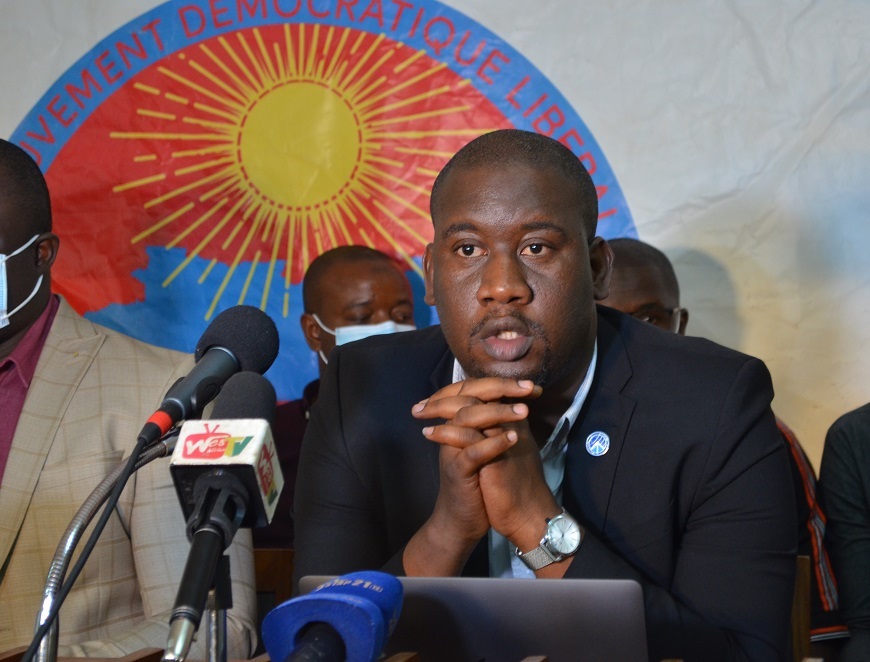
Guinea's President Mamadi Doumbouya has granted a presidential pardon to opposition leader Mamadou Aliou Bah as part of an Independence Day clemency measure covering 217 convicted people. The decree was announced on state television on Friday, October 2, by senior presidency and government officials.
Bah leads the Mouvement démocratique libéral, known as MoDeL. He had been detained since December 2024 and was serving a two-year sentence for remarks judged to have offended and defamed the head of state. An appeals court upheld the conviction in May 2025. The pardon removes the remaining custodial sentence; it is not an acquittal or a judicial reversal of the conviction.
What the October 2 decree changed
International reports published on October 5 described Bah as freed. Local Guinean reporting is more cautious. MoDeL said the decision opened the way for its president to return to his family and called supporters to remain calm, language that treats the decree as the beginning of a release process rather than proof that every administrative step had already been completed.
That distinction matters because the ECOWAS Court of Justice had already ruled in Bah's favour on June 25. In judgment ECW/CCJ/JUD/39/26, the regional court found violations of his rights, ordered his immediate release and awarded symbolic compensation of one CFA franc. Its official case record remains separate from the president's later act of clemency.
Pardon does not erase the regional-court ruling
A September 25 communication from the regional court sought implementation of that judgment through Guinea's Supreme Court. The pardon followed a week later, but no official material reviewed for this report establishes that Doumbouya issued it in response to the ECOWAS Court. It also applied to 216 other people and was presented as an Independence Day measure.
The main uncertainty is a condition reported from the televised decree. Guineematin and Le Lynx said beneficiaries must complete a 45-day civic-guidance and reintegration programme. Public accounts do not yet make clear whether that programme occurs before release, after release, or under another form of supervision.
The 45-day requirement is the unresolved question
That condition sits uneasily beside the ECOWAS Court's order for immediate release. A presidential pardon may end the domestic punishment, while the regional judgment addresses whether the arrest and detention violated protected rights. The two measures reach Bah through different legal routes, and the pardon does not by itself answer whether Guinea has fully implemented the court's findings.
Bah's case has become a test of political speech in Guinea. Doumbouya took power in a 2021 coup and later won a December 2025 presidential election from which major opposition challengers were absent. Opposition parties and rights groups have accused the authorities of narrowing civic space through party dissolutions, protest restrictions, arrests and pressure on government critics; the government disputes some opposition characterisations of its record.
Why the case matters beyond one politician
The pardon is therefore politically significant, but it should not be described as a broad reopening of Guinea's political space. It concerns a named group of prisoners, and there has been no accompanying announcement restoring dissolved parties, changing protest rules or overturning the laws used against Bah.
The next facts to establish are practical: whether Bah has physically left custody, where and when the 45-day programme will be conducted, whether he can immediately resume political activity, and whether Guinea will file the compliance report requested by the ECOWAS Court. Until authorities or Bah's representatives confirm those points, headlines declaring an unconditional release go beyond the public record.
What to watch next
For Guinea's opposition, the moment offers relief and a warning. A prominent leader may be returning to public life, but his path out of detention came through executive clemency after a regional court had already ordered immediate freedom. The durability of the change will be measured not only by Bah's status, but by how freely Guineans can organise, speak and contest power after the celebrations end.