Vaccination is underway: October 14–18
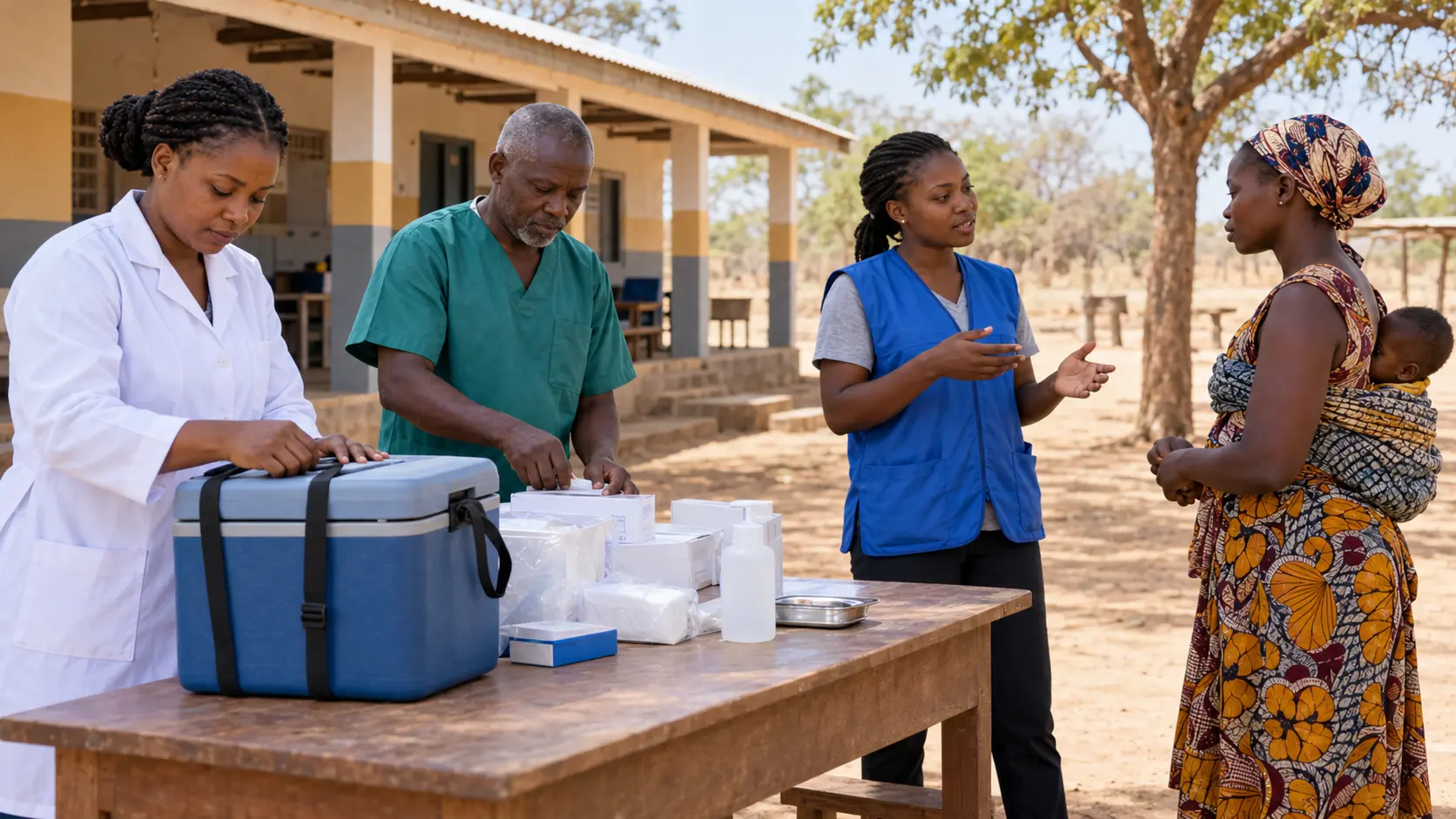
Ghana’s yellow-fever response has moved from preparations to vaccination. In an October 15 statement, Ghana Health Service confirmed that the campaign started on Wednesday, October 14, in Wa West, Sissala East and Sissala West in the Upper West Region. It is scheduled to continue through Sunday, October 18, 2026.
The five-day programme aims to reach approximately 244,869 people aged nine months to 60 years. This is the intended population, not evidence that that many people have already received a vaccine. The statement does not provide a completed vaccination total or an updated laboratory-confirmed case count; the outbreak figures below retain their original reporting dates.
GHS says health facilities and temporary posts at public locations are providing vaccination, with mobile teams visiting communities. Graphic Online also reported the rollout on October 15. Residents should check with their local health facility for the nearest operating post and individual eligibility advice. People vaccinated in the campaign receive yellow vaccination cards, which GHS asks them to keep safely.
The outbreak declaration: what was confirmed
Ghana’s Ministry of Health declared a yellow-fever outbreak in parts of the Upper West Region on Friday, October 9, after laboratory testing confirmed three infections. All three confirmed patients died, according to the ministry statement reported by Ghana Broadcasting Corporation on Saturday.
The statement said health facilities in Sissala West and Wa West had reported suspected patients with fever, jaundice and bleeding from September 9. Samples were tested in Ghana and sent for further testing at a World Health Organization-accredited laboratory in Dakar, Senegal, before the three yellow-fever infections were confirmed.
The ministry made the declaration under Ghana’s Public Health Act and the International Health Regulations. It did not identify the three patients or publish their ages, communities or individual dates of death. Those details should not be inferred from the broader list of suspected cases.
Suspected cases are not confirmed cases
Health Minister Kwabena Mintah Akandoh said at an October 9 media briefing that 450 suspected cases had been recorded across Ghana’s 16 regions and 88 of those reports were in Upper West. A Ghanaian Times account gave an earlier regional count of 74 suspected cases as of October 7. The different figures describe reports under investigation at different times, not laboratory-confirmed totals.
That distinction is essential. Fever, jaundice, headache, body pain and bleeding can have several causes, and WHO says yellow-fever diagnosis is difficult from symptoms alone. Only three cases had been confirmed in the outbreak announcement; the suspected-case figures must not be presented as hundreds of confirmed infections.
The change from 74 suspected reports on October 7 to 88 in the minister’s later briefing may reflect active case finding or newly logged reports. It does not establish the number of people currently ill, and it does not mean that all reported deaths in the region were caused by yellow fever. Authorities said investigations were continuing.
From emergency preparations to rollout
Ghana Health Service activated national and regional public-health emergency operations centres and deployed rapid-response teams to affected communities. Their work includes finding possible cases, tracing the pattern of illness, strengthening surveillance, supporting designated health facilities and giving residents consistent risk information.
At the October 9 briefing, Akandoh described preparations for targeted emergency vaccination and said 187,000 additional doses had been requested. That was a request reported before the rollout, not a delivery confirmation or a count of people vaccinated. The later GHS announcement now establishes that the campaign has begun.
Starting a campaign does not establish that an outbreak has ended. A coverage report and further surveillance results will be needed to assess progress. Residents should use Ghana Health Service information rather than unverified messages when making arrangements to attend.
What residents should know
Yellow fever is a viral disease transmitted by infected mosquitoes; it does not spread directly from person to person. WHO says the principal vectors bite during the day. Vaccination is the most important preventive measure, while repellents, protective clothing and removal of standing water can reduce exposure to mosquitoes.
The ministry advised people to seek care promptly for sudden fever, headache, muscle pain, yellowing of the eyes or skin, or unusual bleeding. It also warned against self-medication. Early symptoms can resemble malaria, hepatitis, dengue and other illnesses, so clinical assessment and laboratory testing matter.
Upper West borders Burkina Faso and includes communities with regular movement across district and national boundaries. That makes fast investigation, vaccination and reliable communication important even when the confirmed total is small. WHO’s outbreak guidance says every confirmed yellow-fever case requires investigation and emergency immunisation measures because the disease can spread quickly where population immunity is low.
Why rapid containment matters
Ghana has faced serious yellow-fever activity before. WHO recorded 70 confirmed cases and 35 deaths in four regions, including Upper West, between October 15 and November 27, 2021. That history provides context for the speed of the present response, but it should not be treated as evidence that the 2026 outbreak will follow the same course.
The immediate public-health test is whether teams can identify additional cases quickly, protect health workers, reach eligible residents with vaccine and publish timely district-level data without mixing suspected and confirmed counts. Clear reporting will help communities take the threat seriously without fuelling panic.
Update note, October 16: this article was first published on October 10 and described vaccination as planned. It has been revised following Ghana Health Service’s October 15 confirmation of the October 14 start. The original URL and dated outbreak context are retained. The accompanying image remains an AI-created editorial illustration, not a photograph of this campaign or its patients.