
A children’s picture book can appear simple because skilled people have made its choices look effortless. The pace of a page turn, the relationship between a picture and a sentence, and the space left for a child to look are all part of its construction. Book Dash brings those decisions into view at Pan Afrikan Design Week in Cape Town, where a session on creative collaboration and early access to books is scheduled for October 22, 2026. This is a preview of the published programme, not a report of an event already held.
The makers behind a small book
The organisation’s published model gives volunteer creative teams 12 hours to make a book. That compressed format depends on different skills working together: a writer shapes the story, an illustrator creates its visual world, a designer arranges the reading experience and an editor helps refine the result. Speed is the production format; it should not make any of those contributions invisible.
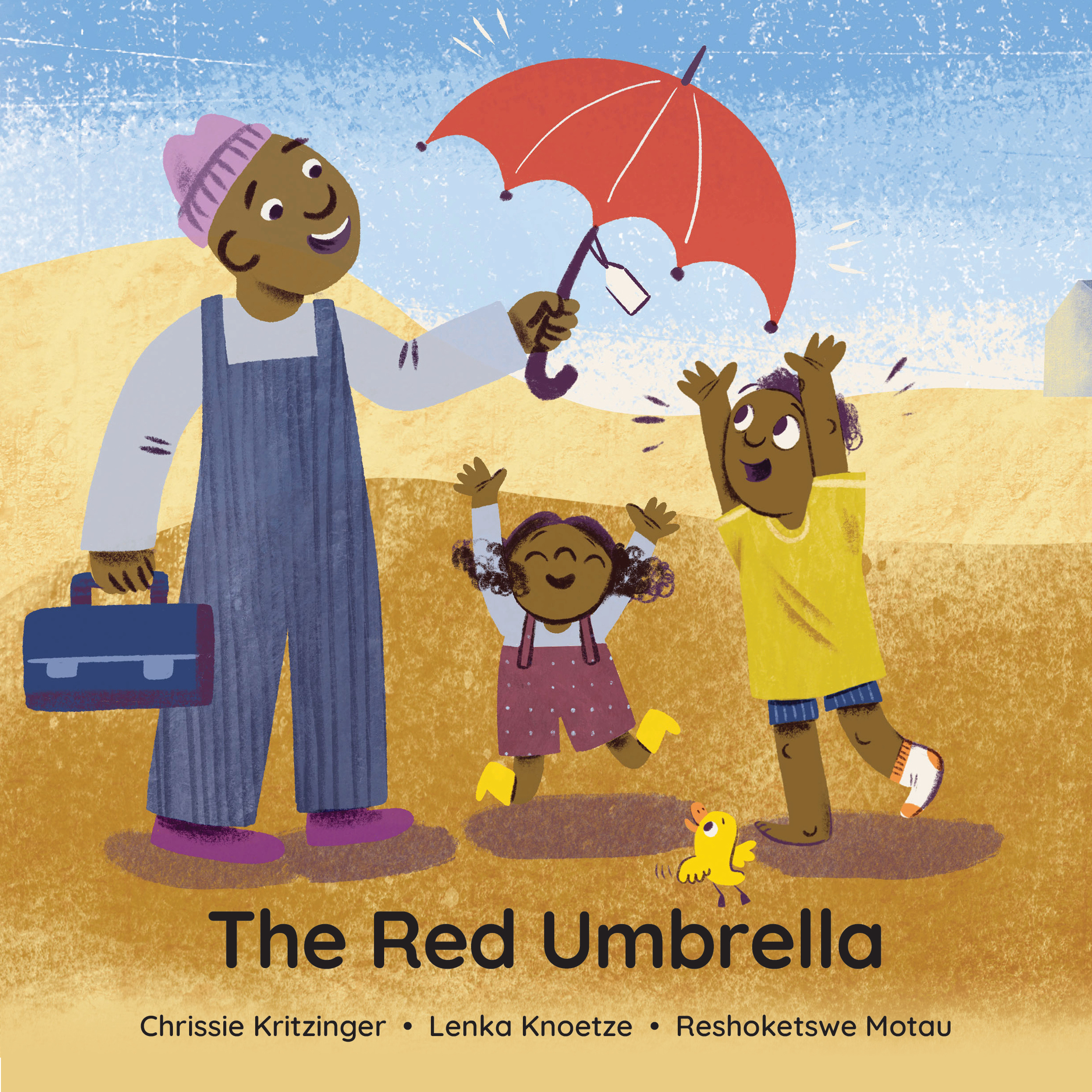
The Red Umbrella offers a concrete example. Book Dash identifies it as a creation of its September 19, 2026, Johannesburg event, crediting illustrator Lenka Knoetze, writer Chrissie Kritzinger, designer Reshoketswe Motau and editor Ester Levinrad. Its premise—a father bringing home an umbrella that his family wants to use in unexpected ways—starts with an everyday object. The cover reproduced here is that existing book’s original illustration, not a photograph or a newly announced design-week title.
That example invites a useful way of looking at African book craft. Instead of treating the illustrator as decoration added after a text is complete, look at how an image carries action, mood and relationships. Then consider the designer’s decisions: what the eye encounters first, how type and pictures share a page, and whether the format is comfortable to handle. These are questions readers can ask of a finished book without assuming there is only one correct visual style.
Open rights do not remove the work
Book Dash releases its books under Creative Commons Attribution 4.0, allowing reuse, translation and adaptation with attribution. Its reuse guidance asks for the original creators’ credits, a link back and the Book Dash logo; changes must be identified when content is adapted. Open licensing gives another publisher, teacher or reading project a lawful starting point. It does not mean the original makers have become anonymous or that their credit can be removed.
The physical edition adds another layer of design. Book Dash says its square 150-by-150-millimetre format helps use printing paper efficiently. It also describes funded bulk printing and distribution through partners. A downloadable book and a book in a child’s hands are therefore different stages: paper, printing, transport and a practical route into homes still matter after a file has been made freely available.
For an artisan or young creative, the wider lesson is collaboration with a visible division of labour. A finished object can carry several authorships, and its usefulness depends on production and distribution as well as an attractive surface. For readers choosing books, it is an invitation to notice the names on the credits and the language and format of an edition—not to assume that a conference appearance proves a literacy outcome.
What the Cape Town preview does—and does not—promise
PADI’s published programme schedules the Book Dash-related session, “Creative Collaboration, Social Impact and Early Book Access”, for Thursday, October 22, from 2:20 to 3:05 p.m. South African time. The listed participants include Thembalethu Shangase, Arthur Attwell, Diane Awerbuck and Subi Bosa. The main conference runs October 21–23 at Workshop17 in the Watershed at Cape Town’s V&A Waterfront, within the wider October 21–24 design week. Programmes can change; confirm the organiser’s current listing before travelling.
PADI distinguishes online access to main conference sessions from in-person workshops, networking and community activity. Readers should check the actual ticket category rather than interpret a minimum advertised price as the cost of every part of the programme. The cultural value worth watching is more specific than a promise of transformation: how these makers explain their decisions, credit one another and connect a designed story with the people who will read it.