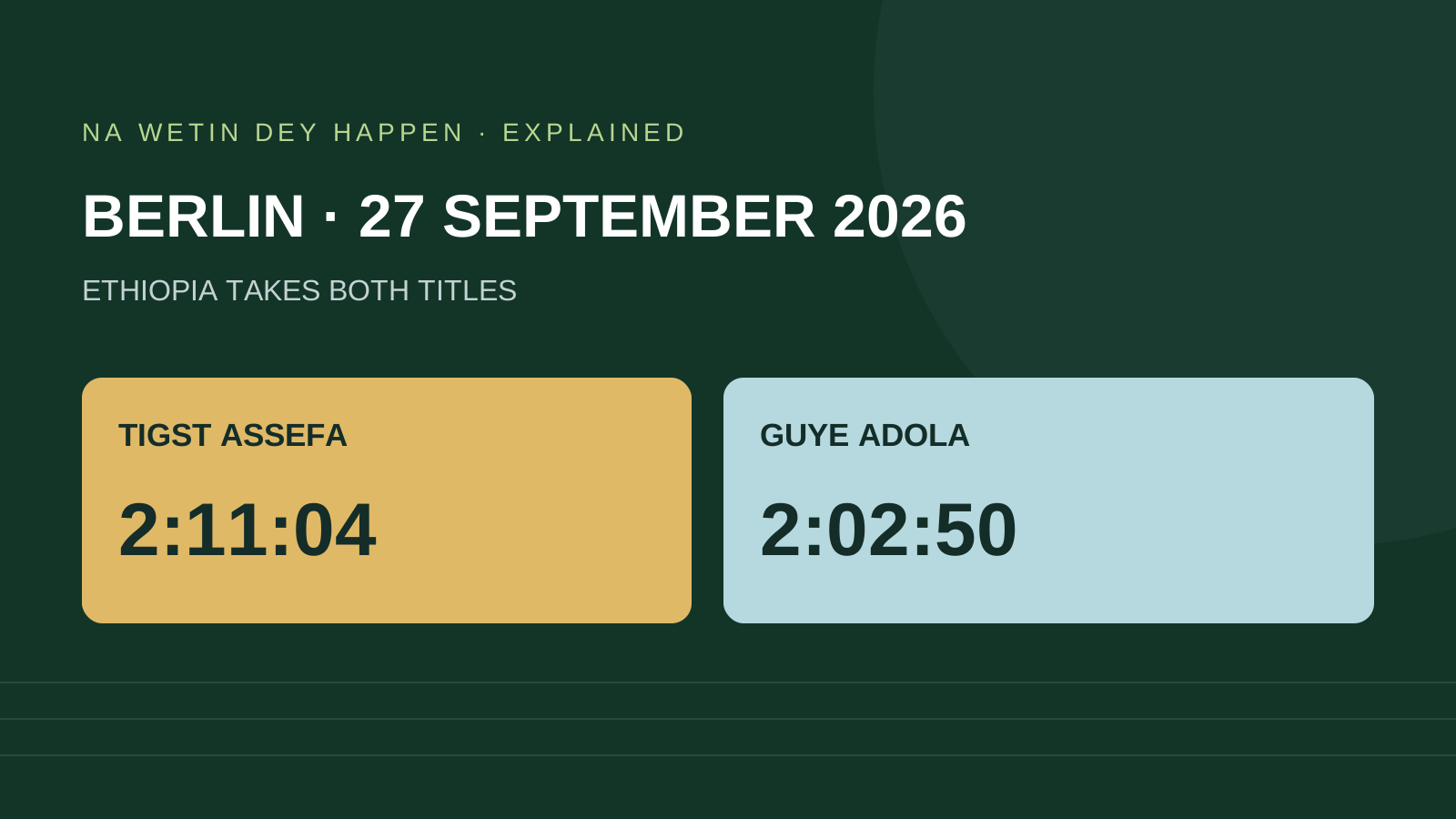
Ethiopia claimed both elite titles at the Berlin Marathon on Sunday, September 27, 2026. Tigst Assefa won the women’s race in 2:11:04; Guye Adola took the men’s title in 2:02:50. World Athletics recorded a personal best for Adola and placed Assefa’s performance third on the all-time list.
A result, not a projected record
Assefa had threatened the world record before slowing sharply near the finish. World Athletics reported a partial Achilles tendon tear. Her winning margin survived, but the record did not fall. The result should be celebrated without turning a reported injury into advice for other runners to keep competing through pain.
Bedatu Hirpa finished second in 2:16:53, two seconds ahead of Dera Dida. In the men’s race, Gemechu Dida was runner-up in 2:03:19 and Tanzania’s Gabriel Geay third in 2:03:59. These are the published leading results, not projected times from an intermediate checkpoint.
Adola’s win was his second in Berlin, following 2021. Assefa’s was her third, after 2022 and 2023. Those repeat victories put the individual athletes’ names at the centre of a story too easily reduced to a national medal count.
How to read the next marathon
The distinction between winning and breaking a record is useful for anyone watching a marathon. Position measures performance against the people on the road that day. A record compares a completed, eligible performance with the best recognised mark. A projected finish on a broadcast is neither a result nor a guarantee.
That gives readers two ways to follow the next major race: watch how the contest changes between competitors, then check the final official times. A dramatic early split may explain the ambition of an attempt, but the last kilometres still have to be run. The finish line can change the meaning of everything before it.
Berlin’s lasting picture is therefore more complicated than a single stopwatch. Two Ethiopian champions returned to the top of a major city race, while the podium also included Tanzania. The achievement belongs to named athletes and specific performances; claims about future starts or recovery should wait for confirmed announcements.