
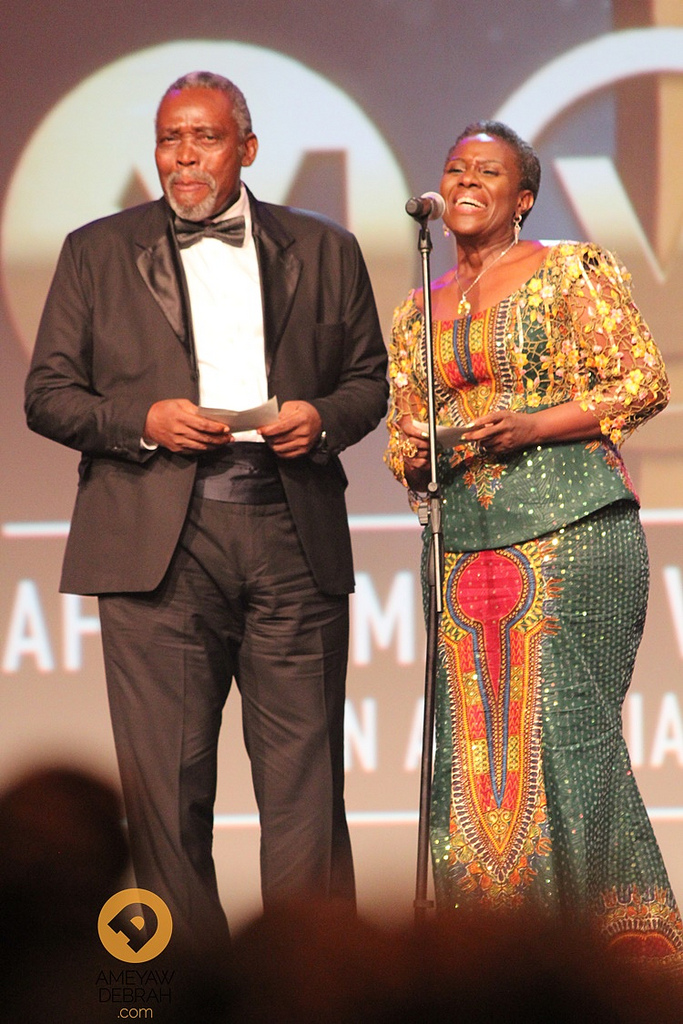
Some screen partnerships end when the director calls cut. Joke Silva and Olu Jacobs carried theirs into a marriage, a family and a shared commitment to the performing arts. Their story matters because both remained recognisable artists in their own right, even as their names became inseparable in the public imagination. To remember them together is to celebrate affection, professional respect and the patient work of building a life around a demanding calling.
Jacobs died on 16 September 2026, aged 84, according to his family’s announcement. The family asked for privacy and did not disclose a cause of death. This appreciation follows that confirmed announcement; it is separate from the false death reports that circulated during his lifetime. Behind the loss felt by a film industry is the more intimate grief of Silva, their children and the people who knew him at home.
The rehearsal that became a life together
Their relationship began in the theatre. Punch’s account, published on 19 September, traces their meeting to rehearsals for Wole Soyinka’s Jero’s Metamorphosis at the National Theatre in 1981. Jacobs was reportedly certain early on that he wanted to marry her. Silva’s affection developed through friendship. They married in 1985, turning a professional encounter into a partnership that lasted more than four decades.
One especially revealing detail concerns the name audiences know so well: Joke Silva. In interviews recalled by Punch, she explained that Jacobs supported her continuing to use the professional identity she had already established. That decision deserves its place in their love story. It suggests a marriage in which a woman’s achievement could be encouraged and recognised on its own terms, rather than absorbed into her husband’s fame.
Silva did not describe their marriage as free of disagreements. Her public reflections have included difficult periods, reconciliation and the friendship that endured underneath. Those admissions make the relationship more human, not less admirable. A loving tribute need not turn two working people into an impossible ideal: the example lies in the continuing effort, mutual regard and room they made for one another’s careers.
Partners on stage, colleagues on screen
Their shared performance history reaches beyond cinema. In a 2022 recollection reported by QED, Silva identified Jacobs as Joseph and herself as Mary in Holy Child, a musical written by Jacobs and directed by Tunde Oloyede. It premiered at the National Theatre in December 1986 and was performed again in 1987 and 1993. This is a documented example of the couple portraying a husband and wife on stage, and of their real partnership supporting a joint creative undertaking.
Their shared film credits also include Twins of the Rain Forest, the 1999 short directed by Odion P. Agboh, and The Kingmaker, commonly catalogued as a 2003 film. Legit.ng’s career retrospective identifies Silva as a co-star in both and a co-producer of The Kingmaker. The former places Jacobs in a story about an expectant father confronting a community’s lethal treatment of twins. These credits show the breadth of their collaboration across family, moral conflict and royal drama; they should not all be recast as romances simply because the actors were married.
A later shared credit is Ishaya Bako’s The Royal Hibiscus Hotel, which screened at Toronto in 2017 before its Nigerian cinema release in 2018. Silva is credited as Augustina and Jacobs as Richard. The central romance belongs to Ope and Deji, played by Zainab Balogun and Kenneth Okolie. Ope’s parents are played by Jide Kosoko and Rachel Oniga. Keeping those roles straight allows us to celebrate Silva and Jacobs without handing them another couple’s scenes or inventing a screen rivalry.
Their appeal as a performing partnership is therefore richer than a catalogue of romantic embraces. Holy Child brought their work into a story of marriage, responsibility and faith; their films placed them within broader dramas and ensembles. For admirers who knew they were married, seeing both names in the credits added another layer of affection. But the fictional relationship must always be distinguished from the real one: a character’s quarrel is an actor’s work, not evidence about the actor’s home.
The people and institutions they helped to grow
The clearest lasting expression of their shared ambition is Lufodo. Its official biography describes Silva as co-founder and co-chief executive of the group they established in 1986, and dates the Lufodo Academy of Performing Arts to 2007. Production and training made their partnership useful to people beyond their own household. An actor can leave behind a wonderful performance; an actor who helps build a school also helps others prepare for performances that have yet to be imagined.
There are named colleagues behind the broad word ‘inspiration’. In an interview reported by Pulse in August 2025, Bimbo Akintola recalled Silva among the senior actresses whose dedication to the work impressed her as she entered the industry. Following Jacobs’ death, Mr Macaroni publicly described him as an inspiration, while Funke Akindele and other entertainers offered condolences. Those responses connect different generations of Nigerian performance, from established screen actors to younger comedy and digital audiences.
Their example also offers something practical to aspiring performers across Africa: take the craft seriously, allow a collaborator to remain an individual, and build opportunities that can outlive your own starring roles. This is our assessment of the legacy, not a claim that every younger actor studied under them. The documented academy, productions and colleagues’ recollections are substantial enough without inventing a roll call of pupils.
Our condolences to Joke Silva
To Joke Silva, we offer our heartfelt condolences and our respect. Her own distinguished career deserves celebration alongside her devotion to the man with whom she shared so much of her life. Grief should not become a public performance that admirers demand from a bereaved family. Honouring the family’s request for space is one way of returning the generosity that both artists gave their audiences.
As Olu Jacobs answers what many admirers call his call to glory, Nollywood loses an irreplaceable elder and one of its most commanding presences. The industry will continue to make films, discover talent and tell new stories, but it will not be the same without him. The performances remain; so do the example of a serious working actor and the institutions he helped to build with Silva. May he rest in peace, and may his family find comfort in the love surrounding them.