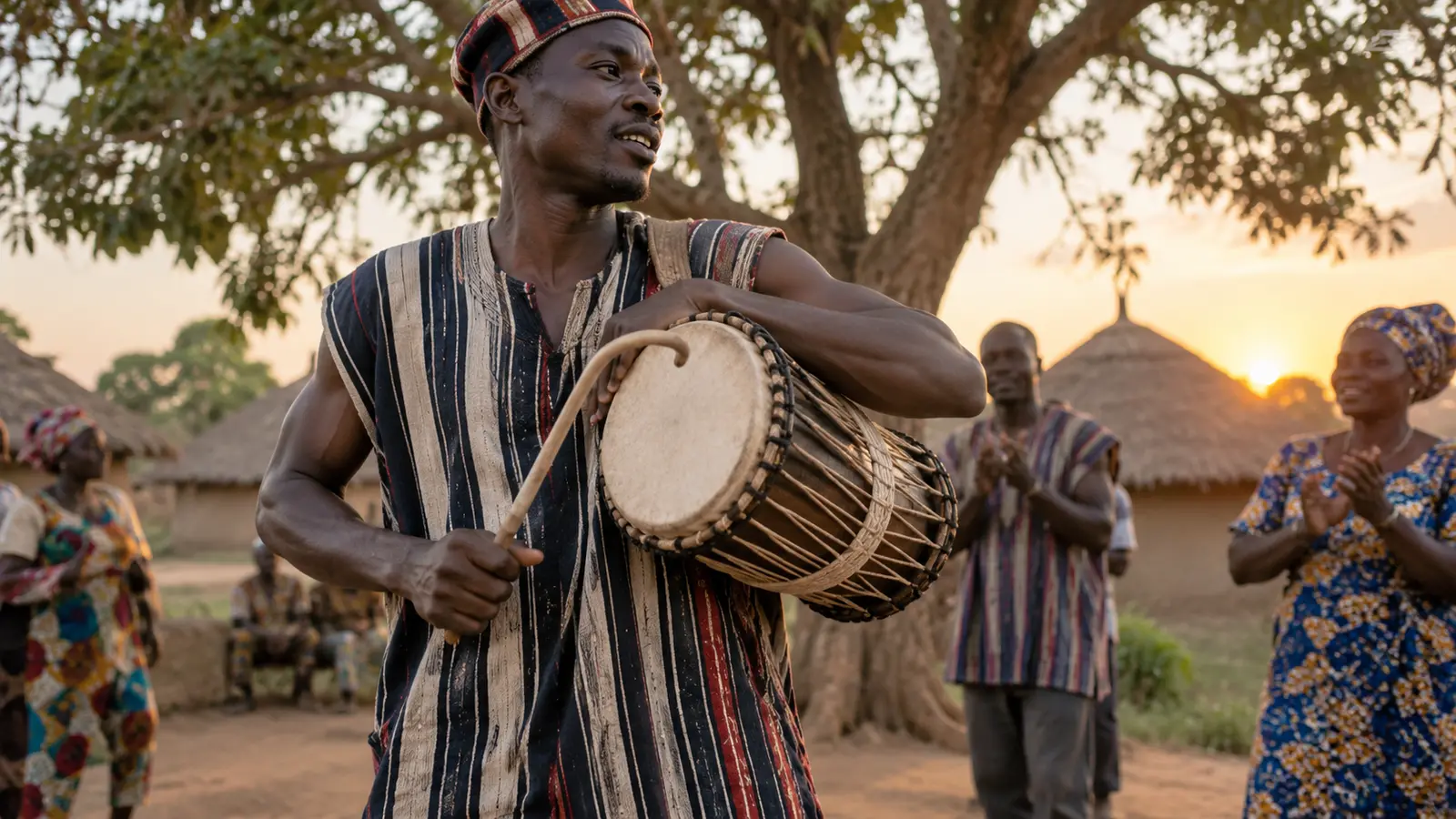
The phrase ‘talking drum’ covers several pressure drums in West Africa. Among the Yoruba, the hourglass dùndún family is played by striking one head while squeezing leather tension cords under the arm to alter pitch. Related instruments and speech-surrogate traditions exist among Akan, Dagomba and other peoples, each with its own names and repertoire.
Because Yoruba and several neighbouring languages are tonal, a master drummer can shape pitch contours and rhythm to evoke proverbs, praise names and recognisable phrases. Meaning depends on shared language and context. The drummer does not reproduce every consonant; listeners recognise a compressed musical speech supported by familiar formulas.
Training is built through listening, imitation and ensemble discipline. Drum makers hollow and cure wood, prepare skins, lace cords and tune the instrument; performers learn calls for ceremonies, rulers, dancers and deities. Weddings and popular music create paid work, but mastery requires far more than a sample dropped into a recording.
Amplification and global touring have expanded the instrument’s reach. Preservation depends on paying teachers, recording repertoires with consent and naming the specific tradition. Calling every bent pitch ‘African talking drum’ erases the language that makes the drum speak.