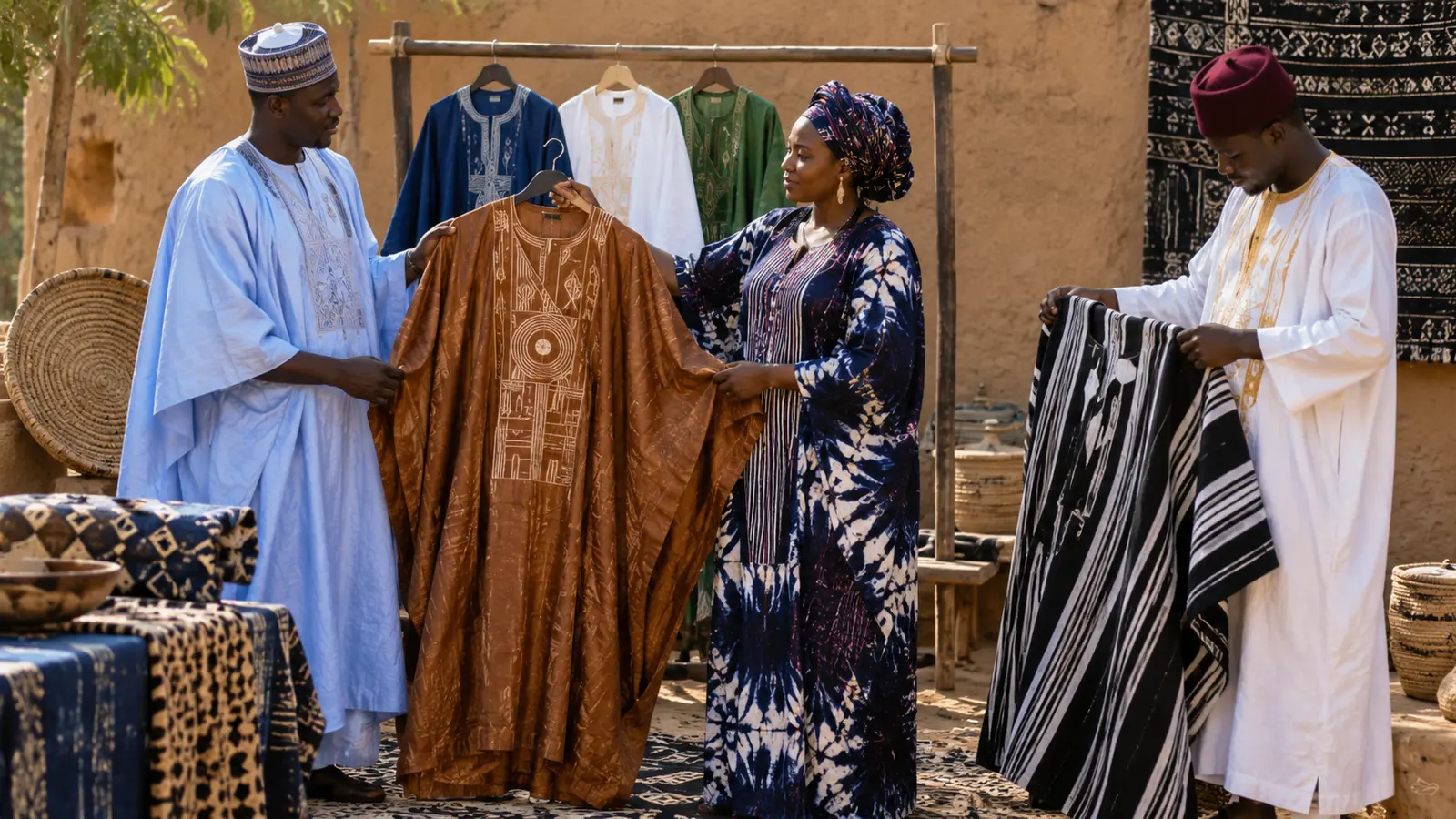
Boubou is a regional garment family, not one national costume. Senegalese grand boubou, Malian and Guinean forms, and Nigerian babban riga share generous cloth and public presence, yet differ in neckline, embroidery, fabric, layering and the social occasions for which they are commissioned.
A finished robe passes through fabric traders, dyers, cutters, embroiderers, tailors and pressers. The cutter must distribute metres of cloth so the garment falls evenly; the embroiderer builds weight around the chest without making it buckle; the tailor aligns side openings and sleeves so volume remains wearable in heat.
Workshops in Dakar, Bamako, Conakry, Kano and other cities serve weddings, religious festivals, office-holders and diaspora clients. That demand sustains apprentices and specialist machine operators, although imported ready-made garments and copied digital patterns can push prices below the cost of patient work.
The boubou travels because it adapts. Women and men restyle it, designers change proportion, and customers order by phone across borders. Accuracy requires naming the maker and regional form; continuity requires that the workshop, not merely the retailer, shares in the garment’s growing prestige.