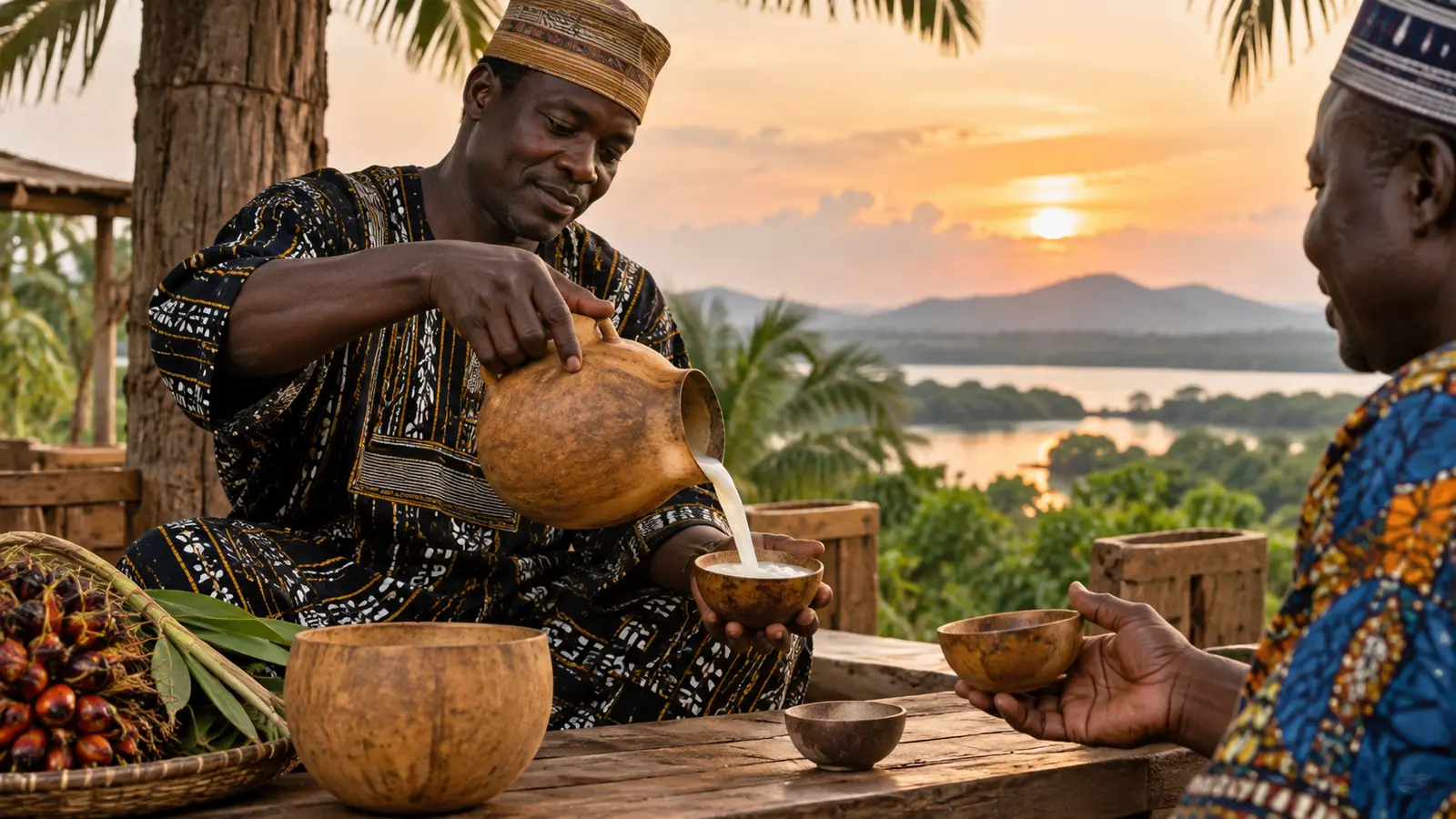
Palm wine is tapped from several palm species across West and Central Africa, so its taste and method change with ecology. In southeastern Nigeria and parts of Cameroon the raffia palm is important; oil and date palms are used elsewhere. A tapper climbs or reaches the flowering point, makes a controlled cut and fixes a container to collect sap.
Fresh sap can be sweet and lightly cloudy. Natural yeasts begin fermentation quickly, increasing acidity and alcohol as hours pass. That living transformation explains why village-fresh wine differs from bottled products and why cleanliness of tools, containers and water matters for safety.
Tappers, calabash and container sellers, transporters, bar owners and ceremony vendors depend on the trade. Palm wine accompanies marriages, negotiations, funerals and everyday hospitality, but access to trees, land conversion and inconsistent regulation affect livelihoods.
Refrigeration and controlled bottling can extend shelf life, while careless industrial imitation can erase origin. Modernisation should improve hygiene and market reach without separating the drink from named tappers, communities and the trees on which the economy depends.